Menschen im Amazonas haben aus armem, rotem Boden schwarze Erde gemacht, die bis heute fruchtbar ist. Wie haben sie das geschafft – und was können wir daraus lernen?People in the Amazon turned poor red soil into black earth that is still fertile today. How did they do it – and what can we learn from it?
2 t CO₂bindet eine Tonne Pflanzenkohle, vorsichtig gerechnetlocked away per tonne of biochar, cautiously counted
Scroll
Das RezeptThe recipe
Fünf Zutaten. Tausend Jahre.Five ingredients. A thousand years.
🪨KohleCharcoal
🦴NährstoffeNutrients
🍂HumusHumus
🍄BodenlebenSoil life
⏳ZeitTime
Terra Preta
01
Kohle – Das GerüstCharcoal – The scaffold
Holzkohle ist das Skelett der schwarzen Erde: porös, extrem stabil und voller winziger Hohlräume. Gut verkohlt bleibt sie Jahrhunderte im Boden.Charcoal is the skeleton of the black earth: porous, extremely stable and full of tiny cavities. Well charred, it stays in the soil for centuries.
bis zu 70× mehr Holzkohle als im Nachbarbodenup to 70× more charcoal than neighbouring soil
KI-BildAI image
02
Nährstoffe – Die NahrungNutrients – The food
Asche, Knochen, Küchen- und Ernteabfälle brachten Phosphor und Calcium in den Boden – genau das, was dem roten Tropenboden fehlt.Ash, bones, kitchen and harvest waste brought phosphorus and calcium into the soil – exactly what the red tropical soil lacks.
Phosphor: 116–291 statt 5 mg pro kgPhosphorus: 116–291 instead of 5 mg per kg
KI-BildAI image
03
Humus – Der SpeicherHumus – The store
Organische Substanz verbindet sich mit der Kohle. So entsteht ein Boden, der Wasser und Nährstoffe hält, statt sie auszuwaschen.Organic matter binds with the char. The result is a soil that holds water and nutrients instead of losing them.
im ganzen Profil etwa 3× so viel Kohlenstoffabout 3× as much carbon across the profile
KI-BildAI image
04
Bodenleben – Die BewohnerSoil life – The residents
Pilze und Bakterien ziehen in die Poren der Kohle ein. Sie bauen Humus auf und machen Nährstoffe für Pflanzen verfügbar.Fungi and bacteria move into the pores of the char. They build humus and make nutrients available to plants.
Kohle allein ist keine Terra PretaChar alone is not Terra Preta
KI-BildAI image
05
Zeit – Die GeduldTime – The patience
Terra Preta entstand über Generationen, meist zwischen 500 v. Chr. und 1500 n. Chr. Gut verkohlte Kohle ist darin nachweislich über 1.000 Jahre alt.Terra Preta formed over generations, mostly between 500 BC and AD 1500. Well-charred char in it is demonstrably over 1,000 years old.
nachweislich über 1.000 Jahre im Bodenproven to last over 1,000 years in the soil
KI-BildAI image
=
Terra PretaTerra Preta
Kohle + Nährstoffe + Humus + Bodenleben + Zeit. Erst alle fünf zusammen ergeben die schwarze Erde. Genau dieses Prinzip lässt sich heute auf Äckern und in Gärten nachbauen.Char + nutrients + humus + soil life + time. Only all five together make the black earth. This very principle can be rebuilt on fields and in gardens today.
KI-BildAI image
Vorher / NachherBefore / after
Zwei Böden. Ein Unterschied von Jahrhunderten.Two soils. Centuries apart.
Zieh den Regler: links die schwarze Terra Preta voller Kohle und Scherben, rechts der typische rote, nährstoffarme Tropenboden (Ferralsol) gleich daneben.Drag the slider: on the left the black Terra Preta full of char and pottery, on the right the typical red, nutrient-poor tropical soil (Ferralsol) right next to it.
116–291mg Phosphor pro kg in Terra Pretamg phosphorus per kg in Terra Preta
5mg Phosphor pro kg im Nachbarbodenmg phosphorus per kg next door
⇆Terra PretaFerralsolKI-BildAI image
ZeitreiseTime travel
6.500 Jahre in einem Boden6,500 years in one soil
vor 6.500 J.6,500 yrs ago
Erste dunkle ErdenFirst dark earths
Teotônio am oberen Rio Madeira: die älteste bekannte Abfolge. Ein Einzelfall.Teotônio on the upper Madeira River: the oldest known sequence. A single case.
500 v. – 1500 n. Chr.500 BC – AD 1500
HauptphaseMain phase
Überall im Amazonasbecken wachsen Siedlungen und ihre schwarzen Böden.Settlements and their black soils grow throughout the Amazon basin.
15421542
Orellana und CarvajalOrellana and Carvajal
Erste Fahrt den Amazonas hinab. Der Chronist beschreibt dicht besiedelte Ufer.First journey down the Amazon. The chronicler describes densely settled banks.
18791879
Herbert H. SmithHerbert H. Smith
Nennt die Terra Preta bei Santarém „die beste Erde am Amazonas“.Calls the Terra Preta near Santarém “the best on the Amazon”.
19031903
Friedrich KatzerFriedrich Katzer
Der deutsche Geologe schließt auf frühere Bewirtschaftung.The German geologist concludes the soils were once cultivated.
19661966
Wim SombroekWim Sombroek
Unterscheidet Terra Preta und Terra Mulata. Vordenker der „Terra Preta Nova“.Distinguishes Terra Preta from Terra Mulata. Pioneer of “Terra Preta Nova”.
20012001
Bruno Glaser und TeamBruno Glaser and team
Zeigen: Holzkohle ist der Schlüssel zur Dauerhaftigkeit.Show that charcoal is the key to durability.
20222022
Über 50 ForschendeMore than 50 researchers
Widerlegen die These einer natürlichen Entstehung.Refute the idea of a natural origin.
20232023
MIT und KuikuroMIT and the Kuikuro
Dokumentieren, dass die Kuikuro Dunkelerde gezielt herstellen.Document that the Kuikuro make dark earth on purpose.
Dunkle Erden weltweitDark earths worldwide
Nicht nur im Amazonas.Not only in the Amazon.
Tipp auf einen leuchtenden Punkt.Tap a glowing dot.
Terra PretaTerra Preta
AmazonienAmazonia
Das Original: Menschen machten hier aus rotem Tropenboden schwarze Erde – meist zwischen 500 v. Chr. und 1500 n. Chr. Kartiert sind 0,1–0,3 % Amazoniens.The original: people turned red tropical soil into black earth here – mostly between 500 BC and AD 1500. Mapped sites cover 0.1–0.3% of Amazonia.
engste Verwandteclosest relative
WestafrikaWest Africa
African Dark Earths in Liberia, Ghana, Guinea und Sierra Leone: 200–300 % mehr organischer Kohlenstoff, bis 270-mal mehr Phosphor. 115–692 Jahre alt und bis heute gepflegt, vor allem von Frauen.African Dark Earths in Liberia, Ghana, Guinea and Sierra Leone: 200–300% more organic carbon, up to 270 times more phosphorus. 115–692 years old and still tended today, mostly by women.
unsere dunkle Erdeour own dark earth
Oldenburger MünsterlandOldenburg Münsterland
Der Plaggenesch: rund 1.000 Jahre lang Heideplaggen in den Stall und dann auf den Acker. Der Boden wuchs etwa 1 mm pro Jahr. 183.000 ha in Niedersachsen – Kohle ist hier aber nur Beimengung.Plaggen soil: for about 1,000 years heath sods went into the barn and then onto the field. The soil grew about 1 mm a year. 183,000 ha in Lower Saxony – but charcoal is only a minor ingredient.
bester Vergleich in Europabest comparison in Europe
WendlandWendland
Nordic Dark Earth bei Brünkendorf, 10.–11. Jahrhundert: rund 30 t Holzkohle pro Hektar, viermal so viel wie nebenan.Nordic Dark Earth near Brünkendorf, 10th–11th century: about 30 t of charcoal per hectare, four times as much as next door.
keine Terra Pretanot Terra Preta
MitteleuropaCentral Europe
Schwarzerde: Bis zu 45 % ihres Kohlenstoffs sind verkohlt, Feuer half bei ihrer Bildung. Sie ist aber natürlich entstanden.Chernozem: up to 45% of its carbon is charred and fire helped form it. But it formed naturally.
Praxis, kein Bodenpractice, not a soil
Japan, Korea, ChinaJapan, Korea, China
Asche und Kohle als Dünger: 1697 beschreibt ein japanisches Lehrbuch Dünger aus Asche und Fäkalien, in China schon 1149. Reisspelzenkohle (Kuntan) ist bis heute verbreitet.Ash and charcoal as fertiliser: a Japanese textbook describes it in 1697, China as early as 1149. Rice husk char (kuntan) is still common.
Nährstoffe, kaum Kohlenutrients, hardly any char
KanadaCanada
Muschel-Middens: Auf bis zu 6.000 Jahre alten Abfallhaufen der First Nations wachsen Rotzedern höher und gesünder.Shell middens: red cedars grow taller and healthier on First Nations refuse heaps up to 6,000 years old.
keine Terra Pretanot Terra Preta
MittelamerikaCentral America
Maya: Dunkle Siedlungsböden gibt es, eine gezielte Kohle-Anreicherung ist aber nicht belegt.Maya: dark settlement soils exist, but deliberate charcoal enrichment is not documented.
Terra Preta verwandt Praxis / Nährstoffe keine Terra PretaTerra Preta related practice / nutrients not Terra Preta
Mini-LaborMini lab
Dreh die Temperatur hoch.Turn up the heat.
Wie gut eine Pflanzenkohle ist, entscheidet vor allem die Temperatur bei ihrer Herstellung. Probier es aus: Mit dem Regler siehst du echte Messwerte für Kiefernholz.How good a biochar is depends above all on the temperature at which it is made. Try it: the slider shows real measurements for pine wood.
Merke: Je kleiner H/C, desto stärker verkohlt und desto dauerhafter.Remember: the lower H/C, the more charred and the more durable.
500 °C
300400500600700 °C
AusbeuteYield
KohlenstoffCarbon
Verkohlung (H/C ↓)Charring (H/C ↓)
Innere OberflächeSurface area
Messreihe Kiefernholz: Keiluweit et al. 2010, Environmental Science & Technology. Kon-Tiki erreicht ca. 650–750 °C.Pine wood series: Keiluweit et al. 2010, Environmental Science & Technology. A Kon-Tiki reaches approx. 650–750 °C.
Die ehrliche RechnungThe honest calculation
Wie viel CO₂ steckt in 1 Tonne Pflanzenkohle?How much CO₂ is in 1 tonne of biochar?
Oft liest man 3,3 Tonnen. Wir rechnen vorsichtig – Schritt für Schritt.You often read 3.3 tonnes. We count cautiously – step by step.
Kohlenstoff in 1 t guter KohleCarbon in 1 t of good char
0,80 t C80 % Kohlenstoff80% carbon
× 3,67 = als CO₂ gerechnet× 3.67 = counted as CO₂
2,93 tCO₂ ist 3,67-mal schwerer als KohlenstoffCO₂ is 3.67 times heavier than carbon
× 0,74 = nach 100 Jahren noch da× 0.74 = still there after 100 years
2,17 tvorsichtig gerechnetcautiously counted
− Herstellung & Sicherheitsabschlag− production & safety margin
−0,12 tEmissionen abgezogenemissions deducted
Dauerhaft gebundenPermanently stored
ca. 2 t CO₂approx. 2 t CO₂pro Tonne Pflanzenkohleper tonne of biochar
Bei schlecht verkohlter Kohle (H/C über 0,5) fällt der Wert deutlich kleiner aus. Weltweit schätzt der IPCC etwa 1,1 Gt CO₂ pro Jahr – rund 2 % der heutigen Emissionen: ein wichtiger Baustein, keine Lösung für alles.With poorly charred char (H/C above 0.5) the figure is much lower. Worldwide the IPCC estimates about 1.1 Gt CO₂ a year – roughly 2% of today’s emissions: an important building block, not a cure-all.
RechnerCalculator
Wie viel Kohle braucht dein Boden?How much char does your soil need?
Wähl aus, was du vorhast. Der Rechner nutzt die vorsichtigen Praxiswerte aus dem Dossier – immer aufgeladene Kohle, nie frische.Choose what you are planning. The calculator uses the cautious practice values from the dossier – always charged char, never fresh.
Grobe Obergrenze gebundenes CO₂ pro JahrRough upper bound of CO₂ stored per yearmit ca. 2 t CO₂ je t trockener Kohle; aufgeladene Kohle enthält Wasser – der echte Wert ist kleiner.using approx. 2 t CO₂ per t of dry char; charged char contains water – the real figure is lower.
Rezept für 100 L GartenerdeRecipe for 100 L of garden soil
Pflanzenkohle, feucht, 0–10 mm (1-cm-Sieb): 10–15 LBiochar, moist, 0–10 mm (1 cm sieve): 10–15 L
Reifer Kompost: 50–60 LMature compost: 50–60 L
Gut verrotteter Mist oder Bokashi: 10–20 L (oder Hornspäne 100–200 g)Well-rotted manure or bokashi: 10–20 L (or horn shavings 100–200 g)
Lehm, Tonmehl oder Bentonit: 2–5 kg (vor allem bei Sand)Loam, clay flour or bentonite: 2–5 kg (especially on sand)
Gesteinsmehl: 1–2 kgRock dust: 1–2 kg
Kohle zuerst 2–14 Tage laden, dann alles 4–12 Wochen kompostieren. Vorher Kressetest.Charge the char for 2–14 days first, then compost everything for 4–12 weeks. Cress test before use.
Mythen-CheckMyth check
Stimmt das wirklich?Is that really true?
Tipp auf eine Karte und dreh sie um.Tap a card to flip it.
Aufgedeckt: 0 von 14Revealed: 0 of 14
Stark – alle 14 Mythen geknackt!Great – all 14 myths cracked!Hol dir das ganze Wissen als Gratis-PDF.Get all the knowledge as a free PDF.Gratis-PDF sichernGet the free PDF
Tiefer einsteigenGo deeper
Das ganze Wissen – 15 Kapitel, über 150 QuellenAll the knowledge – 15 chapters, 150+ sources
Unten findest du das komplette Dossier zum Nachlesen – oder hol es dir als PDF.Below you will find the complete dossier – or get it as a PDF.
Trag dich kurz ein – den Download-Link bekommst du sofort per E-Mail. Dazu gibt es ab und zu Praxiswissen vom Humusguru – jederzeit abbestellbar.
Sign up and we will e-mail you the download link right away (English edition, 35 pages). You’ll also receive occasional updates from the Humus Guru – unsubscribe any time.
15 Kapitel von Herkunft bis Mythen-Check
über 150 Quellen ausgewertet
vorsichtig gerechnete Zahlen
15 chapters from origins to myth check
more than 150 sources reviewed
cautiously calculated figures
📬 Dein Download-Link ist unterwegs – schau in dein E-Mail-Postfach (auch im Spam-Ordner).📬 Your download link is on its way – please check your inbox (and spam folder).
01
Das Wichtigste zuerst
Terra Preta auf einen Blick
KI-Bild
Kohle + Nährstoffe + Humus + Bodenleben + Zeit = Terra Preta KI-generierte Illustration (Symbolbild)
Terra Preta ist schwarze, fruchtbare Erde mitten im Amazonas-Regenwald. Die Natur hat sie nicht allein geschaffen: Menschen haben sie über Jahrhunderte aufgebaut, aus Holzkohle, Asche, Knochen, Küchenabfällen und Fäkalien. Die umgebenden Böden sind arm und rot, die Terra Preta ist bis heute fruchtbar.
Das ist die wichtigste Botschaft dieser Seite: Pflanzenkohle allein ist keine Terra Preta. Die Kohle ist das Gerüst. Fruchtbar wird der Boden erst durch Nährstoffe, organische Substanz, Bodenleben und Zeit.
Altermeist 500 v. Chr. bis 1500 n. Chr. entstanden, die ältesten Anfänge liegen rund 6.500 Jahre zurück.
Flächekartiert sind 0,1–0,3 % Amazoniens (etwa 6.300–18.900 km²). Modelle halten bis 3,2 % für möglich.
Kohlebis zu 70-mal mehr Holzkohle als im Nachbarboden, im ganzen Profil etwa dreimal so viel Kohlenstoff.
Nährstoffevor allem Phosphor und Calcium sind stark erhöht, im Beispiel 116–291 statt 5 mg Phosphor pro kg.
Haltbarkeitgut verkohlte Kohle bleibt Jahrhunderte im Boden, in Terra Preta nachweislich über 1.000 Jahre.
Heute„Terra Preta“ aus dem Handel ist immer eine Nachbildung mit Pflanzenkohle, nie echte Amazonas-Erde.
So lesen Sie die Kennzeichnungen: gesichert mehrere unabhängige Studien oder Gesetzestext · umstritten Schätzung, wenige Daten oder Praxiserfahrung · Mythos nicht belegt oder widerlegt. Wo Zahlen streuen, nennen wir den vorsichtigen Wert.
02
Begriffe
Was ist Terra Preta?
KI-Bild
Schwarze Terra Preta neben rotem Tropenboden (Ferralsol) – schematische Gegenüberstellung KI-generierte Illustration (Symbolbild)
Der Name ist Portugiesisch: terra preta do índio heißt „schwarze Erde der Indigenen“. In der Forschung spricht man von Amazonian Dark Earths (ADE), in Brasilien auch von solos antrópicos, also menschengemachten Böden.
Kern der Siedlung
Terra Preta
Schwarz bis sehr dunkelbraun, voller Keramikscherben, Knochen und Steinwerkzeuge. Der Wohn- und Abfallbereich.
Ring um die Siedlung
Terra Mulata
Dunkelgrau-braun, kaum Funde. Die bewirtschafteten Gärten und Felder rund um das Dorf.
Die Kuikuro, ein Volk am oberen Xingu in Brasilien, nennen die dunkle Erde eegepe. Sie legen sie bis heute an. gesichert
Quellen: Sombroek et al. 2002; Denevan 2004; Schmidt et al. 2023, Science Advances.
03
Geschichte
Herkunft, Alter und Verbreitung
KI-Bild
So werden dunkle Erden erforscht: Grabungsprofil mit schwarzer Schicht über rotem Unterboden KI-generierte Illustration (Symbolbild)
Terra Preta liegt inselartig im Amazonasbecken, meist auf Anhöhen an großen Flüssen. Dort lebten Menschen über Generationen an derselben Stelle. Die meisten Böden entstanden zwischen etwa 500 v. Chr. und 1500 n. Chr., mit einem Schwerpunkt um 500–1300 n. Chr. gesichert
vor 6.500 J.
Erste dunkle Erden
Teotônio am oberen Rio Madeira (Rondônia): die älteste bekannte Abfolge. Ein Einzelfall.
500 v. – 1500 n. Chr.
Hauptphase
Überall im Amazonasbecken wachsen Siedlungen und ihre schwarzen Böden. In Osvaldo bei Manaus entstand Terra Preta innerhalb eines Jahrhunderts (601–700 n. Chr.).
1542
Orellana und Carvajal
Erste Fahrt den Amazonas hinab. Der Chronist beschreibt dicht besiedelte Ufer. Spätere Reisende finden sie leer und halten ihn für einen Übertreiber.
1879
Herbert H. Smith
Nennt die Terra Preta bei Santarém „die beste Erde am Amazonas“.
1903
Friedrich Katzer
Der deutsche Geologe analysiert die Böden und schließt auf frühere Bewirtschaftung.
1966
Wim Sombroek
Unterscheidet Terra Preta und Terra Mulata. Später Vordenker der „Terra Preta Nova“.
2001
Bruno Glaser und Team
Zeigen: Holzkohle (Black Carbon) ist der Schlüssel zur Dauerhaftigkeit.
2022
Über 50 Forschende
Widerlegen die These einer natürlichen Entstehung durch Flussablagerungen.
2023
MIT und Kuikuro
Dokumentieren, dass die Kuikuro Dunkelerde gezielt herstellen.
Wie groß ist die Fläche?
Schätzung
Fläche
Bewertung
Kartierte Fundstellen (Sombroek et al. 2003)
0,1–0,3 % Amazoniens, ca. 6.300–18.900 km²
vorsichtiger Standard
Computermodell (McMichael et al. 2014)
bis ca. 154.000 km², 3,2 % des Waldes
Modell
„10 % Amazoniens, so groß wie Frankreich“
persönliche Schätzung
unbelegt
Eine typische Fundstelle ist etwa 20 Hektar groß und 40–60 cm tief. An großen Flüssen gibt es Flächen bis etwa 350 Hektar mit bis zu 2 m mächtiger schwarzer Erde.
Ein dicht besiedelter Regenwald
Terra Preta ist ein wichtiger Beleg dafür, dass Amazonien vor 1492 keine unberührte Wildnis war. Schätzungen reichen von 1–2 bis 8–10 Millionen Menschen, häufig genannt werden 5–6 Millionen. Schätzung Nach dem Kontakt mit Europäern starben die meisten an eingeschleppten Krankheiten, und der Wald wuchs über die Siedlungen.
Laserscans aus der Luft (LiDAR) bestätigen das Bild: große Siedlungen der Casarabe-Kultur in Bolivien (500–1400 n. Chr.), über 6.000 Plattformen im Upano-Tal in Ecuador und Tausende Erdwerke in Südwest-Amazonien. Eine Studie in Nature vom Juli 2026 schätzt dort allein 1,25–3 Millionen Menschen um 100–300 n. Chr. neu, noch in Diskussion
Schutz heute
In Brasilien sind Terra-Preta-Flächen mit Siedlungsspuren archäologische Fundstätten. Das Gesetz Nr. 3.924 von 1961 verbietet ihre wirtschaftliche Ausbeutung. Trotzdem wird Terra Preta abgebaut und als Blumenerde verkauft. Echte Terra Preta zu kaufen ist deshalb rechtlich und ethisch problematisch.
Quellen: Glaser & Birk 2012; Arroyo-Kalin 2014; Watling et al. 2018, PLOS ONE; Neves et al. 2004; McMichael et al. 2014; Lombardo et al. 2022, Nature Communications; Prümers et al. 2022; Rostain et al. 2024; Pärssinen et al. 2026, Nature.
04
Entstehung
Wie entstand Terra Preta?
Lange galt Terra Preta als Nebenprodukt: Über Generationen landeten Abfälle rund um die Häuser im Boden. Eine Studie von 2023 zeigt, dass auch Absicht dahintersteckt.
Holzkohle aus HerdfeuernAscheKnochen, FischgrätenExkremente, UrinKüchen- und PflanzenabfälleMuschelschalenKeramikscherben
Keramikscherben sind vor allem ein Erkennungszeichen. Eine eigene Düngewirkung ist nicht belegt.
Die Kuikuro zeigen, wie es geht
Forschende vom MIT haben 2023 zusammen mit den Kuikuro deren heutige Praxis dokumentiert. Die Kuikuro fegen Asche und Kohle aus den Herdstellen zusammen und bringen sie gezielt auf ihre Anbauflächen. Dazu kommen Maniokschalen, Mulch und das Abbrennen von Ernteresten. Neue dunkle Erde entsteht so innerhalb weniger Jahre. gesichert
„Wo keine eegepe ist, ist der Boden schwach.“Kanu Kuikuro, zitiert in Schmidt et al. 2023
Nicht alle Befragten sahen das so: 54 % der Aussagen stützten eine Absicht, 14 % widersprachen. Die wahrscheinlichste Antwort: Die schwarzen Kernzonen entstanden eher nebenbei, die Gartenflächen darum eher gezielt. Deutung Die Dunkelerde dieser Siedlungen speichert 9–22 kg Kohlenstoff pro Quadratmeter.
Quellen: Glaser & Birk 2012, Geochimica et Cosmochimica Acta; Schmidt et al. 2023, Science Advances 9: eadh8499.
05
Wissenschaft
Warum funktioniert Terra Preta?
KI-Bild
Poröse Kohle als Wohnraum: Pilzfäden und Wasser in den Poren KI-generierte Illustration (Symbolbild)
Vier Dinge wirken zusammen: sehr stabiler Kohlenstoff, gealterte Kohleoberflächen, große Mengen Nährstoffe und ein eigenes Bodenleben. Die Grafik zeigt, wie stark sich Terra Preta vom Nachbarboden unterscheidet.
Quellen: Glaser et al. 2001; Glaser, Lehmann & Zech 2002; Cunha et al. 2009 (Beispielstandorte: pH 5,1–5,4 statt 4,4; KAK 17,2–17,5 statt 9,5 cmolc/kg). Vorsichtige Werte, „bis 70ד ist ein Höchstwert.
Wichtig: „Bis 70-fach“ gilt nur für die Holzkohle. Der gesamte Humus ist nicht 70-mal höher, im Profil ist es etwa das Dreifache. Stickstoff und Kalium sind nur mäßig erhöht. Terra Preta ist also kein Stickstoffdünger.
1
Die Kohle altert
Ihre Oberflächen oxidieren über Jahre und bilden negativ geladene Gruppen. Die halten Calcium, Magnesium und Kalium fest, statt sie vom Regen auswaschen zu lassen. gesichert
2
Die Kohle hält lange
Rund 97 % gut verkohlter Kohle haben eine mittlere Verweilzeit von über 500 Jahren. Die Kohle in Terra Preta ist 1.000–2.000 Jahre alt. gesichert
3
Nährstoffe aus Abfall
Phosphor und Calcium stammen nicht aus der Kohle, sondern aus Knochen, Fischgräten, Asche und Exkrementen.
4
Eigenes Bodenleben
Deutlich mehr Bakterien und etwa 25 % mehr Bakterienarten als der Waldboden daneben. Ob Ursache oder Folge, ist offen. offen
Wasser und Auswaschung
Pflanzenkohle erhöht das pflanzenverfügbare Wasser im Mittel um etwa 15 %, in Sandböden deutlich stärker, in Tonböden kaum. Nitrat wird in längeren Versuchen um 26–32 % weniger ausgewaschen. gesichert
Quellen: Liang et al. 2006 und 2008; Wang, Xiong & Kuzyakov 2016; Kim et al. 2007; O’Neill et al. 2009; Grossman et al. 2010; Borchard et al. 2019; Schmidt et al. 2021, GCB Bioenergy.
06
Weltweit
Dunkle Erden auf der ganzen Welt
KI-Bild
Auch bei uns: Plaggenwirtschaft schuf in Nordwestdeutschland dunkle, fruchtbare Eschböden KI-generierte Illustration (Symbolbild)
KI-Bild
Dunkle Erden gibt es auch in Westafrika – aus Asche, Kohle und Küchenresten KI-generierte Illustration (Symbolbild)
Terra Preta gibt es nicht nur in Amazonien. Menschen haben auf mehreren Kontinenten Böden mit Asche, Kohle und Abfällen angereichert. Nicht jede dunkle Kulturschicht ist aber eine Terra Preta.
Westafrika
African Dark Earths
Liberia, Ghana, Guinea, Sierra Leone. 200–300 % mehr organischer Kohlenstoff, bis 270-mal mehr Phosphor. 115–692 Jahre alt und bis heute gepflegt, vor allem von Frauen.
engste Verwandte
Niedersachsen
Nordic Dark Earth
Slawische Siedlung bei Brünkendorf im Wendland, 10.–11. Jahrhundert: rund 30 t Holzkohle pro Hektar, viermal so viel wie nebenan.
bester Vergleich in Europa
Japan, Korea, China
Asche und Kohle als Dünger
1697 beschreibt ein japanisches Lehrbuch Dünger aus Asche und Fäkalien, in China schon 1149. Reisspelzenkohle (Kuntan) ist bis heute verbreitet.
Praxis, kein Boden
Kanada
Muschel-Middens
Auf bis zu 6.000 Jahre alten Abfallhaufen der First Nations wachsen Rotzedern höher und gesünder.
Nährstoffe, kaum Kohle
Mitteleuropa
Schwarzerde
Bis zu 45 % ihres Kohlenstoffs sind verkohlt, Feuer half bei ihrer Bildung. Sie ist aber natürlich entstanden.
keine Terra Preta
Mittelamerika
Maya
Dunkle Siedlungsböden gibt es, eine gezielte Kohle-Anreicherung ist aber nicht belegt.
keine Terra Preta
Quellen: Solomon et al. 2016; Wiedner et al. 2015, Catena; Schmidt et al. 1999; Trant et al. 2016; Graham et al. 2017; Japan Biochar Association.
07
Pflanzenkohle-Qualität
Gute Pflanzenkohle erkennen
KI-Bild
Gut verkohlt (links, schwarz, glänzend) oder nur angekohlt (rechts, braun, faserig) KI-generierte Illustration (Symbolbild)
Pflanzenkohle ist nicht gleich Pflanzenkohle. Wie gut sie ist, hängt vor allem von zwei Dingen ab: der Temperatur, bei der sie entsteht, und dem Rohstoff. Die Temperatur verändert fast jede Eigenschaft der Kohle, am stärksten zwischen 200 und 400 °C. gesichert
Temperatur
Ausbeute
Kohlenstoff
H/C
Innere Oberfläche
300 °C
62 %
55 %
1,42
3 m²/g
400 °C
35 %
74 %
0,80
29 m²/g
500 °C
28 %
82 %
0,52
196 m²/g
600 °C
24 %
89 %
0,40
392 m²/g
700 °C
22 %
92 %
0,21
347 m²/g
Messreihe Kiefernholz: Keiluweit et al. 2010, Environmental Science & Technology. H/C = Verhältnis von Wasserstoff zu Kohlenstoff; kleiner heißt stärker verkohlt.
Zwei Dinge überraschen viele: Der pH-Wert steigt mit der Temperatur, gute Holzkohle liegt meist bei pH 8–10 und wirkt damit wie Kalk. Und frische Hochtemperatur-Kohle hält anfangs wenig Nährstoffe fest. Ihre Haltekraft entsteht erst durch Alterung und Aufladen im Boden. gesichert
Der Rohstoff bestimmt die Mineralien
Holz
Stroh, Spelzen
Mist, Gärrest
Klärschlamm
Kohlenstoff
70–90 %
ca. 60 %
ca. 40 %
unter 25 %
Asche
1–10 %
ca. 20 %
ca. 45 %
55–79 %
Phosphor, Kalium
wenig
viel Kalium
viel Phosphor
viel Phosphor
Salz
sehr wenig
mittel
hoch
–
Schwermetalle
gering
gering
Kupfer, Zink erhöht
stark erhöht
Einsatz
Boden, Kompost, Futter
Boden, Kompost
Dünger mit Kohle
in der EU als Dünger ausgeschlossen
Mittelwerte aus rund 5.400 Studien: Ippolito et al. 2020, Biochar; Singh et al. 2017.
Einfache Tests für zu Hause
Kressetest
Zwei Gläser: Erde mit und ohne Kohle, je 1 g Kressesamen. Nach 3–5 Tagen vergleichen. Keimt die Kresse mit Kohle schlechter oder werden die Wurzeln braun, ist die Kohle belastet oder nicht ausgereift.
sinnvoll
Geruch
Riecht die Kohle nach Rauch, Teer oder Säure, stecken noch flüchtige Stoffe darin. Gute Kohle riecht kaum.
Warnsignal
Bruch und Farbe
Gute Kohle ist durchgehend schwarz und bricht spröde. Braune Kerne oder zähes, faseriges Holz zeigen unvollständige Verkohlung.
Faustregel
Wassertest
Perlt Wasser ab oder schwimmt trockene Kohle sehr lange, ist sie oft bei zu niedriger Temperatur entstanden.
grob
pH-Streifen
In Wasser 1 : 10 aufgeschlämmt: Gute Holzkohle liegt bei pH 7,5–10. Unter 7 deutet auf zu niedrige Temperatur.
grober Anhalt
„Klingen“
Metallischer Klang zeigt Härte und sehr hohe Temperatur, sagt aber nichts über Schadstoffe oder Bodenwirkung.
überschätzt
Wichtig: Schadstoffe (PAK, Schwermetalle) und den H/C-Wert kann nur ein Labor messen. Kein Heimtest ersetzt ein EBC-Zertifikat.
Der offene Flammenvorhang-Kegel liefert erstaunlich gute Kohle: Messungen ergaben 680–750 °C, H/C 0,22–0,28 und PAK meist unter 6 mg/kg. Das liegt im Bereich guter zertifizierter Kohle. Beim Kohlenmonoxid schneidet der Kon-Tiki deutlich besser ab als Meiler und Retorte. gesichert
Quelle: Cornelissen et al. 2016, PLOS ONE 11: e0154617 (Mittelwerte). Methan: praktisch null bei trockenem Material (Cornelissen et al. 2023), rund 5 kg pro Tonne Kohle bei unter 25 % Feuchte, 30–40 kg darüber (Lotz & Schmidt 2026).
Trockenes Material mit unter 15 % Feuchte, höchstens 25 %. Das ist der wichtigste einzelne Faktor gegen Methan und Rauch.
Dünn nachlegen, sobald die oberste Schicht weiß überascht glüht, etwa alle 5–10 Minuten. Zu viel erstickt die Flamme.
Gleich große Stücke verkohlen gleichmäßiger.
Mit Wasser von unten löschen. Das ergibt weniger PAK als Ersticken mit Erde, und der Dampf öffnet Poren.
08
Permanenz
Wie lange hält Pflanzenkohle?
KI-Bild
Unter dem Mikroskop lässt sich zeigen, wie dauerhaft Kohle ist KI-generierte Illustration (Symbolbild)
Für den Boden und fürs Klima zählt, wie lange der Kohlenstoff gebunden bleibt. Registries und Käufer von CO₂-Zertifikaten arbeiten mit festen Zeiträumen: 100, 200 oder 1.000 Jahre. Zwei Messmethoden stehen sich gegenüber.
Methode 1 · Elementaranalyse
H/C-Verhältnis
Ein Labor misst Wasserstoff und Kohlenstoff der ganzen Probe. Günstig, schnell, standardisiert. Aber: nur ein Mittelwert, und Zusätze wie Gesteinsmehl können ihn verfälschen.
Methode 2 · Mikroskop
Random Reflectance (Rₒ)
Aus der Kohlegeologie: Unter dem Auflichtmikroskop wird gemessen, wie stark rund 500 einzelne Kohlepartikel Licht zurückwerfen. Teurer, aber jedes Partikel zählt einzeln.
Die 2-%-Schwelle
Ab einer Reflexion von etwa Rₒ = 2 % verhält sich Pflanzenkohle wie Inertinit, die natürliche Holzkohle aus urzeitlichen Waldbränden, die seit Millionen Jahren im Gestein liegt. Diese Schwelle wird bei etwa 575–600 °C Verkohlungstemperatur erreicht.
Faustregel: Unter etwa 550 °C bleibt Kohle am Rand der Schwelle. Ab etwa 600 °C liegt sie sicher darüber.
Beton, Erdnussbutter und Marmelade
Prof. Hamed Sanei (Universität Aarhus) erklärt Pflanzenkohle mit einem Bild: Sie besteht aus Beton (voll verkohlt, dauerhaft), Erdnussbutter (schlecht verkohlte Partikel) und Marmelade (reaktiver Kohlenstoff an Oberflächen und in Poren). Zwei Kohlen können denselben H/C-Wert haben und trotzdem sehr unterschiedlich dauerhaft sein. Das H/C sieht den Unterschied nicht, das Mikroskop schon.
Beton: voll verkohlt, Rₒ über 2 %, dauerhaftErdnussbutter: schlecht verkohlt, Rₒ unter 2 %Marmelade: reaktiver Anteil an Oberfläche und in Poren
Drei Modelle, ein vorsichtiger Wert
Drei Modelle schätzen, wie viel Kohlenstoff nach 100 Jahren noch im Boden ist. Bei gut verkohlter Kohle (H/C unter 0,5) liegen sie nah beieinander. Darüber gehen sie weit auseinander: Bei H/C 0,7, dem EBC-Grenzwert, sagt ein Modell 91 %, ein anderes nur 10 %.
Woolf et al. 2021Azzi et al. 2024Sanei et al. 2026 (aus Folie abgelesen)Rechenwert = niedrigster Wert
H/C
Woolf
Azzi
Sanei
Vorsichtiger Wert
0,3
85 %
94 %
~95 %
85 %
0,4
79 %
94 %
~90 %
79 %
0,5
73 %
93 %
~81 %
73 %
0,6
66 %
92 %
~39 %
39 %
0,7
60 %
91 %
~10 %
10 %
Anteil Kohlenstoff nach 100 Jahren. Woolf et al. 2021 und Azzi et al. 2024 als Formel; Sanei et al. 2026 (International Journal of Coal Geology 324) aus Vortragsfolien abgelesen, ±5 Punkte. Das Sanei-Modell ist neu (August 2026) und noch nicht unabhängig bestätigt. neu
Was heißt das für die Praxis?
Mit dem niedrigsten Wert der Modelle rechnen, nicht mit dem schönsten.
Kohle bei mindestens 600 °C herstellen, Ziel H/C unter 0,4. Dann sind sich alle Modelle einig.
Gut betriebene Kon-Tikis erreichen H/C 0,2–0,3. Feuchtes Material oder zu frühes Löschen kann Kohle in den kritischen Bereich 0,5–0,7 bringen.
Die EU hat für CO₂-Zertifikate aus Pflanzenkohle beide Wege vorgesehen: eine 200-Jahre-Rechnung über H/C und Bodentemperatur und einen 1.000-Jahre-Nachweis über Rₒ.
Quellen: Sanei, IBI-Webinar „Measuring Biochar Permanence“ (September 2026); Sanei et al. 2024, 2025 und 2026; Petersen et al. 2025; Woolf et al. 2021; Azzi et al. 2024; Cornelissen et al. 2016; Delegierte Verordnung (EU) 2026/285. Aufbereitet aus dem SCF-Dossier „Pflanzenkohle-Permanenz messen“ (B. Aumann, tgo AG, 2026).
09
Praxis
Terra Preta heute selber machen
KI-Bild
Pflanzenkohle selber machen: Kon-Tiki-Kegel mit Flamme von oben KI-generierte Illustration (Symbolbild)
KI-Bild
Ablöschen mit Wasser stoppt die Verkohlung KI-generierte Illustration (Symbolbild)
KI-Bild
Aufladen: Kohle in den Kompost geben, bevor sie in den Boden kommt KI-generierte Illustration (Symbolbild)
Echte Terra Preta braucht Jahrhunderte. Nach ihrem Vorbild lässt sich aber ein sehr guter Boden aufbauen. Der Kern: Pflanzenkohle wird mit Nährstoffen und Bodenleben aufgeladen und dann in kleinen Mengen eingebracht.
Kohle herstellen oder kaufenzertifiziert, mindestens 600 °C, nie Grillkohle
Aufladenim Kompost, mit Mist oder Nährlösung
Reifen lassen4–12 Wochen kompostieren
Einbringenwenig, wurzelnah, jedes Jahr
Aufladen: der wichtigste Schritt
Frische Kohle wirkt wie ein trockener Schwamm: Sie saugt Wasser und Nährstoffe an sich und kann Pflanzen zunächst Stickstoff entziehen. In einem Versuch sank das Wachstum mit reiner Kohle auf 60 %, mit im Kompost aufgeladener Kohle stieg es auf bis zu 305 %. gesichert
Methode
So geht’s
Dauer
Im Kompost
10–20 % Kohle (Volumen) zum Kompostmaterial geben
ganze Rotte, mindestens 2 Wochen
Mit reifem Kompost
Kohle und Kompost etwa 1 : 1 mischen, feucht halten
mindestens 14 Tage
Mit Mist oder Gülle
mischen, feucht halten, alle 3 Tage umsetzen
ca. 14 Tage
Mit Nährlösung
Kohle in verdünnter Nährlösung oder Komposttee tränken
2–14 Tage
Die Stall-Kaskade
Auf Höfen lässt sich Kohle mehrfach nutzen, bevor sie in den Boden kommt. Jede Station lädt sie weiter auf.
EinstreuKohle bindet Feuchte und Gerüche
Mistnimmt Stickstoff und Kalium auf
KompostBodenleben besiedelt die Poren
Bodengeladene Kohle, dauerhaft gebunden
Futterkohle ist rechtlich ein Einzelfuttermittel. Leistungseffekte bei Tieren sind in neueren Studien aber nicht bestätigt, und im deutschen Öko-Landbau ist sie nicht zulässig. umstritten
Rezept für etwa 100 Liter Gartenerde
Zutat
Menge
Wozu
Pflanzenkohle, feucht, 0–10 mm
10–15 L
Gerüst und Speicher
Reifer Kompost
50–60 L
Bodenleben, Humus, Nährstoffe
Gut verrotteter Mist oder Bokashi
10–20 L
Stickstoff und Phosphor
oder Hornspäne
100–200 g
langsamer Stickstoff
Lehm, Tonmehl oder Bentonit
2–5 kg
Wasser- und Nährstoffspeicher (vor allem bei Sand)
Gesteinsmehl
1–2 kg
Magnesium, Calcium, Spurenelemente
Knochenmehl (nur bei Phosphorbedarf)
100–300 g
langsamer Phosphor
Die Kohle zuerst 2–14 Tage mit Kompost oder Flüssigkeit laden, dann alles mischen und 4–12 Wochen kompostieren. Vor dem Einsatz einen Kressetest machen. Die Mengen sind vorsichtige Praxiswerte. Praxis
Wie viel?
Einsatz
Vorsichtige Menge
Landwirtschaft
0,5–2 t aufgeladene Kohle pro Hektar und Jahr, nah an der Wurzel
Garten, Beet
0,5–2 L aufgeladene Kohle pro m² und Jahr
Kübel und Töpfe
5–10 % aufgeladene Kohle im Substrat
Pflanzloch
etwa 1 Tasse (125 ml) pro Tomatenpflanze
Was bringt es wirklich?
In den Tropen steigert Pflanzenkohle die Erträge im Mittel um etwa 25 %. Auf fruchtbaren Böden in Mitteleuropa liegt der Effekt im Mittel bei null. Aufgeladene Kohle zusammen mit Dünger bringt auch bei uns im Mittel etwa 15 % mehr. gesichert Am meisten profitieren saure, sandige und humusarme Böden. Weitere Vorteile: mehr Wurzelwachstum, weniger Nitratauswaschung, besserer Kompost und eine dauerhafte CO₂-Senke.
Häufige Fehler
Frische, ungeladene Kohle direkt ins Beet geben.
Zu viel auf einmal oder Kohle und Gärrest gemeinsam vergoren. In einem Feldversuch halbierte das den Ertrag.
Kalkreiche Böden vergessen: Kohle ist basisch und hebt den pH-Wert.
Grillkohle, Briketts oder behandeltes Holz verwenden.
Trocken arbeiten: Kohle feucht lagern und ausbringen, beim Sieben FFP2-Maske tragen.
Beim Kon-Tiki: Löschwasser bereithalten und das Feuer vorher mit Gemeinde oder Landkreis klären.
Was kostet es?
Zertifizierte Pflanzenkohle kostet im Großgebinde etwa 0,35–0,45 € pro Liter, rund 1.000 € pro Tonne (Stand 2025/2026). Fertige Terra-Preta-Erden im Sack kosten bis zu 1,20 € pro Liter. Selbst gemischt liegt man etwa 5- bis 10-mal günstiger.
Quellen: Schmidt & Taylor 2014; Schmidt 2011 und 2016, Ithaka-Journal; Kammann et al. 2015, Scientific Reports; Glaser et al. 2015; Jeffery et al. 2017; Schmidt et al. 2019, PeerJ; LfL Bayern.
Kompost, Gesteinsmehl, Ton, Mikroben-Mischungen: Für Terra-Preta-Substrate werden viele Zutaten empfohlen. Hier steht, was jede bewirkt, wie viel sinnvoll ist und wie gut das belegt ist. Die Gartenmengen sind vorsichtige Praxiswerte.
Am besten belegt ist eine Kombination: Kohle plus Kompost. Ob Kohle wirkt, hängt vor allem davon ab, dass sie vorher aufgeladen wird.
Nährstoffe und Bodenleben
Kompost
gesichert
Der wichtigste Partner der Kohle: Humus, Phosphor, Kalium, Spurenelemente und Bodenleben. Gütegesicherten Kompost (RAL) bevorzugen, wegen Fremdstoffen.
Menge
3 L/m² im Jahr, Starkzehrer bis 6 L; höchstens 30 % im Substrat
Wurmhumus
gesichert
Eine Metaanalyse fand im Mittel 26 % mehr Ertrag und 57 % mehr Wurzelmasse. Mit Mineraldünger fällt der Effekt kleiner aus.
Menge
10–20 % im Substrat, 1–2 L/m²
Stallmist, Gärrest
gesichert
Stickstoff, Phosphor, Kalium. Kohle plus Gärrest brachte im Feldversuch in Niedersachsen 30 % mehr Mais. Nicht beides gemeinsam vergären: Das halbierte den Ertrag.
Menge
2–4 kg verrotteter Mist pro m²; im Substrat höchstens 10–20 %
Hornspäne
gesichert
Langsamer organischer Stickstoff (rund 13 %). Ideal, um kohlehaltige Substrate mit Stickstoff zu versorgen. Hornmehl wirkt in 5–12 Wochen, Späne in 16–24.
Menge
50–150 g/m²; 100–200 g pro 100 L
Schafwolle
N-Dünger
Rund 9,5 % Stickstoff, wirkt langsam. Pellets brachten bei Spinat so viel Ertrag wie Handelsdünger. Wasserspeicherung: Praxiserfahrung.
Menge
50–100 g/m²
Urin
rechtlich heikel
Schneller Stickstoff, gut zum Aufladen von Kohle. Mindestens einen Monat lagern. In Deutschland ist menschlicher Urin nicht als Düngemittel zugelassen; im eigenen Garten eine Grauzone.
Menge
1,5 L/m² pro Saison, stark verdünnt, nicht später als 1 Monat vor der Ernte
Bokashi
Praxis
Vergären unter Luftabschluss konserviert Nährstoffe. Frisches Bokashi ist sauer (pH 3,5–4,5) und sollte zwei Wochen im Boden oder Kompost nachrotten.
Menge
1–3 L/m²
Mineralien
Gesteinsmehl
Praxis
Basalt oder Diabas verwittern langsam und geben Calcium, Magnesium und Kalium frei, wie eine sehr langsame Kalkung. Ertragsplus ist auf sauren Tropenböden belegt. In Mitteleuropa zeigte es sich erst bei 19–50 t/ha (+9 bis +20 %), nicht bei Gartenmengen.
Menge
1–2 kg pro 100 L; 100–200 g/m² im Jahr
Achtung
Nickel und Chrom per Analyse prüfen; Staubmaske tragen
Ton, Bentonit
auf Sand
Ton erhöht die Nährstoff-Haltekraft und die Wasserspeicherung und bildet mit Humus stabile Krümel. Belegt vor allem auf Sandböden: bis 12 % mehr Feldkapazität.
Menge
2–5 kg pro 100 L; auf Sand 0,5–2 kg/m² einmalig
Achtung
Granulat statt Pulver; kein Katzenstreu mit Zusätzen
Zeolith
im Kompost
Käfigmineral, das Ammonium festhält. Im Kompost bleiben mit 2,5 % Zeolith 44 % mehr Stickstoff. Als Güllezusatz wirkt er nach über 30 Jahren Versuchen nicht.
Menge
2,5 % des Kompostgewichts; 1–2 kg pro 100 L
Kalk, Algenkalk
gesichert
Hebt den pH und liefert Calcium. Nur nach Bodenanalyse. Pflanzenkohle kalkt selbst schon. Dass Algenkalk besser wirkt als normaler Kalk, ist nicht belegt.
Menge
ca. 150 g/m² alle 3 Jahre, nach Analyse
Holzasche
mit Vorsicht
Wirkt stark basisch wie Kalk und liefert Kalium. Sie kann aber Cadmium, Chrom und PAK enthalten. Nur Asche aus unbehandeltem Holz, nie Filterasche.
Menge
höchstens 30–50 g/m² im Jahr, nur auf sauren Böden
Knochenmehl, Knochenkohle
langsamer Phosphor
Calciumphosphat als langsame Phosphorquelle, wie in echter Terra Preta. Wirkt schwächer als Mineraldünger. Holzkohle kann den verfügbaren Phosphor aus Knochenkohle sogar um 14–26 % senken.
Menge
50–100 g/m², nur bei Phosphorbedarf
Recht
tierisches Nebenprodukt: nicht auf Grünland, sofort einarbeiten
Muschel-, Eierschalen
Kalk
Fein gemahlen wirken sie wie Kalk. Grobe Schalen wirken kaum. Eierschalen gegen Blütenendfäule helfen nicht: Die Ursache ist meist die Wasserversorgung.
Menge
50–150 g/m² fein gemahlen, nur bei Kalkbedarf
Struktur
Ziegel- und Keramikbruch
Struktur
Poröses Material mit 54–65 % Poren speichert Wasser und lüftet. In Substraten Standard. Dass Scherben das „Geheimnis“ der Terra Preta sind, ist ein Mythos.
Menge
10–30 % im Substrat, sortenrein ohne Mörtel und Gips
Schwache Beleglage
Effektive Mikroorganismen (EM)
nicht belegt
Vierjähriger Schweizer Feldversuch: Lebende und abgetötete EM wirkten gleich. Die Effekte kamen allein aus den mitgelieferten Nährstoffen.
Mykorrhiza aus dem Handel
meist unwirksam
84 % von 28 getesteten Produkten besiedelten keine Wurzeln. In lebendigem Gartenboden sind die Pilze meist schon da.
Komposttee
umstritten
Unterdrückt Krankheiten in manchen Fällen, aber schwer vorhersagbar. Mit Melasse können Keime wachsen: nicht auf erntereifes Blattgemüse.
Holzessig
umstritten
Saures Kondensat aus der Pyrolyse. Stark verdünnt (0,1–0,5 %) mitunter wachstumsfördernd, konzentriert schädlich. In Deutschland kein zugelassenes Pflanzenschutzmittel.
Welche Kombinationen sind belegt?
Kombination
Befund
Beleglage
Kohle + Kompost
Wachstum 139–305 % statt 60 % mit roher Kohle; im Feld +26 %
am besten belegt
Kohle + Gärrest oder Dünger
+20 bis +42 % Mais auf Sand (Wendland)
gesichert
Kohle-Dünger (fertige Produkte)
+10 % Ertrag gegenüber normalem Dünger (Metaanalyse)
gesichert
Kohle + Gesteinsmehl
Effekte addieren sich im Feld meist nur; im Labor schnellere Verwitterung
umstritten
Kohle + Ton
ein Topfversuch positiv, keine Felddaten aus Deutschland
Praxis
Kohle + Knochenkohle
Holzkohle senkte verfügbaren Phosphor um 14–26 %
Vorsicht
Quellen: Kammann et al. 2015; Glaser et al. 2015; Melo et al. 2022, Plant and Soil; Blouin et al. 2019; Beerling et al. 2024, PNAS; Skov et al. 2024; Swoboda et al. 2022; Mi et al. 2020; Šubová et al. 2021; Kruse et al. 2022; Zwetsloot et al. 2016; Mayer et al. 2010; Salomon et al. 2022; Koziol et al. 2025; Idbella et al. 2026; Honvault et al. 2024; LWK Niedersachsen; LWG Bayern; FiBL.
11
Rahmen
Rechtlicher Rahmen
KI-Bild
Kaskade: Pflanzenkohle zuerst im Stall, danach mit dem Mist aufs Feld KI-generierte Illustration (Symbolbild)
Wer Pflanzenkohle oder Terra-Preta-Erde verkauft oder in der Landwirtschaft einsetzt, muss das Düngerecht beachten. Die Lage in Deutschland ist uneinheitlich. Dieser Abschnitt ist keine Rechtsberatung.
Deutschland
Düngemittelverordnung
Zugelassen ist nur „Holzkohle“ mit mindestens 80 % Kohlenstoff aus chemisch unbehandeltem Holz, als Ausgangsstoff für Kultursubstrate oder als Trägerstoff für Nährstoffe.
EU
Düngeprodukte-Verordnung
Seit 16.07.2022 dürfen Pflanzenkohle-Produkte mit CE-Kennzeichnung (Kategorie CMC 14) in der ganzen EU verkauft werden. Grenzwerte u. a. für PAK und Dioxine; Klärschlamm ausgeschlossen.
Öko-Landbau
EU-Öko-Verordnung
Pflanzenkohle aus pflanzlichen Stoffen ist als Bodenverbesserer erlaubt. In Deutschland vorher mit Kontrollstelle und Anbauverband klären.
Nachbarn
Österreich, Schweiz
Österreich erlaubt Pflanzenkohle seit 2018 für Bio-Betriebe. Die Schweiz regelt sie seit 2011 mit strengeren Grenzwerten.
Eigene Kohle auf eigenen Flächen ist rechtlich nicht abschließend geklärt. Fragen Sie die Landwirtschaftskammer. offen Tierische Zuschlagstoffe wie Knochen- und Hornmehl unterliegen eigenen Regeln (VO (EG) 1069/2009).
Quellen: DüMV Anlage 2 Tab. 7.1.10; VO (EU) 2019/1009 und Delegierte VO (EU) 2021/2088; VO (EU) 2021/1165 Anhang II; EBC Guidelines 10.5 (2025).
12
Klima
Terra Preta und das Klima
KI-Bild
Aufgeladene Kohle auf dem Acker: dauerhafte Kohlenstoffsenke KI-generierte Illustration (Symbolbild)
Pflanzen holen CO₂ aus der Luft. Verrottet die Pflanze, geht es in Jahren zurück. Wird sie zu Pflanzenkohle, bleibt ein großer Teil des Kohlenstoffs für Jahrhunderte im Boden. Das macht Pflanzenkohle zu einer der wenigen Methoden, die CO₂ dauerhaft aus der Atmosphäre entfernen.
Wie viel CO₂ steckt in einer Tonne Pflanzenkohle?
Kohlenstoffgehalt guter Pflanzenkohle80 %
× 3,67 (so viel schwerer ist CO₂ als reiner Kohlenstoff)2,93 t CO₂
× 0,74 (vorsichtig gerechnet nach 100 Jahren noch da)2,17 t CO₂
− Emissionen der Herstellung und Sicherheitsabschlag− 0,12 t
Dauerhaft gebunden je Tonne Pflanzenkohleca. 2 t CO₂
Oft liest man „1 Tonne Kohle = 3,3 Tonnen CO₂“. Das ist der Bruttowert ohne Abzüge. Wir rechnen mit dem vorsichtigen Nettowert. Bei schlecht verkohlter Kohle (H/C über 0,5) fällt er deutlich kleiner aus, siehe Kapitel „Wie lange hält Kohle?“.
Wie groß ist das Potenzial?
Der Weltklimarat IPCC schätzt weltweit etwa 1,1 Gigatonnen CO₂ pro Jahr bei Kosten unter 100 US-Dollar pro Tonne (Spanne 0,3–1,8). Das sind grob 2 % der heutigen Emissionen. Ein wichtiger Baustein, aber keine Lösung für alles. Die größte Grenze ist die nachhaltig verfügbare Biomasse. gesichert
Markt und Politik
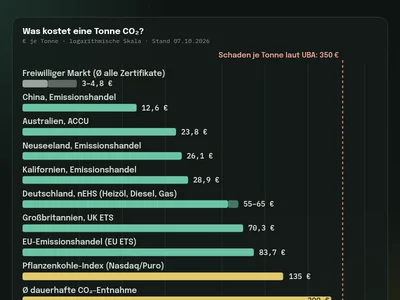
Pflanzenkohle stellt seit 2022 rund 86 % aller gelieferten Zertifikate für dauerhafte CO₂-Entnahme. Zertifikate kosteten 2025 um 150 US-Dollar pro Tonne CO₂.
Die EU hat am 3. Februar 2026 ihre erste Zertifizierungsmethode für Pflanzenkohle als CO₂-Entnahme angenommen (Rahmen: CRCF, VO (EU) 2024/3012).
Pflanzenkohle kann Lachgas aus dem Boden im Feld um etwa 12–38 % senken. Die Wirkung lässt oft nach einem Jahr nach.
Quellen: IPCC AR6 WG III (2022), Kap. 7; Woolf et al. 2010; Lehmann et al. 2021, Nature Geoscience; Global Biochar C-Sink Standard; CDR.fyi 2025/2026; EU-Kommission 03.02.2026; Borchard et al. 2019.
13
Ehrlich eingeordnet
Grenzen und Kritik
KI-Bild
Selbst testen: Kressetest mit und ohne Pflanzenkohle KI-generierte Illustration (Symbolbild)
Terra Preta und Pflanzenkohle sind kein Wundermittel. Wer sie empfiehlt, sollte auch die Grenzen kennen.
Ertrag
Auf guten Böden in Mitteleuropa im Mittel kein Mehrertrag. Bayerische Feldversuche 2013–2017 zeigten keinen systematischen Effekt.
Schadstoffe
Schlecht hergestellte Kohle kann PAK und Dioxine enthalten, belastete Rohstoffe bringen Schwermetalle. Deshalb nur zertifizierte Kohle.
Humusabbau
Frische Kohle kann in Sandböden den Abbau von vorhandenem Humus zunächst beschleunigen.
Biomasse
Wald oder Acker nur für Kohle zu nutzen schadet mehr, als es nützt. Sinnvoll sind Reststoffe.
Energie
Ohne Nutzung der Pyrolysewärme schrumpft der Klimavorteil.
Greenwashing
CO₂-Zertifikate ersetzen keine Emissionsminderung.
Neu · kostenlos · 2 Minuten
Was heißt das für deinen Boden?
Acht kurze Fragen – und du bekommst deinen persönlichen Bodenplan: die drei wichtigsten Hebel für deinen Garten oder Betrieb, einen Jahresplan und ein Mess-Protokoll.
Im Garten wirkt Kohle nur mit Nährstoffen und Leben – nicht als Wundermittel KI-generierte Illustration (Symbolbild)
Um Terra Preta ranken sich viele Geschichten. Die meisten haben einen wahren Kern, sind aber übertrieben.
„Terra Preta wächst von selbst nach, 1 cm pro Jahr.“
Beruht auf Erzählungen von Bauern, es gibt keine Messung. Neue dunkle Erde entsteht nur, wenn laufend Asche, Kohle und Abfälle dazukommen.
Mythos
„Pflanzenkohle ist Terra Preta.“
Kohle ist nur das Gerüst. Es braucht Nährstoffe, Humus, Bodenleben und Zeit.
Mythos
„Pflanzenkohle bringt immer mehr Ertrag.“
In den Tropen ja, in Mitteleuropa im Mittel nicht. Ungeladen kann sie Erträge sogar senken.
Mythos
„Mit EM wird jede Erde zu Terra Preta.“
Es gibt keinen geheimen Mikroben-Code. EM wirkten im Feldversuch nicht über ihre Nährstoffe hinaus.
Mythos
„Die Scherben sind das Geheimnis.“
Keramik zeigt, wo Menschen lebten. Eine Düngewirkung ist nicht belegt.
Mythos
„EBC-zertifiziert heißt: hält 1.000 Jahre.“
Die EBC-Grenze H/C 0,7 ist ein Qualitätskriterium. Genau dort sagen manche Modelle nur noch 10 % nach 100 Jahren voraus.
Mythos
„Grillkohle tut es auch.“
Ungeprüft, oft mit Bindemitteln, mögliche Schadstoffe.
Mythos
„Terra Preta kann man kaufen.“
Echte Terra Preta ist geschütztes archäologisches Erbe. Im Handel gibt es Nachbildungen, die gut sein können.
Mythos
„Sie bedeckt 10 % Amazoniens.“
Kartiert sind 0,1–0,3 %, ein Modell kommt auf 3,2 %.
Mythos
„Terra Preta ist natürlich entstanden.“
2022 von über 50 Forschenden widerlegt.
Mythos
„Terra Preta ist 7.000 Jahre alt.“
Nur ein Einzelfall reicht an 6.500 Jahre heran. Die meisten Böden sind 500–2.500 Jahre alt.
übertrieben
„Die Indigenen haben bewusst Dünger hergestellt.“
Bewusste Bodenpflege ist belegt, ein festes Rezept gab es nicht.
teilweise
„Der Plaggenesch ist die deutsche Terra Preta.“
Beide sind menschengemacht und tief, aber im Plaggenesch spielt Kohle kaum eine Rolle.
teilweise
„Pflanzenkohle rettet das Klima.“
Möglich sind etwa 1,1 Gt CO₂ pro Jahr, die Welt stößt rund 55 Gt aus.
Mythos
15
Quellen
Weiterlesen und Quellen
Bücher
Scheub, U., Pieplow, H., Schmidt, H.-P. (2013): Terra Preta – Die schwarze Revolution aus dem Regenwald. oekom.
Lehmann, J., Joseph, S. (Hg.) (2024): Biochar for Environmental Management. 3. Aufl., Routledge.
Lehmann, J., Kern, D. C., Glaser, B., Woods, W. I. (Hg.) (2003): Amazonian Dark Earths: Origin, Properties, Management. Kluwer.
Glaser, B., Woods, W. I. (Hg.) (2004): Amazonian Dark Earths: Explorations in Space and Time. Springer.
Mann, C. C. (2005): 1491. Knopf. Deutsch: Amerika vor Kolumbus. Rowohlt.
Wichtige Studien
Glaser, B. et al. (2001): The „Terra Preta“ phenomenon. Naturwissenschaften 88: 37–41. doi.org/10.1007/s001140000193
Keiluweit, M. et al. (2010): Dynamic molecular structure of plant biomass-derived black carbon. Environ. Sci. Technol. 44: 1247–1253. doi.org/10.1021/es9031419
Glaser, B., Birk, J. J. (2012): State of the scientific knowledge on Anthropogenic Dark Earths. Geochim. Cosmochim. Acta 82: 39–51. doi.org/10.1016/j.gca.2010.11.029
McMichael, C. H. et al. (2014): Predicting pre-Columbian anthropogenic soils in Amazonia. Proc. R. Soc. B 281: 20132475. doi.org/10.1098/rspb.2013.2475
Kammann, C. et al. (2015): Plant growth improvement mediated by nitrate capture in co-composted biochar. Scientific Reports 5: 11080. doi.org/10.1038/srep11080
Cornelissen, G. et al. (2016): Emissions and char quality of flame-curtain „Kon Tiki“ kilns. PLOS ONE 11: e0154617. doi.org/10.1371/journal.pone.0154617
Solomon, D. et al. (2016): Indigenous African soil enrichment. Front. Ecol. Environ. 14: 71–76. doi.org/10.1002/fee.1226
Jeffery, S. et al. (2017): Biochar boosts tropical but not temperate crop yields. Environ. Res. Lett. 12: 053001. doi.org/10.1088/1748-9326/aa67bd
Ippolito, J. A. et al. (2020): Feedstock choice, pyrolysis temperature and type influence biochar characteristics. Biochar 2: 421–438. doi.org/10.1007/s42773-020-00067-x
Schmidt, H.-P. et al. (2021): Biochar in agriculture – A systematic review of 26 global meta-analyses. GCB Bioenergy 13: 1708–1730. doi.org/10.1111/gcbb.12889
Woolf, D. et al. (2021): Greenhouse gas inventory model for biochar additions to soil. Environ. Sci. Technol. 55: 14795–14805. doi.org/10.1021/acs.est.1c02425
Melo, L. C. A. et al. (2022): Biochar-based fertilizer effects on crop productivity: a meta-analysis. Plant and Soil.
Lombardo, U. et al. (2022): Evidence confirms an anthropic origin of Amazonian Dark Earths. Nature Communications 13: 3444. doi.org/10.1038/s41467-022-31064-2
Schmidt, M. J. et al. (2023): Intentional creation of carbon-rich dark earth soils in the Amazon. Science Advances 9: eadh8499. doi.org/10.1126/sciadv.adh8499
Beerling, D. J. et al. (2024): Enhanced weathering in the US Corn Belt delivers carbon removal with agronomic benefits. PNAS 121: e2319436121. doi.org/10.1073/pnas.2319436121
Sanei, H. et al. (2026): A unified framework for biochar carbon permanence. International Journal of Coal Geology 324: 105075. doi.org/10.1016/j.coal.2026.105075
IPCC (2022): Sixth Assessment Report, Working Group III, Kapitel 7. ipcc.ch/report/ar6/wg3
Charcoal + nutrients + humus + soil life + time = Terra Preta AI-generated illustration (symbolic image)
Terra Preta is black, fertile soil in the middle of the Amazon rainforest. Nature did not make it on its own: people built it up over centuries from charcoal, ash, bones, kitchen waste and excrement. The surrounding soils are poor and red, while Terra Preta stays fertile to this day.
This is the key message of this page: biochar alone is not Terra Preta. Charcoal is the framework. The soil only becomes fertile through nutrients, organic matter, soil life and time.
Agemostly formed between 500 BC and AD 1500; the oldest beginnings go back about 6,500 years.
Areamapped sites cover 0.1–0.3% of Amazonia (about 6,300–18,900 km²). Models suggest up to 3.2% is possible.
Charcoalup to 70 times more charcoal than neighbouring soil, about three times as much carbon across the profile.
Nutrientsphosphorus and calcium above all are strongly raised, in one example 116–291 instead of 5 mg phosphorus per kg.
Durabilitywell-carbonised char stays in the soil for centuries; in Terra Preta it has been there for more than 1,000 years.
Today„Terra Preta“ sold in shops is always a recreation made with biochar, never real Amazonian soil.
How to read the labels: established several independent studies or legal text · disputed estimate, few data or practical experience · myth not supported or disproven. Where figures vary, we give the cautious value.
02
Terms
What is Terra Preta?
AI image
Black Terra Preta next to red tropical soil (Ferralsol) – schematic comparison AI-generated illustration (symbolic image)
The name is Portuguese: terra preta do índio means „black earth of the Indigenous people“. Researchers call it Amazonian Dark Earths (ADE); in Brazil it is also called solos antrópicos, human-made soils.
Settlement core
Terra Preta
Black to very dark brown, full of pottery sherds, bones and stone tools. The living and waste area.
Ring around the settlement
Terra Mulata
Dark greyish brown, hardly any finds. The cultivated gardens and fields around the village.
The Kuikuro, a people on the upper Xingu in Brazil, call the dark earth eegepe. They still make it today. established
Sources: Sombroek et al. 2002; Denevan 2004; Schmidt et al. 2023, Science Advances.
03
History
Origins, age and distribution
AI image
How dark earths are studied: excavation profile with a black layer over red subsoil AI-generated illustration (symbolic image)
Terra Preta occurs as islands across the Amazon basin, mostly on high ground along large rivers, where people lived in the same place for generations. Most of these soils formed between about 500 BC and AD 1500, with a peak around AD 500–1300. established
6,500 yrs ago
First dark earths
Teotônio on the upper Madeira River (Rondônia): the oldest known sequence. A single case.
500 BC – AD 1500
Main phase
Settlements and their black soils grow throughout the Amazon basin. At Osvaldo near Manaus, Terra Preta formed within a century (AD 601–700).
1542
Orellana and Carvajal
First journey down the Amazon. The chronicler describes densely settled banks. Later travellers find them empty and dismiss him as exaggerating.
1879
Herbert H. Smith
Calls the Terra Preta near Santarém „the best on the Amazon“.
1903
Friedrich Katzer
The German geologist analyses the soils and concludes they were once cultivated.
1966
Wim Sombroek
Distinguishes Terra Preta from Terra Mulata. Later a pioneer of „Terra Preta Nova“.
2001
Bruno Glaser and team
Show that charcoal (black carbon) is the key to durability.
2022
More than 50 researchers
Refute the idea that river deposits formed it naturally.
2023
MIT and the Kuikuro
Document that the Kuikuro make dark earth on purpose.
How large is the area?
Estimate
Area
Assessment
Mapped sites (Sombroek et al. 2003)
0.1–0.3% of Amazonia, approx. 6,300–18,900 km²
cautious standard
Computer model (McMichael et al. 2014)
up to approx. 154,000 km², 3.2% of the forest
model
„10% of Amazonia, the size of France“
personal estimate
unsupported
A typical site covers about 20 hectares and is 40–60 cm deep. Along large rivers there are sites of up to about 350 hectares with black earth up to 2 m thick.
A densely populated rainforest
Terra Preta is key evidence that Amazonia before 1492 was not untouched wilderness. Estimates range from 1–2 to 8–10 million people, with 5–6 million often cited. estimate After contact with Europeans, most died of introduced diseases, and the forest grew over the settlements.
Airborne laser scans (LiDAR) confirm the picture: large settlements of the Casarabe culture in Bolivia (AD 500–1400), more than 6,000 platforms in Ecuador’s Upano Valley and thousands of earthworks in south-western Amazonia. A study in Nature from July 2026 estimates 1.25–3 million people there alone around AD 100–300. new, still debated
Protection today
In Brazil, Terra Preta sites with traces of settlement are archaeological sites. Law no. 3,924 of 1961 forbids their commercial exploitation. Even so, Terra Preta is dug up and sold as potting soil. Buying real Terra Preta is therefore legally and ethically questionable.
Sources: Glaser & Birk 2012; Arroyo-Kalin 2014; Watling et al. 2018, PLOS ONE; Neves et al. 2004; McMichael et al. 2014; Lombardo et al. 2022, Nature Communications; Prümers et al. 2022; Rostain et al. 2024; Pärssinen et al. 2026, Nature.
04
Formation
How did Terra Preta form?
For a long time Terra Preta was seen as a by-product: over generations, waste around the houses ended up in the soil. A 2023 study shows that intention played a part too.
Charcoal from hearthsAshBones, fish bonesExcrement, urineKitchen and plant wasteShellsPottery sherds
Pottery sherds are mainly a marker. Any fertilising effect of their own is not proven.
The Kuikuro show how it is done
In 2023, MIT researchers worked with the Kuikuro to document their current practice. The Kuikuro sweep up ash and charcoal from their hearths and spread them on their fields on purpose. They add manioc peels and mulch and burn crop residues. New dark earth forms this way within a few years. established
„When you plant where there is no eegepe, the soil is weak.“Kanu Kuikuro, quoted in Schmidt et al. 2023
Not everyone interviewed agreed: 54% of statements supported intent, 14% contradicted it. The most likely answer: the black cores formed more as a by-product, the garden areas around them more on purpose. interpretation The dark earth of these settlements stores 9–22 kg of carbon per square metre.
Sources: Glaser & Birk 2012, Geochimica et Cosmochimica Acta; Schmidt et al. 2023, Science Advances 9: eadh8499.
05
Science
Why does Terra Preta work?
AI image
Porous char as habitat: fungal threads and water in the pores AI-generated illustration (symbolic image)
Four things work together: very stable carbon, aged charcoal surfaces, large amounts of nutrients and a distinct soil life. The chart shows how strongly Terra Preta differs from neighbouring soil.
Sources: Glaser et al. 2001; Glaser, Lehmann & Zech 2002; Cunha et al. 2009 (example sites: pH 5.1–5.4 instead of 4.4; CEC 17.2–17.5 instead of 9.5 cmolc/kg). Cautious values; „up to 70ד is a maximum.
Important: „up to 70ד applies to charcoal only. Total humus is not 70 times higher; across the profile it is about three times. Nitrogen and potassium are only moderately raised, so Terra Preta is not a nitrogen fertiliser.
1
Charcoal ages
Its surfaces oxidise over the years and form negatively charged groups. These hold calcium, magnesium and potassium instead of letting rain wash them out. established
2
Charcoal lasts
About 97% of well-carbonised char has a mean residence time of more than 500 years. The charcoal in Terra Preta is 1,000–2,000 years old. established
3
Nutrients from waste
Phosphorus and calcium do not come from the charcoal but from bones, fish bones, ash and excrement.
4
Distinct soil life
Far more bacteria and about 25% more bacterial species than the forest soil next to it. Cause or effect is still open. open
Water and leaching
Biochar raises plant-available water by about 15% on average, much more in sandy soils and hardly at all in clay. In longer trials, 26–32% less nitrate is leached. established
Sources: Liang et al. 2006 and 2008; Wang, Xiong & Kuzyakov 2016; Kim et al. 2007; O’Neill et al. 2009; Grossman et al. 2010; Borchard et al. 2019; Schmidt et al. 2021, GCB Bioenergy.
06
Worldwide
Dark earths around the world
AI image
Close to home: plaggen farming created dark, fertile soils in north-west Germany AI-generated illustration (symbolic image)
AI image
Dark earths also exist in West Africa – from ash, charcoal and kitchen waste AI-generated illustration (symbolic image)
Terra Preta is not unique to Amazonia. On several continents people enriched soils with ash, charcoal and waste. But not every dark cultural layer is a Terra Preta.
West Africa
African Dark Earths
Liberia, Ghana, Guinea, Sierra Leone. 200–300% more organic carbon, up to 270 times more phosphorus. 115–692 years old and still tended today, mainly by women.
closest relative
Lower Saxony, Germany
Nordic Dark Earth
Slavic settlement near Brünkendorf in the Wendland, 10th–11th century: about 30 t of charcoal per hectare, four times as much as next door.
best European comparison
Japan, Korea, China
Ash and char as fertiliser
A Japanese manual from 1697 describes fertiliser from ash and excrement, a Chinese one from 1149. Rice-husk char (kuntan) is still common.
practice, not a soil
Canada
Shell middens
On First Nations refuse heaps up to 6,000 years old, red cedars grow taller and healthier.
nutrients, little char
Central Europe
Chernozem
Up to 45% of its carbon is charred, and fire helped form it. But it formed naturally.
not Terra Preta
Central America
Maya
Dark settlement soils exist, but deliberate charcoal enrichment is not proven.
not Terra Preta
Sources: Solomon et al. 2016; Wiedner et al. 2015, Catena; Schmidt et al. 1999; Trant et al. 2016; Graham et al. 2017; Japan Biochar Association.
07
Biochar quality
How to spot good biochar
AI image
Well carbonised (left, black, glossy) versus merely scorched (right, brown, fibrous) AI-generated illustration (symbolic image)
Not all biochar is equal. Its quality depends mainly on two things: the temperature at which it is made and the feedstock. Temperature changes almost every property of the char, most strongly between 200 and 400 °C. established
Temperature
Yield
Carbon
H/C
Internal surface
300 °C
62%
55%
1.42
3 m²/g
400 °C
35%
74%
0.80
29 m²/g
500 °C
28%
82%
0.52
196 m²/g
600 °C
24%
89%
0.40
392 m²/g
700 °C
22%
92%
0.21
347 m²/g
Pine wood series: Keiluweit et al. 2010, Environmental Science & Technology. H/C = hydrogen-to-carbon ratio; lower means more carbonised.
Two things surprise many people: pH rises with temperature, so good wood char usually sits at pH 8–10 and acts like lime. And fresh high-temperature char holds few nutrients at first. Its holding power only develops through ageing and charging in the soil. established
The feedstock sets the minerals
Wood
Straw, husks
Manure, digestate
Sewage sludge
Carbon
70–90%
approx. 60%
approx. 40%
below 25%
Ash
1–10%
approx. 20%
approx. 45%
55–79%
Phosphorus, potassium
little
lots of potassium
lots of phosphorus
lots of phosphorus
Salt
very little
medium
high
–
Heavy metals
low
low
copper, zinc raised
strongly raised
Use
soil, compost, feed
soil, compost
fertiliser with char
excluded as EU fertiliser
Means from about 5,400 studies: Ippolito et al. 2020, Biochar; Singh et al. 2017.
Simple tests at home
Cress test
Two jars: soil with and without char, 1 g of cress seed each. Compare after 3–5 days. If cress germinates worse with char or roots turn brown, the char is contaminated or immature.
useful
Smell
If the char smells of smoke, tar or acid, volatile substances remain. Good char hardly smells.
warning sign
Break and colour
Good char is black throughout and breaks brittle. Brown cores or tough, fibrous wood mean incomplete charring.
rule of thumb
Water test
If water beads off or dry char floats for a long time, it was often made at too low a temperature.
rough
pH strip
Stirred into water 1 : 10: good wood char sits at pH 7.5–10. Below 7 suggests too low a temperature.
rough guide
„Ringing“
A metallic ring shows hardness and a very high temperature, but says nothing about pollutants or soil effect.
overrated
Important: only a laboratory can measure pollutants (PAHs, heavy metals) and the H/C value. No home test replaces an EBC certificate.
The open flame-curtain cone produces surprisingly good char: measurements found 680–750 °C, H/C 0.22–0.28 and PAHs mostly below 6 mg/kg. That is in the range of good certified char. For carbon monoxide the Kon-Tiki does much better than traditional kilns and retorts. established
Source: Cornelissen et al. 2016, PLOS ONE 11: e0154617 (means). Methane: practically zero with dry feedstock (Cornelissen et al. 2023), about 5 kg per tonne of char below 25% moisture, 30–40 kg above (Lotz & Schmidt 2026).
Dry feedstock below 15% moisture, 25% at most. This is the single most important factor against methane and smoke.
Add thin layers once the top layer glows with white ash, about every 5–10 minutes. Too much smothers the flame.
Similar-sized pieces char more evenly.
Quench with water from below. This gives fewer PAHs than smothering with soil, and the steam opens pores.
08
Permanence
How long does biochar last?
AI image
Microscopy can show how durable a char is AI-generated illustration (symbolic image)
For the soil and for the climate, what matters is how long the carbon stays locked away. Registries and buyers of carbon credits work with fixed horizons: 100, 200 or 1,000 years. Two measurement methods compete.
Method 1 · elemental analysis
H/C ratio
A lab measures hydrogen and carbon in the whole sample. Cheap, fast, standardised. But: only one average, and additives such as rock dust can distort it.
Method 2 · microscope
Random reflectance (Rₒ)
From coal geology: under a reflected-light microscope, the light reflected by about 500 individual char particles is measured. More expensive, but every particle counts.
The 2% threshold
From a reflectance of about Rₒ = 2%, biochar behaves like inertinite, the natural charcoal from ancient wildfires that has lain in rock for millions of years. This threshold is reached at about 575–600 °C charring temperature.
Rule of thumb: below about 550 °C, char stays on the edge of the threshold. From about 600 °C it is safely above.
Concrete, peanut butter and jam
Prof. Hamed Sanei (Aarhus University) explains biochar with an image: it consists of concrete (fully charred, durable), peanut butter (poorly charred particles) and jam (reactive carbon on surfaces and in pores). Two chars can have the same H/C value and still differ greatly in durability. H/C cannot see the difference; the microscope can.
Concrete: fully charred, Rₒ above 2%, durablePeanut butter: poorly charred, Rₒ below 2%Jam: reactive fraction on surfaces and in pores
Three models, one cautious value
Three models estimate how much carbon is still in the soil after 100 years. For well-carbonised char (H/C below 0.5) they agree closely. Above that they diverge widely: at H/C 0.7, the EBC limit, one model says 91%, another only 10%.
Woolf et al. 2021Azzi et al. 2024Sanei et al. 2026 (read from slide)Accounting value = lowest value
H/C
Woolf
Azzi
Sanei
Cautious value
0.3
85%
94%
~95%
85%
0.4
79%
94%
~90%
79%
0.5
73%
93%
~81%
73%
0.6
66%
92%
~39%
39%
0.7
60%
91%
~10%
10%
Share of carbon after 100 years. Woolf et al. 2021 and Azzi et al. 2024 by formula; Sanei et al. 2026 (International Journal of Coal Geology 324) read from presentation slides, ±5 points. The Sanei model is new (August 2026) and not yet independently confirmed. new
What does this mean in practice?
Use the lowest of the model values, not the most attractive one.
Make char at 600 °C or more, aiming for H/C below 0.4. Then all models agree.
Well-run Kon-Tikis reach H/C 0.2–0.3. Wet feedstock or quenching too early can push char into the critical 0.5–0.7 range.
For carbon credits from biochar, the EU provides both routes: a 200-year calculation from H/C and soil temperature, and 1,000-year evidence via Rₒ.
Sources: Sanei, IBI webinar „Measuring Biochar Permanence“ (September 2026); Sanei et al. 2024, 2025 and 2026; Petersen et al. 2025; Woolf et al. 2021; Azzi et al. 2024; Cornelissen et al. 2016; Delegated Regulation (EU) 2026/285. Adapted from the SCF dossier „Measuring biochar permanence“ (B. Aumann, tgo AG, 2026).
09
Practice
Making Terra Preta today
AI image
Making biochar yourself: a Kon-Tiki cone with a top-down flame AI-generated illustration (symbolic image)
AI image
Quenching with water stops the charring AI-generated illustration (symbolic image)
AI image
Charging: mix char into compost before it goes into the soil AI-generated illustration (symbolic image)
Real Terra Preta takes centuries. But you can use it as a model to build very good soil. The core idea: biochar is charged with nutrients and soil life, then worked in in small amounts.
Make or buy charcertified, at least 600 °C, never barbecue charcoal
Charge itin compost, with manure or a nutrient solution
Let it maturecompost for 4–12 weeks
Work it ina little, near the roots, every year
Charging: the most important step
Fresh char acts like a dry sponge: it soaks up water and nutrients and can at first take nitrogen away from plants. In one trial, growth fell to 60% with plain char and rose to as much as 305% with char charged in compost. established
Method
How
Time
In compost
add 10–20% char (by volume) to the compost material
whole composting, at least 2 weeks
With mature compost
mix char and compost about 1 : 1, keep moist
at least 14 days
With manure or slurry
mix, keep moist, turn every 3 days
approx. 14 days
With a nutrient solution
soak char in diluted nutrient solution or compost tea
2–14 days
The barn cascade
On farms, char can be used several times before it goes into the soil. Each stage charges it further.
Beddingchar binds moisture and odours
Manuretakes up nitrogen and potassium
Compostsoil life colonises the pores
Soilcharged char, locked away for the long term
Feed char is legally a feed material. However, recent studies have not confirmed performance effects in animals, and it is not permitted in German organic farming. disputed
Recipe for about 100 litres of garden soil
Ingredient
Amount
Purpose
Biochar, moist, 0–10 mm
10–15 L
framework and store
Mature compost
50–60 L
soil life, humus, nutrients
Well-rotted manure or bokashi
10–20 L
nitrogen and phosphorus
or horn shavings
100–200 g
slow nitrogen
Loam, clay powder or bentonite
2–5 kg
water and nutrient store (especially on sand)
Rock dust
1–2 kg
magnesium, calcium, trace elements
Bone meal (only if phosphorus is low)
100–300 g
slow phosphorus
First charge the char with compost or liquid for 2–14 days, then mix everything and compost for 4–12 weeks. Do a cress test before use. The amounts are cautious practical values. practice
How much?
Use
Cautious amount
Farming
0.5–2 t charged char per hectare per year, close to the roots
Garden bed
0.5–2 L charged char per m² per year
Tubs and pots
5–10% charged char in the substrate
Planting hole
about 1 cup (125 ml) per tomato plant
What does it really do?
In the tropics, biochar raises yields by about 25% on average. On fertile soils in Central Europe the average effect is zero. Charged char combined with fertiliser gives about 15% more on average in temperate regions too. established Acidic, sandy and humus-poor soils benefit most. Other benefits: more root growth, less nitrate leaching, better compost and a lasting CO₂ sink.
Common mistakes
Putting fresh, uncharged char straight into the bed.
Too much at once, or char and digestate fermented together. In one field trial this halved the yield.
Forgetting chalky soils: char is alkaline and raises pH.
Using barbecue charcoal, briquettes or treated wood.
Working dry: store and spread char moist, and wear an FFP2 mask when sieving.
With a Kon-Tiki: keep water ready and check the fire with your local authority first.
What does it cost?
Certified biochar costs about €0.35–0.45 per litre in bulk, roughly €1,000 per tonne (2025/2026 prices in Germany). Ready-made Terra Preta soils in bags cost up to €1.20 per litre. Mixing your own is about 5 to 10 times cheaper.
Sources: Schmidt & Taylor 2014; Schmidt 2011 and 2016, Ithaka Journal; Kammann et al. 2015, Scientific Reports; Glaser et al. 2015; Jeffery et al. 2017; Schmidt et al. 2019, PeerJ; LfL Bavaria.
10
What goes in?
Additives: what they really do
AI image
Possible additives: char, compost, rock dust, clay, bone meal, wool, eggshells, pottery shards AI-generated illustration (symbolic image)
Compost, rock dust, clay, microbe mixes: many ingredients are recommended for Terra Preta substrates. Here is what each does, how much makes sense and how well it is supported. Garden amounts are cautious practical values.
The best-supported combination is char plus compost. Whether char works depends above all on charging it first.
Nutrients and soil life
Compost
established
Char’s most important partner: humus, phosphorus, potassium, trace elements and soil life. Prefer quality-assured compost, because of foreign matter.
Amount
3 L/m² per year, heavy feeders up to 6 L; max. 30% in substrate
Vermicompost
established
A meta-analysis found 26% more yield and 57% more root mass on average. With mineral fertiliser the effect is smaller.
Amount
10–20% in substrate, 1–2 L/m²
Manure, digestate
established
Nitrogen, phosphorus, potassium. Char plus digestate gave 30% more maize in a field trial in Lower Saxony. Do not ferment the two together: that halved the yield.
Amount
2–4 kg rotted manure per m²; max. 10–20% in substrate
Horn shavings
established
Slow organic nitrogen (about 13%). Ideal for supplying char substrates with nitrogen. Horn meal works in 5–12 weeks, shavings in 16–24.
Amount
50–150 g/m²; 100–200 g per 100 L
Sheep’s wool
N fertiliser
About 9.5% nitrogen, released slowly. Pellets gave spinach yields equal to commercial fertiliser. Water storage: practical experience.
Amount
50–100 g/m²
Urine
legally tricky
Fast nitrogen, good for charging char. Store for at least a month. In Germany human urine is not approved as a fertiliser; in your own garden it is a grey area.
Amount
1.5 L/m² per season, well diluted, no later than 1 month before harvest
Bokashi
practice
Fermenting without air preserves nutrients. Fresh bokashi is acidic (pH 3.5–4.5) and should mature in soil or compost for two weeks.
Amount
1–3 L/m²
Minerals
Rock dust
practice
Basalt or diabase weathers slowly and releases calcium, magnesium and potassium, like very slow liming. Yield gains are proven on acidic tropical soils. In temperate regions they appeared only at 19–50 t/ha (+9 to +20%), not at garden rates.
Amount
1–2 kg per 100 L; 100–200 g/m² per year
Caution
check nickel and chromium by analysis; wear a dust mask
Clay, bentonite
on sand
Clay raises nutrient-holding capacity and water storage and forms stable crumbs with humus. Proven mainly on sandy soils: up to 12% more field capacity.
Amount
2–5 kg per 100 L; on sand 0.5–2 kg/m² once
Caution
granules rather than powder; no cat litter with additives
Zeolite
in compost
A cage mineral that holds ammonium. In compost, 2.5% zeolite kept 44% more nitrogen. As a slurry additive it has not worked in over 30 years of trials.
Amount
2.5% of compost weight; 1–2 kg per 100 L
Lime, algae lime
established
Raises pH and supplies calcium. Only after a soil test. Biochar already has a liming effect. That algae lime works better than ordinary lime is not proven.
Amount
approx. 150 g/m² every 3 years, after testing
Wood ash
with care
Strongly alkaline like lime and supplies potassium. But it can contain cadmium, chromium and PAHs. Only ash from untreated wood, never filter ash.
Amount
max. 30–50 g/m² per year, only on acidic soils
Bone meal, bone char
slow phosphorus
Calcium phosphate as a slow phosphorus source, as in real Terra Preta. Weaker than mineral fertiliser. Wood char can even cut available phosphorus from bone char by 14–26%.
Amount
50–100 g/m², only if phosphorus is low
Law
animal by-product: not on grassland, work in immediately
Shells, eggshells
lime
Finely ground they act like lime; coarse shells hardly work. Eggshells do not prevent blossom-end rot: the cause is usually water supply.
Amount
50–150 g/m² finely ground, only if lime is needed
Structure
Brick and pottery grit
structure
Porous material with 54–65% pores stores water and aerates. Standard in substrates. That sherds are the „secret“ of Terra Preta is a myth.
Amount
10–30% in substrate, clean, without mortar or plaster
Weak evidence
Effective microorganisms (EM)
not supported
Four-year Swiss field trial: living and killed EM worked the same. The effects came only from the nutrients supplied with them.
Commercial mycorrhiza
mostly ineffective
84% of 28 tested products colonised no roots. In living garden soil the fungi are usually already present.
Compost tea
disputed
Sometimes suppresses disease, but unpredictably. With molasses, germs can grow: not on ready-to-harvest leafy greens.
Wood vinegar
disputed
Acidic condensate from pyrolysis. Well diluted (0.1–0.5%) sometimes growth-promoting, concentrated harmful. Not an approved plant protection product in Germany.
Which combinations are supported?
Combination
Finding
Evidence
Char + compost
growth 139–305% instead of 60% with raw char; +26% in the field
best supported
Char + digestate or fertiliser
+20 to +42% maize on sand (Wendland)
established
Biochar-based fertilisers
+10% yield vs ordinary fertiliser (meta-analysis)
established
Char + rock dust
effects mostly just add up in the field; faster weathering in the lab
disputed
Char + clay
one positive pot trial, no field data from Germany
practice
Char + bone char
wood char cut available phosphorus by 14–26%
caution
Sources: Kammann et al. 2015; Glaser et al. 2015; Melo et al. 2022, Plant and Soil; Blouin et al. 2019; Beerling et al. 2024, PNAS; Skov et al. 2024; Swoboda et al. 2022; Mi et al. 2020; Šubová et al. 2021; Kruse et al. 2022; Zwetsloot et al. 2016; Mayer et al. 2010; Salomon et al. 2022; Koziol et al. 2025; Idbella et al. 2026; Honvault et al. 2024; LWK Lower Saxony; LWG Bavaria; FiBL.
11
Framework
Legal framework
AI image
Cascade use: biochar first in the barn, then onto the field with the manure AI-generated illustration (symbolic image)
Anyone selling biochar or Terra Preta soil, or using it in farming, must follow fertiliser law. This section covers Germany and the EU and is not legal advice. Irish and other readers should check their national rules.
Germany
Fertiliser Ordinance
Only „charcoal“ with at least 80% carbon from chemically untreated wood is permitted, as a base material for growing media or as a carrier for nutrients.
EU
Fertilising Products Regulation
Since 16 July 2022, CE-marked biochar products (category CMC 14) may be sold throughout the EU. Limits apply to PAHs and dioxins, among others; sewage sludge is excluded.
Organic farming
EU organic regulation
Biochar from plant material is allowed as a soil conditioner. Check with your certification body first.
Neighbours
Austria, Switzerland
Austria has allowed biochar for organic farms since 2018. Switzerland has regulated it since 2011 with stricter limits.
Your own char on your own land is not definitively settled in German law. Ask your agricultural chamber. open Animal-based additives such as bone and horn meal fall under their own rules (Regulation (EC) 1069/2009).
Charged char on the field: a long-lasting carbon sink AI-generated illustration (symbolic image)
Plants take CO₂ out of the air. When a plant rots, the CO₂ returns within years. When it becomes biochar, much of the carbon stays in the soil for centuries. That makes biochar one of the few methods that remove CO₂ from the atmosphere for the long term.
How much CO₂ is in one tonne of biochar?
Carbon content of good biochar80%
× 3.67 (how much heavier CO₂ is than pure carbon)2.93 t CO₂
× 0.74 (cautious share still there after 100 years)2.17 t CO₂
− production emissions and safety margin− 0.12 t
Locked away per tonne of biocharapprox. 2 t CO₂
You often read „1 tonne of char = 3.3 tonnes of CO₂“. That is the gross value without deductions. We use the cautious net value. For poorly carbonised char (H/C above 0.5) it is much lower; see „How long does char last?“.
How big is the potential?
The IPCC estimates about 1.1 gigatonnes of CO₂ per year worldwide at under 100 US dollars per tonne (range 0.3–1.8). That is roughly 2% of today’s emissions. An important building block, not a fix for everything. The biggest limit is sustainably available biomass. established
Market and policy
Since 2022, biochar has supplied about 86% of all delivered certificates for durable CO₂ removal. Certificates cost around 150 US dollars per tonne of CO₂ in 2025.
On 3 February 2026 the EU adopted its first certification methodology for biochar carbon removal (framework: CRCF, Regulation (EU) 2024/3012).
Biochar can cut nitrous oxide from soil by about 12–38% in the field, though the effect often fades after a year.
Sources: IPCC AR6 WG III (2022), ch. 7; Woolf et al. 2010; Lehmann et al. 2021, Nature Geoscience; Global Biochar C-Sink Standard; CDR.fyi 2025/2026; European Commission 3 Feb 2026; Borchard et al. 2019.
13
A fair assessment
Limits and criticism
AI image
Test it yourself: cress test with and without biochar AI-generated illustration (symbolic image)
Terra Preta and biochar are not miracle cures. Anyone recommending them should know the limits.
Yield
On good soils in Central Europe, no extra yield on average. Bavarian field trials 2013–2017 showed no systematic effect.
Pollutants
Poorly made char can contain PAHs and dioxins; contaminated feedstocks bring heavy metals. Use certified char only.
Humus loss
In sandy soils, fresh char can at first speed up the breakdown of existing humus.
Biomass
Using forest or farmland just to make char does more harm than good. Residues are the sensible feedstock.
Energy
If pyrolysis heat is not used, the climate benefit shrinks.
Greenwashing
CO₂ certificates do not replace cutting emissions.
New · free · 2 minutes
What does this mean for your soil?
Eight short questions – and you get your personal soil plan: the three most important levers for your garden or farm, a year plan and a measuring log.
In the garden, char only works with nutrients and life – it is no miracle cure AI-generated illustration (symbolic image)
Many stories surround Terra Preta. Most have a true core but are exaggerated.
„Terra Preta regrows by itself, 1 cm a year.“
Based on farmers‘ accounts; there is no measurement. New dark earth only forms when ash, char and waste keep being added.
myth
„Biochar is Terra Preta.“
Char is only the framework. It needs nutrients, humus, soil life and time.
myth
„Biochar always raises yields.“
In the tropics yes; in Central Europe not on average. Uncharged, it can even lower yields.
myth
„With EM any soil becomes Terra Preta.“
There is no secret microbe code. In a field trial, EM did nothing beyond its nutrients.
myth
„The sherds are the secret.“
Pottery shows where people lived. A fertilising effect is not proven.
myth
„EBC-certified means it lasts 1,000 years.“
The EBC limit of H/C 0.7 is a quality criterion. Exactly there, some models predict only 10% after 100 years.
myth
„Barbecue charcoal will do.“
Untested, often with binders, possible pollutants.
myth
„You can buy Terra Preta.“
Real Terra Preta is protected archaeological heritage. Shops sell recreations, which can be good.
myth
„It covers 10% of Amazonia.“
Mapped sites cover 0.1–0.3%; one model arrives at 3.2%.
myth
„Terra Preta formed naturally.“
Refuted in 2022 by more than 50 researchers.
myth
„Terra Preta is 7,000 years old.“
Only one site approaches 6,500 years. Most soils are 500–2,500 years old.
exaggerated
„Indigenous people deliberately made fertiliser.“
Deliberate soil care is documented; there was no fixed recipe.
partly
„Plaggen soil is Germany’s Terra Preta.“
Both are human-made and deep, but char plays almost no role in plaggen soil.
partly
„Biochar will save the climate.“
About 1.1 Gt CO₂ a year is possible; the world emits around 55 Gt.
myth
15
Sources
Further reading and sources
Books
Scheub, U., Pieplow, H., Schmidt, H.-P. (2013): Terra Preta – Die schwarze Revolution aus dem Regenwald. oekom (German).
Lehmann, J., Joseph, S. (eds.) (2024): Biochar for Environmental Management. 3rd ed., Routledge.
Lehmann, J., Kern, D. C., Glaser, B., Woods, W. I. (eds.) (2003): Amazonian Dark Earths: Origin, Properties, Management. Kluwer.
Glaser, B., Woods, W. I. (eds.) (2004): Amazonian Dark Earths: Explorations in Space and Time. Springer.
Mann, C. C. (2005): 1491: New Revelations of the Americas Before Columbus. Knopf.
Key studies
Glaser, B. et al. (2001): The „Terra Preta“ phenomenon. Naturwissenschaften 88: 37–41. doi.org/10.1007/s001140000193
Keiluweit, M. et al. (2010): Dynamic molecular structure of plant biomass-derived black carbon. Environ. Sci. Technol. 44: 1247–1253. doi.org/10.1021/es9031419
Glaser, B., Birk, J. J. (2012): State of the scientific knowledge on Anthropogenic Dark Earths. Geochim. Cosmochim. Acta 82: 39–51. doi.org/10.1016/j.gca.2010.11.029
McMichael, C. H. et al. (2014): Predicting pre-Columbian anthropogenic soils in Amazonia. Proc. R. Soc. B 281: 20132475. doi.org/10.1098/rspb.2013.2475
Kammann, C. et al. (2015): Plant growth improvement mediated by nitrate capture in co-composted biochar. Scientific Reports 5: 11080. doi.org/10.1038/srep11080
Cornelissen, G. et al. (2016): Emissions and char quality of flame-curtain „Kon Tiki“ kilns. PLOS ONE 11: e0154617. doi.org/10.1371/journal.pone.0154617
Solomon, D. et al. (2016): Indigenous African soil enrichment. Front. Ecol. Environ. 14: 71–76. doi.org/10.1002/fee.1226
Jeffery, S. et al. (2017): Biochar boosts tropical but not temperate crop yields. Environ. Res. Lett. 12: 053001. doi.org/10.1088/1748-9326/aa67bd
Ippolito, J. A. et al. (2020): Feedstock choice, pyrolysis temperature and type influence biochar characteristics. Biochar 2: 421–438. doi.org/10.1007/s42773-020-00067-x
Schmidt, H.-P. et al. (2021): Biochar in agriculture – A systematic review of 26 global meta-analyses. GCB Bioenergy 13: 1708–1730. doi.org/10.1111/gcbb.12889
Woolf, D. et al. (2021): Greenhouse gas inventory model for biochar additions to soil. Environ. Sci. Technol. 55: 14795–14805. doi.org/10.1021/acs.est.1c02425
Melo, L. C. A. et al. (2022): Biochar-based fertilizer effects on crop productivity: a meta-analysis. Plant and Soil.
Lombardo, U. et al. (2022): Evidence confirms an anthropic origin of Amazonian Dark Earths. Nature Communications 13: 3444. doi.org/10.1038/s41467-022-31064-2
Schmidt, M. J. et al. (2023): Intentional creation of carbon-rich dark earth soils in the Amazon. Science Advances 9: eadh8499. doi.org/10.1126/sciadv.adh8499
Beerling, D. J. et al. (2024): Enhanced weathering in the US Corn Belt delivers carbon removal with agronomic benefits. PNAS 121: e2319436121. doi.org/10.1073/pnas.2319436121
Sanei, H. et al. (2026): A unified framework for biochar carbon permanence. International Journal of Coal Geology 324: 105075. doi.org/10.1016/j.coal.2026.105075
IPCC (2022): Sixth Assessment Report, Working Group III, chapter 7. ipcc.ch/report/ar6/wg3
Gartenbaumeister mit Biotech-Hintergrund, Landwirt auf The Good Ones Farm bei Garrel in Südoldenburg und Fachmann für Bodenbiologie, Pflanzenkohle und CO₂-Zertifizierung. Also mitten im Land des Plaggeneschs.
Diese Seite fasst den Stand der Forschung zusammen, so neutral und vorsichtig wie möglich. Fehler gefunden oder eine neue Studie? Schreiben Sie mir über die Humusguru-Kanäle.
Weiterlesen
Der Humusguru – Warum unsere Zukunft im Boden liegt. Das Buch über Humus, Bodenleben und unsere Ernährung. Im Buchhandel, bei Amazon und auf der Farm.
Workshops zur Pflanzenkohle-Herstellung mit dem Kon-Tiki
Vorträge zu Humus, Pflanzenkohle und CO₂-Senken
Termine auf Instagram, TikTok, LinkedIn und Facebook unter Humusguru.
Master horticulturist with a biotech background, farmer at The Good Ones Farm near Garrel in north-west Germany, and specialist in soil biology, biochar and carbon certification. His farm sits right in plaggen soil country.
This page sums up the state of research as neutrally and cautiously as possible. Found a mistake or a new study? Get in touch via the Humusguru channels.
Read more
The Humus Guru – Why Our Future Lies in the Soil. The book about humus, soil life and our food. Available in bookshops and at the farm.
Workshops on making biochar with a Kon-Tiki kiln
Talks on humus, biochar and carbon sinks
Dates on Instagram, TikTok, LinkedIn and Facebook under Humusguru.
Hinweis zu Bildern: Die Fotos auf dieser Seite sind mit KI erzeugte Illustrationen (Symbolbilder, gekennzeichnet mit „KI-Bild“). Sie zeigen keine realen Personen, Orte, Funde oder Messergebnisse. Diagramme und Grafiken sind eigene Darstellungen auf Basis der genannten Quellen.
About the images: The photos on this page are AI-generated illustrations (symbolic images, marked “AI image”). They do not show real people, places, finds or measurements. Charts and graphics are our own, based on the sources listed.
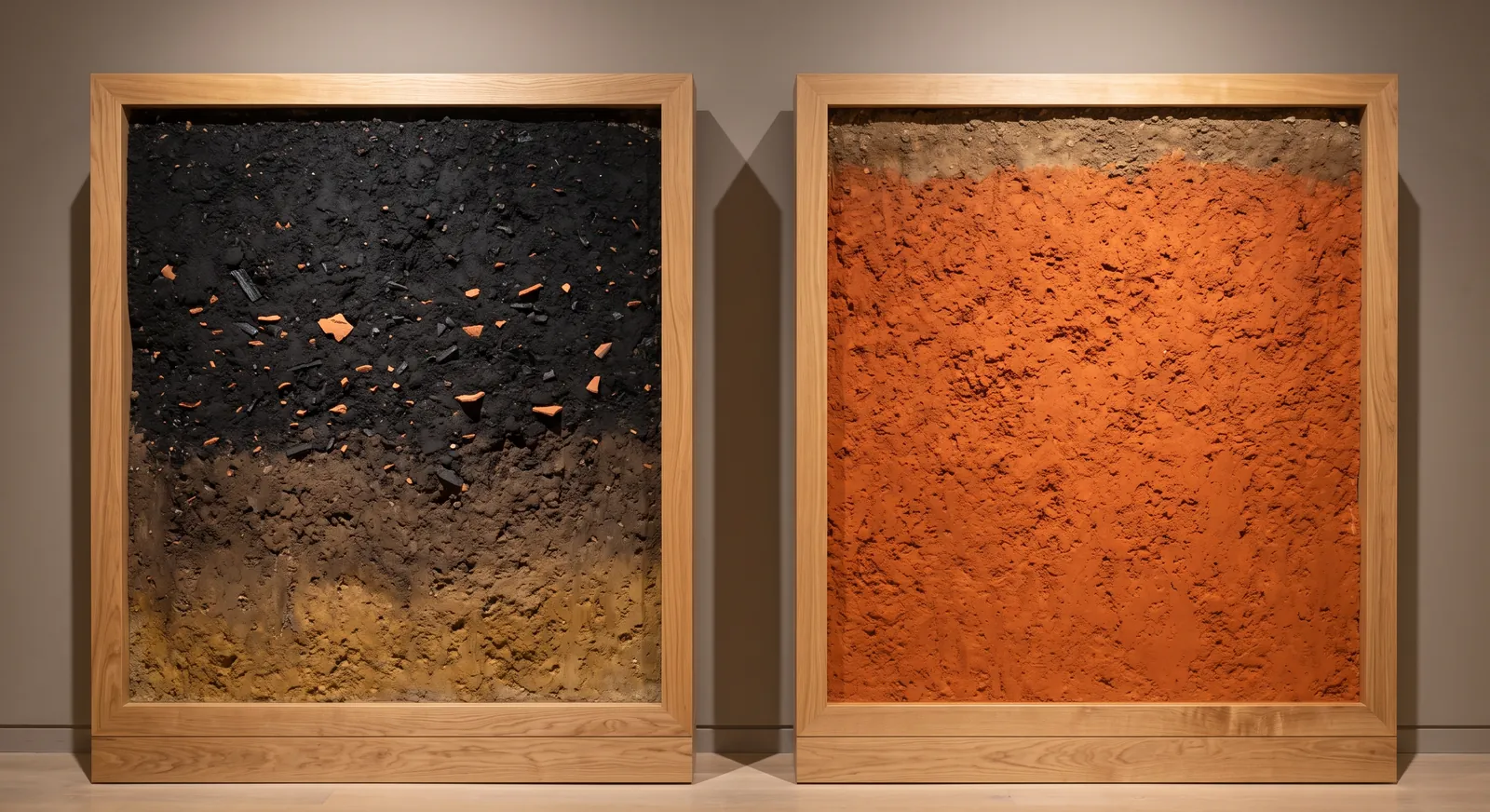
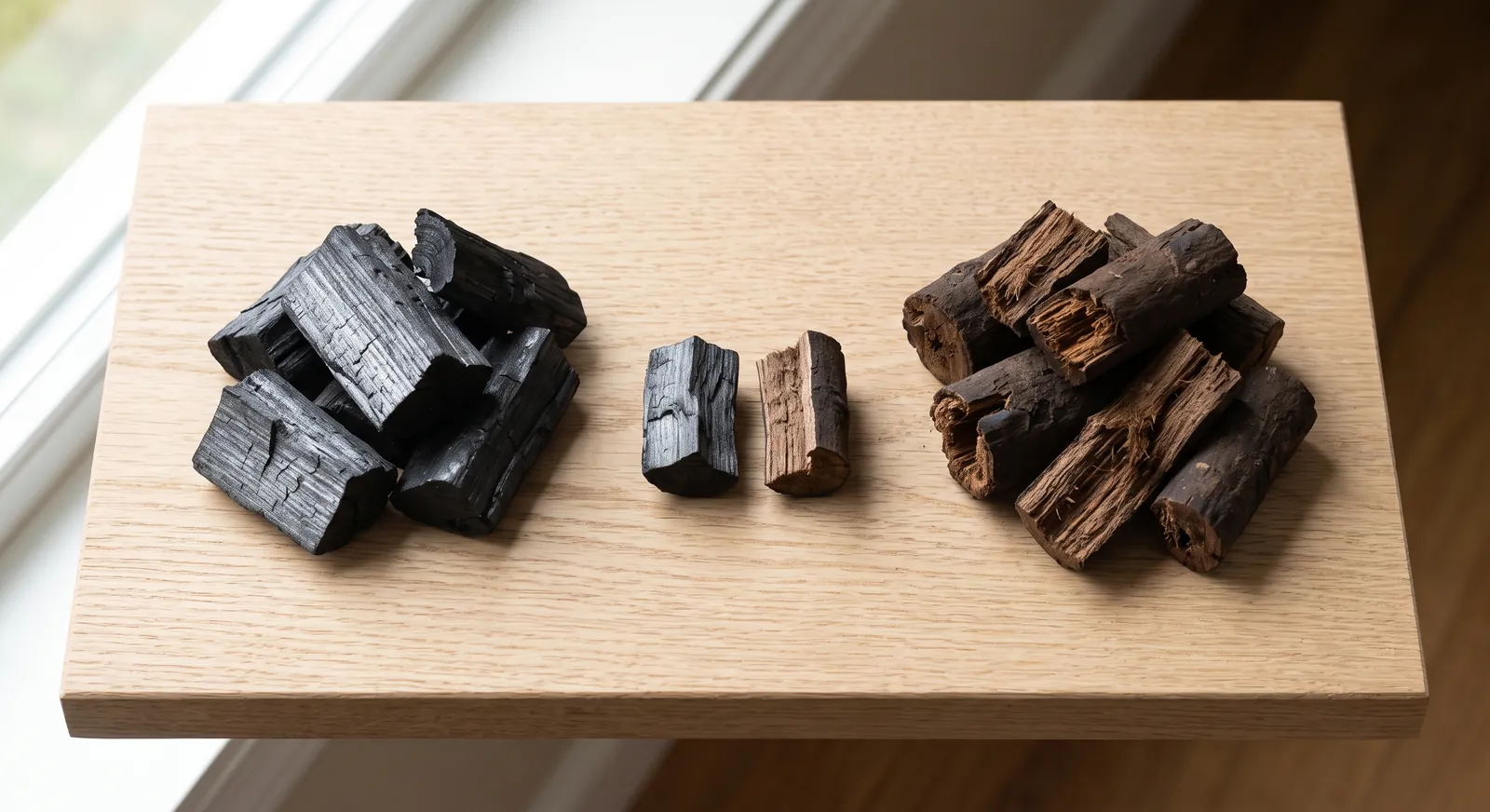 KI-BildAI image
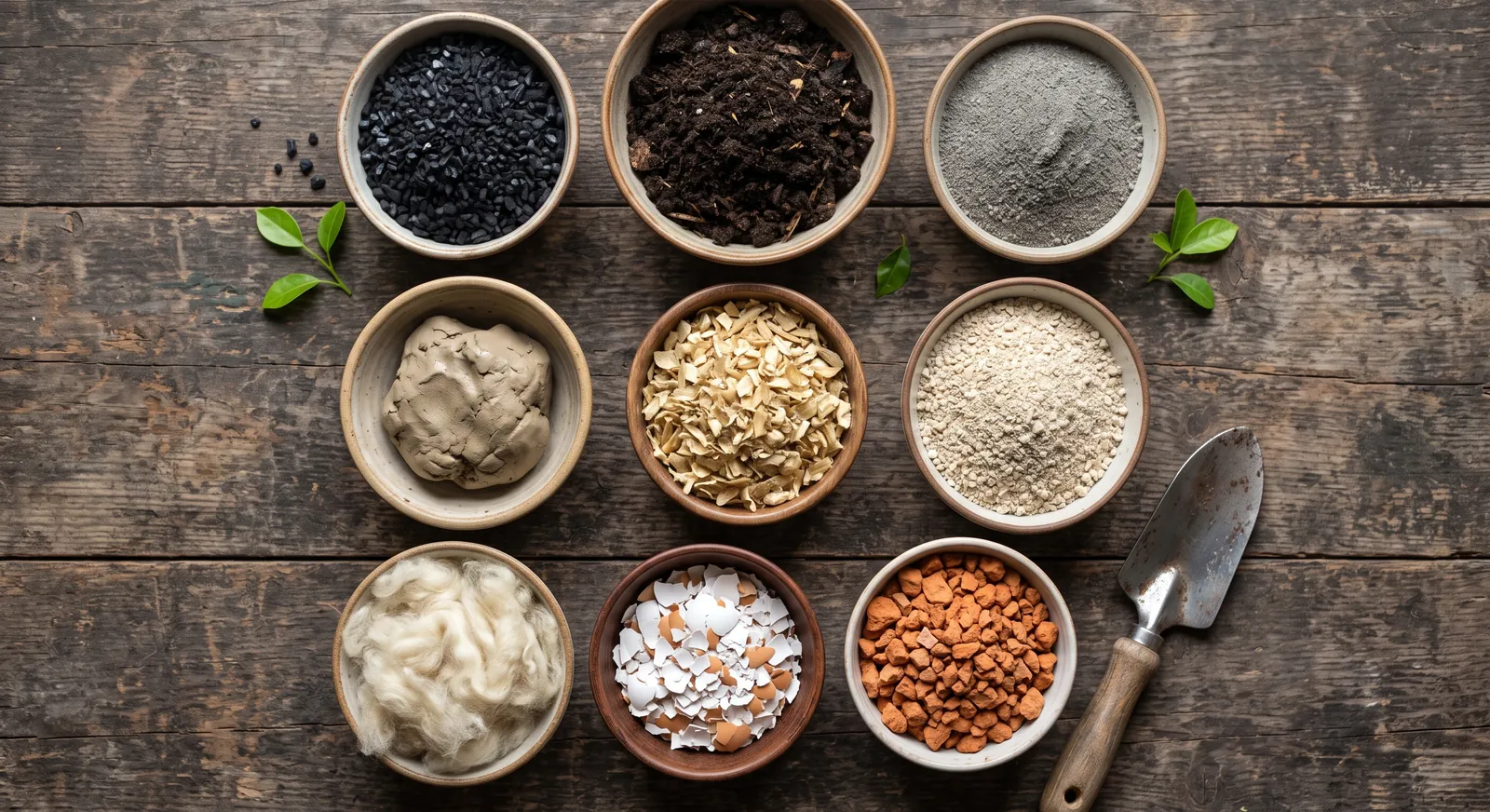
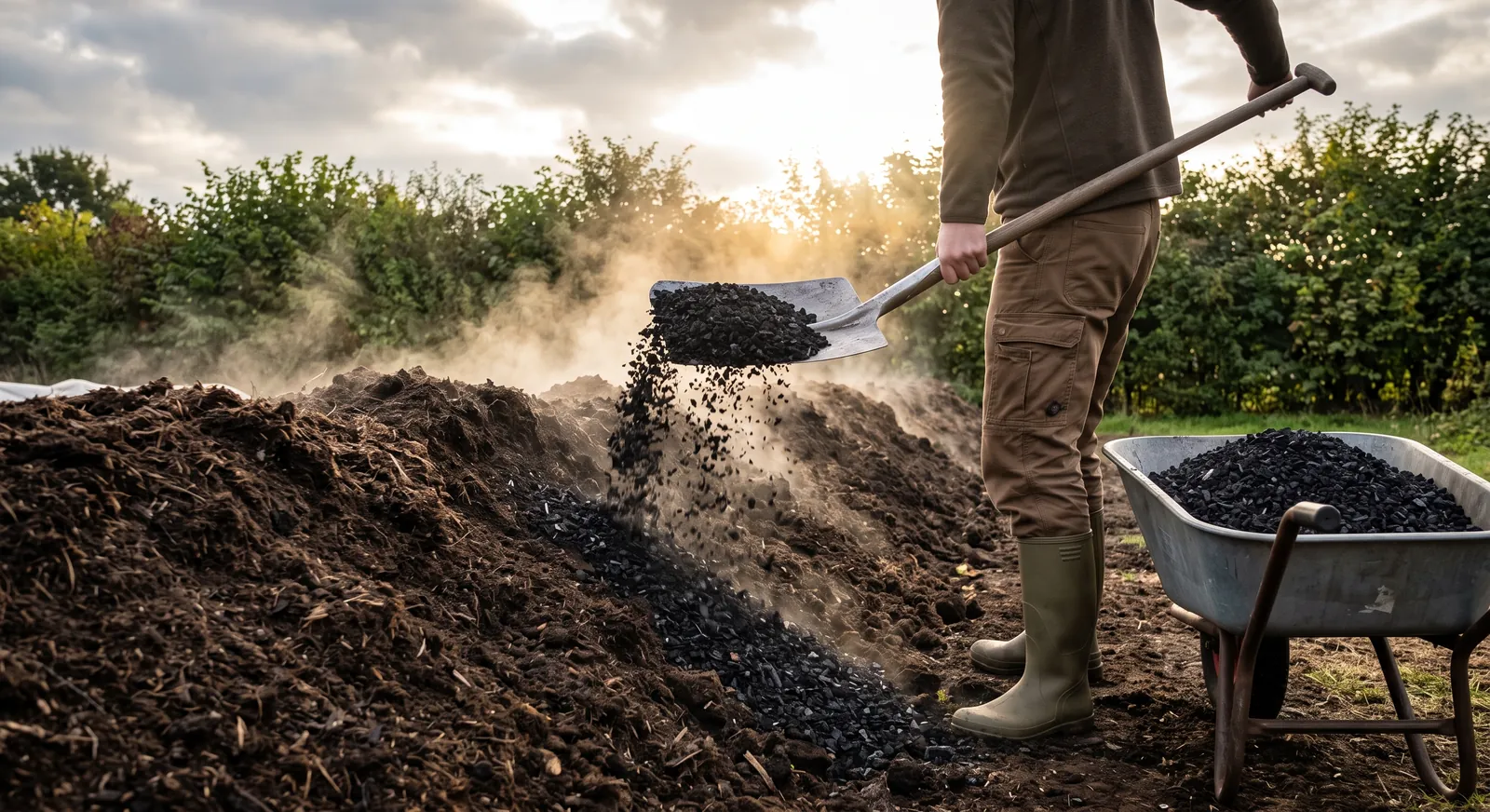
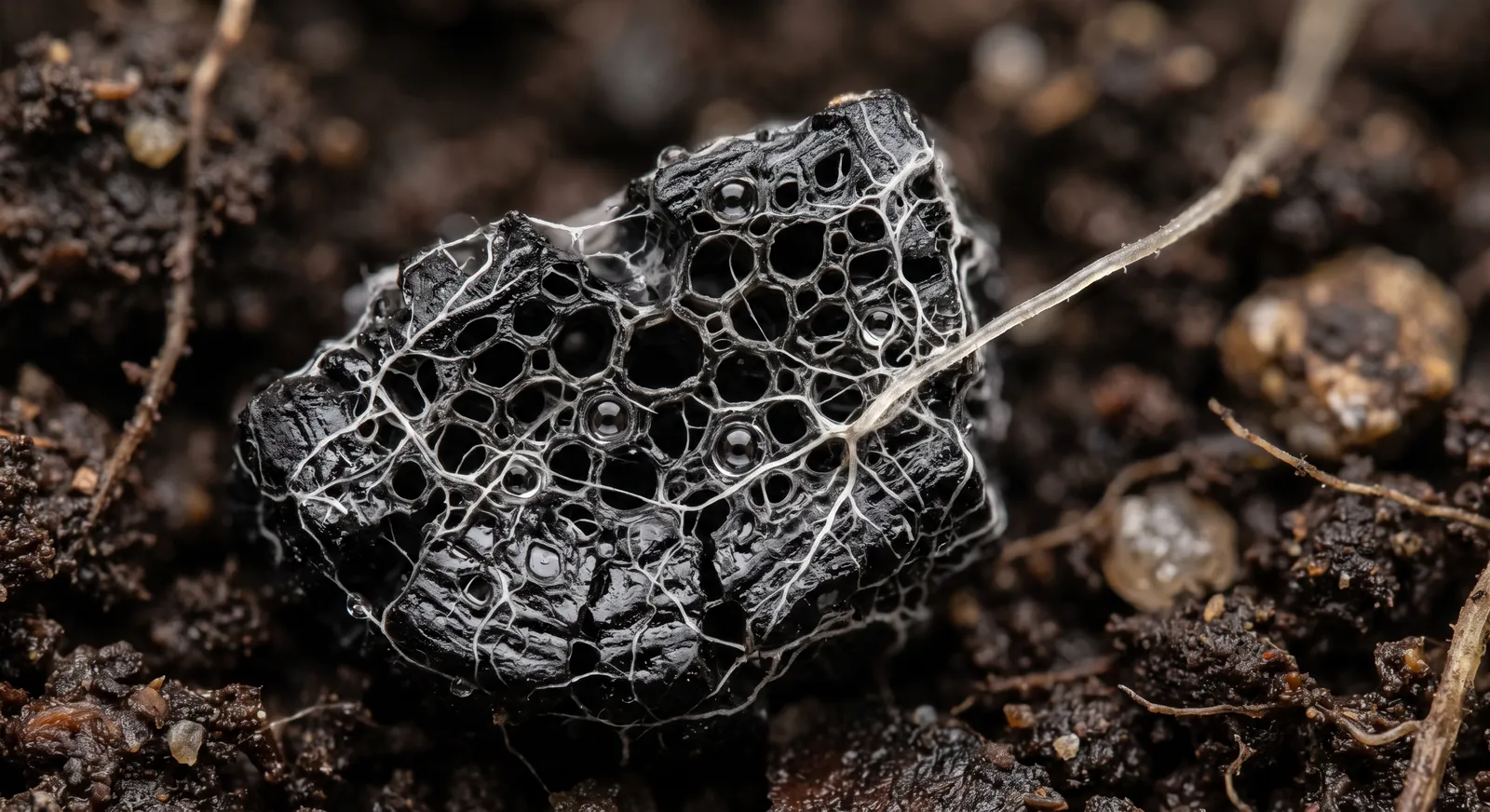
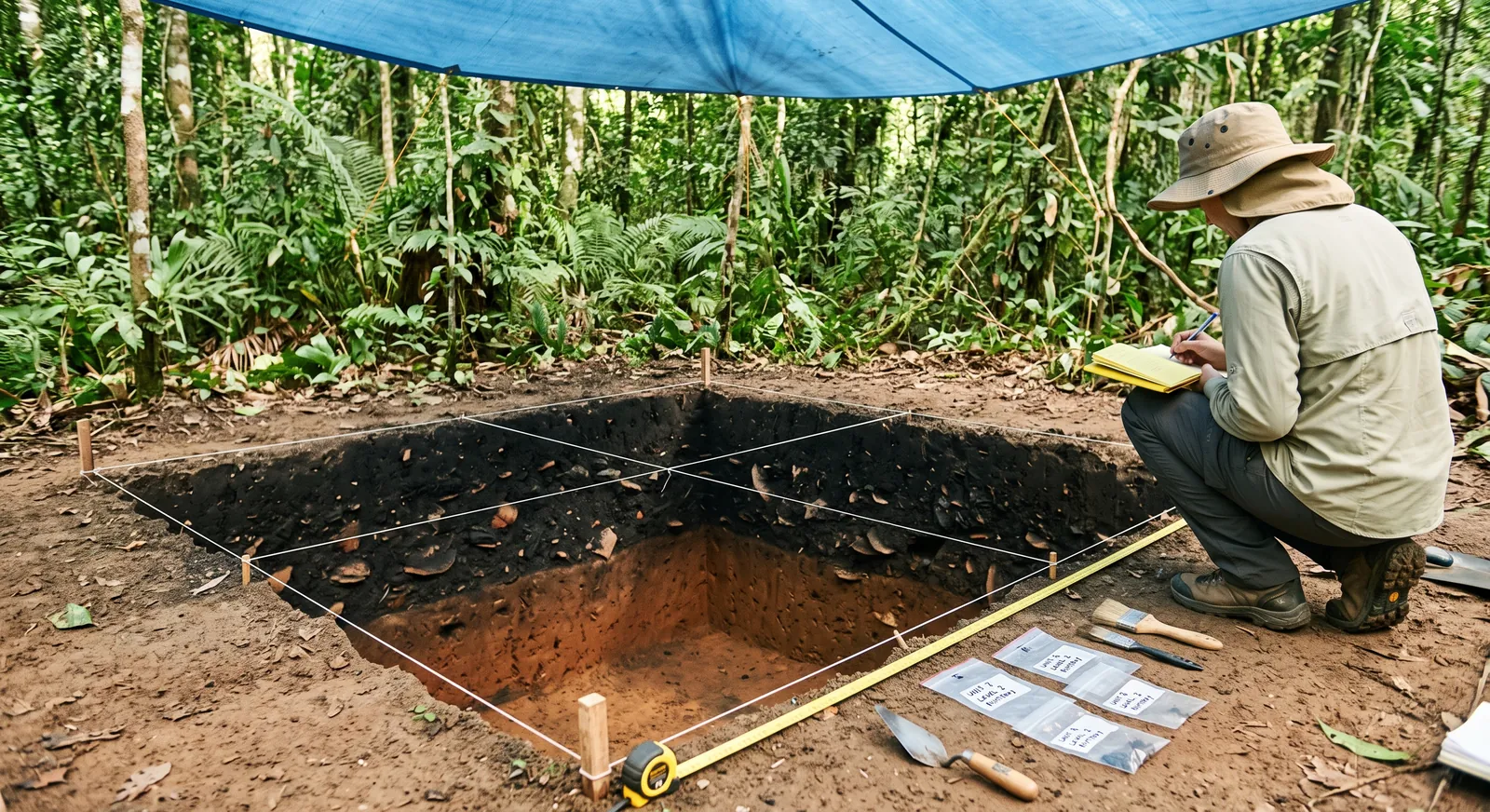
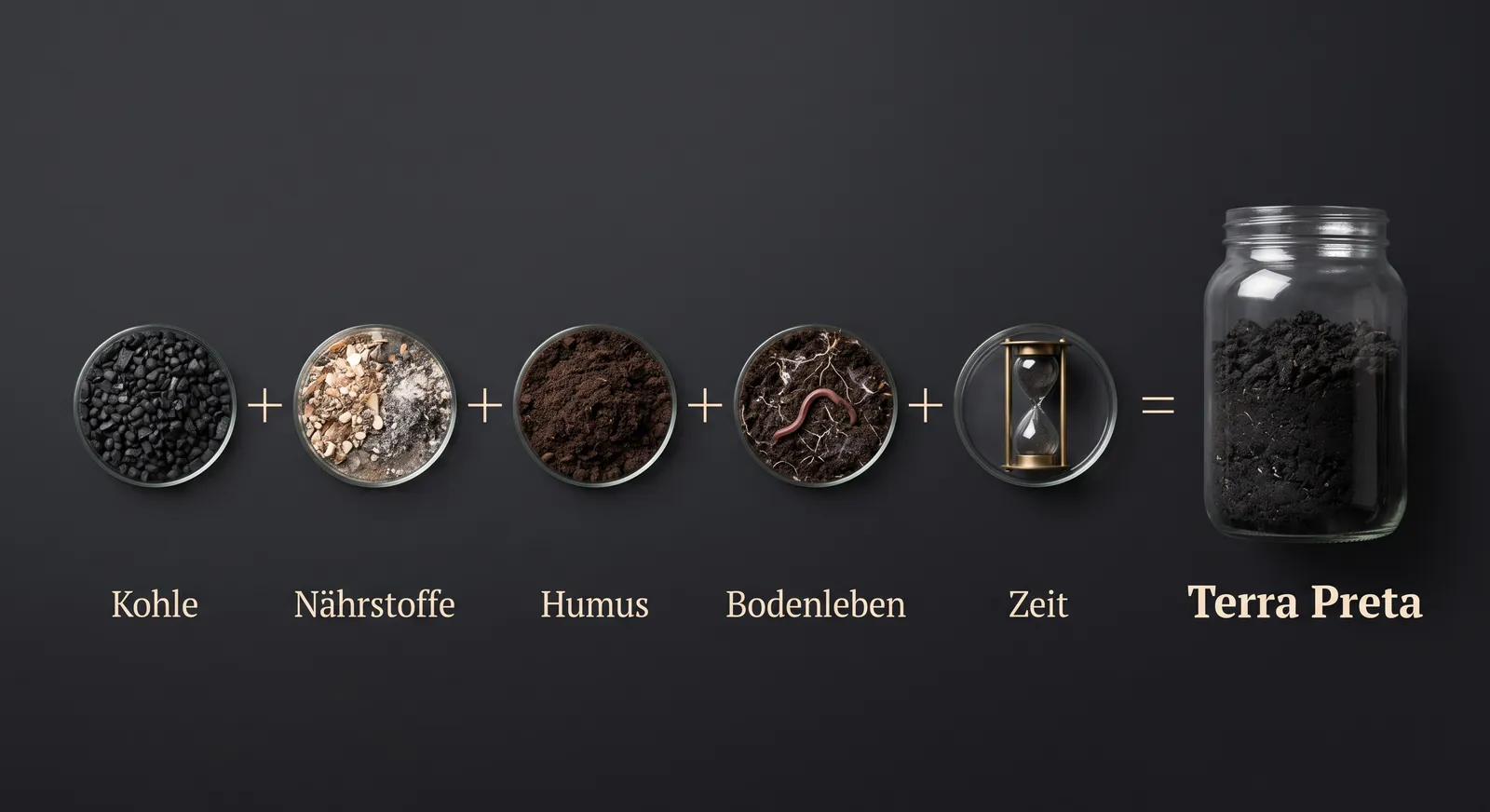
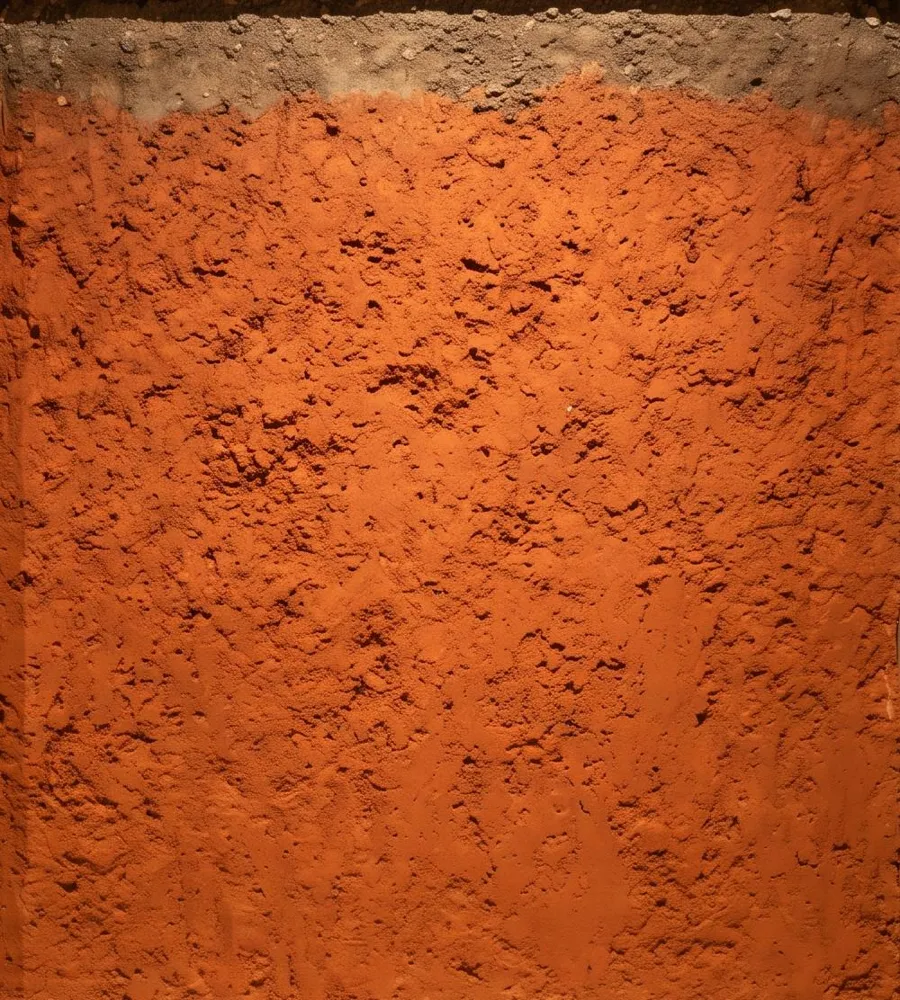
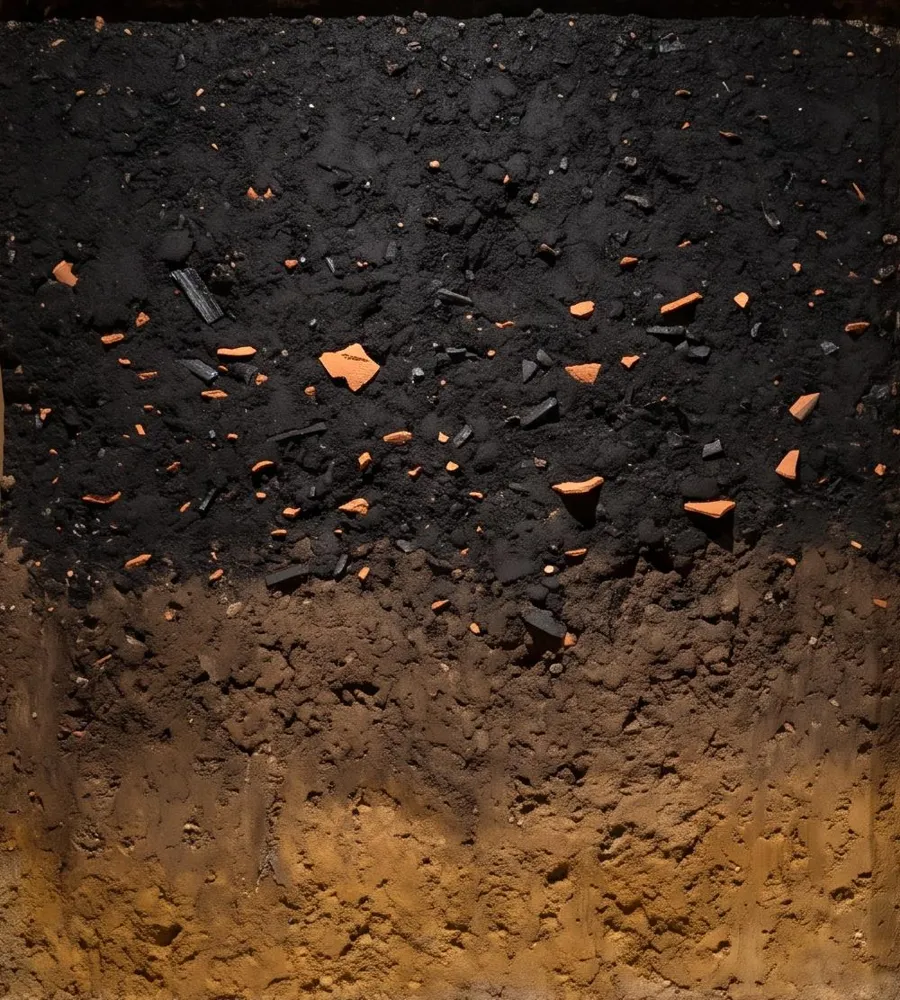
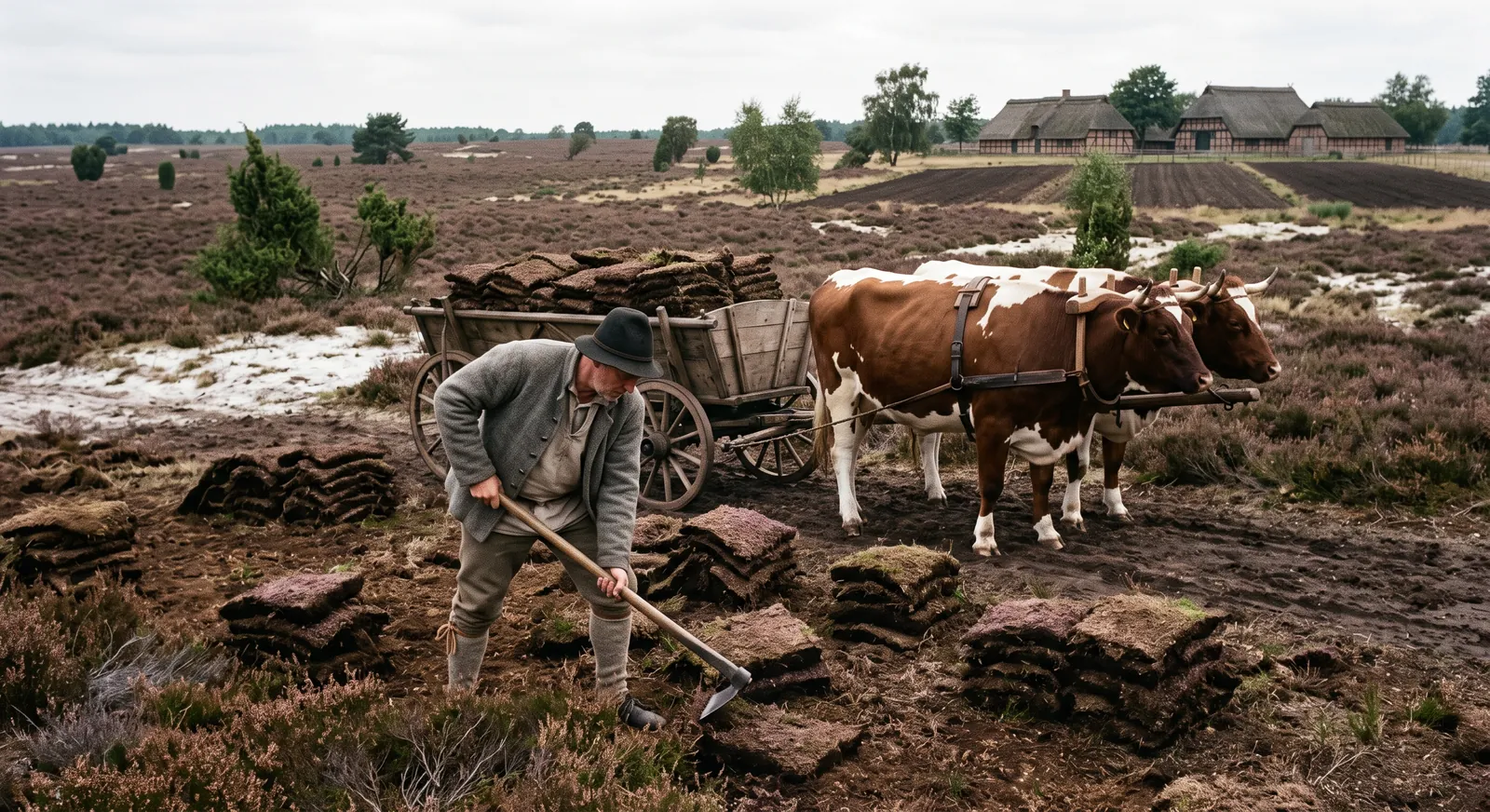
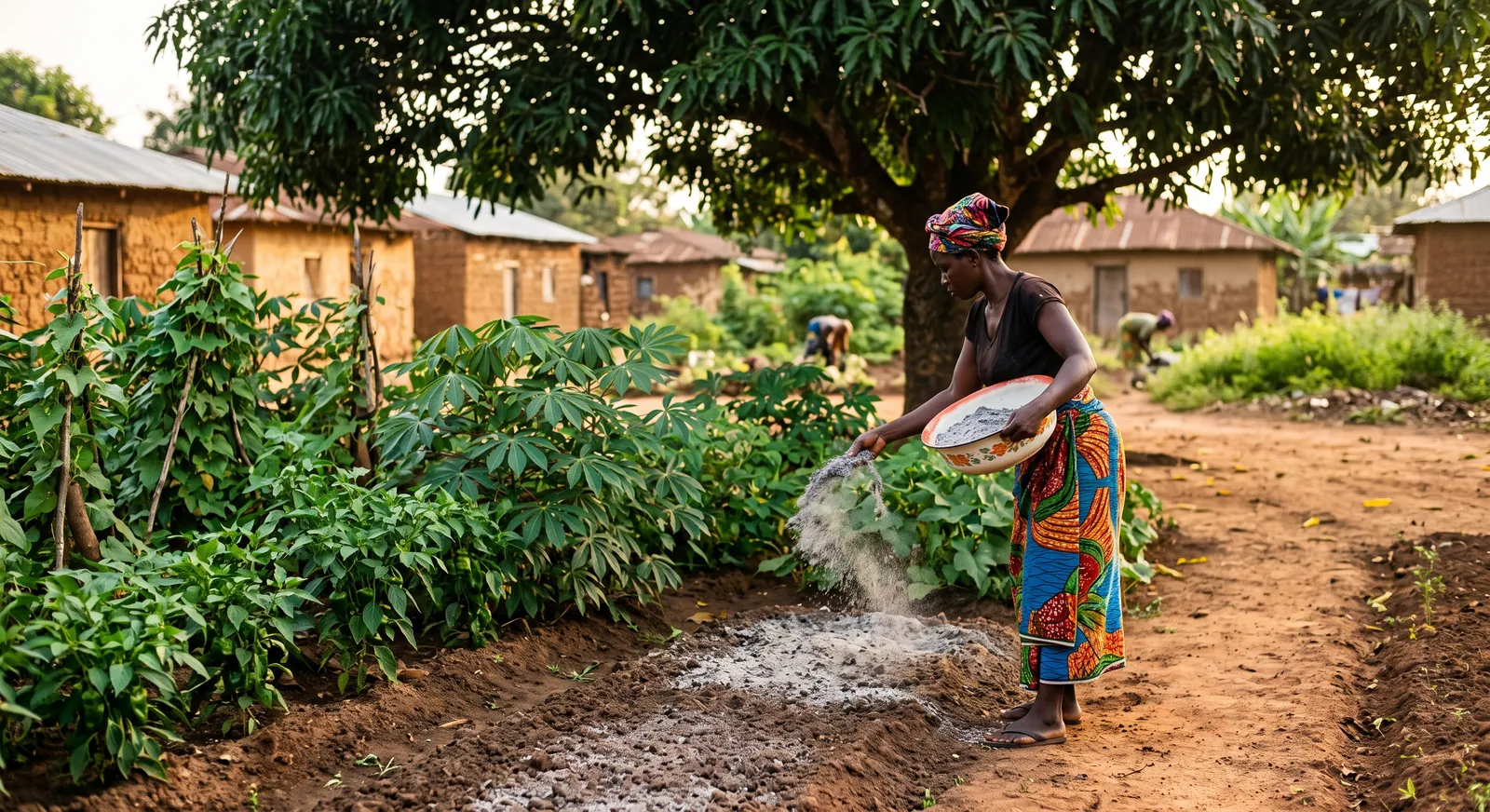
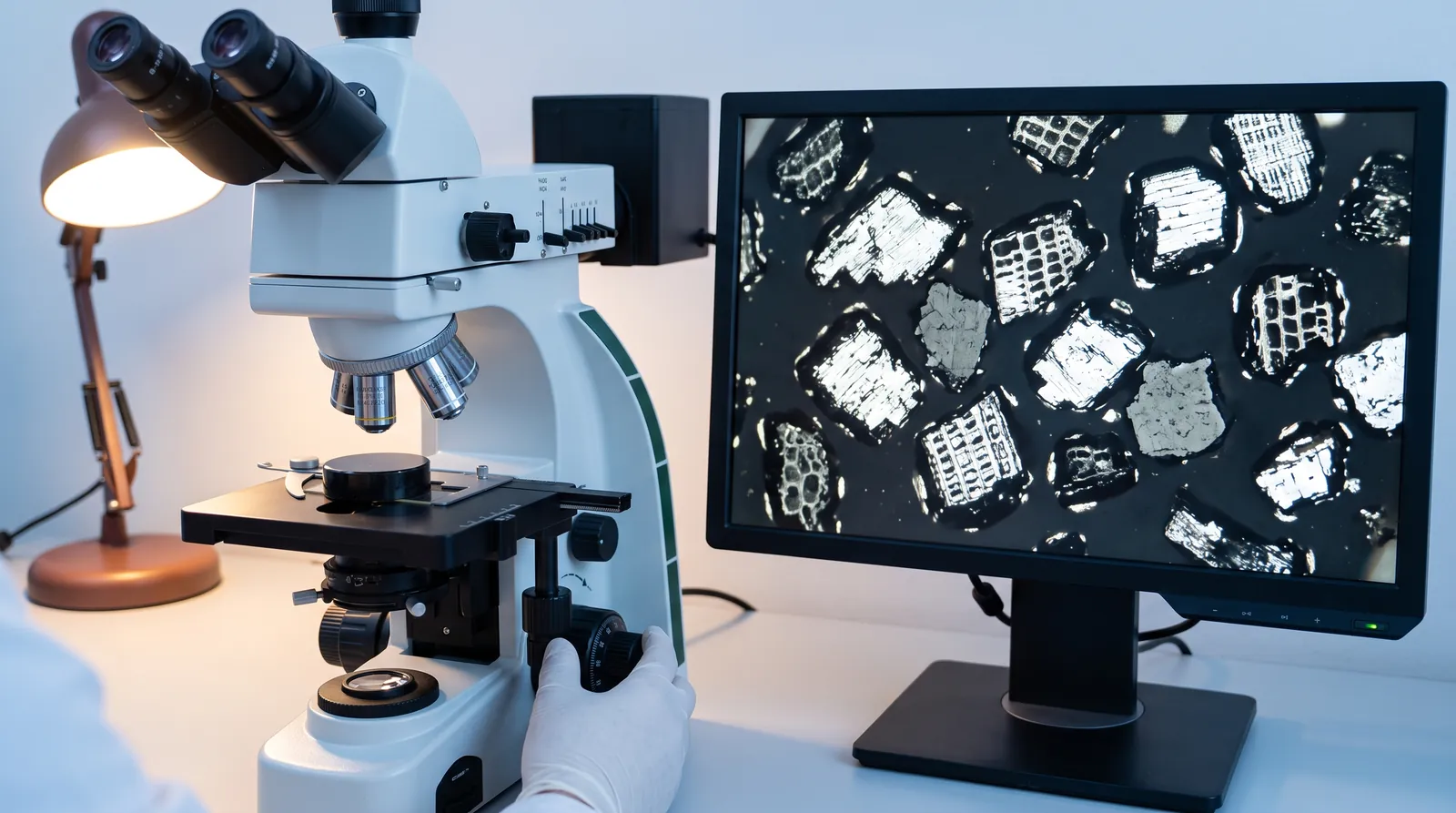
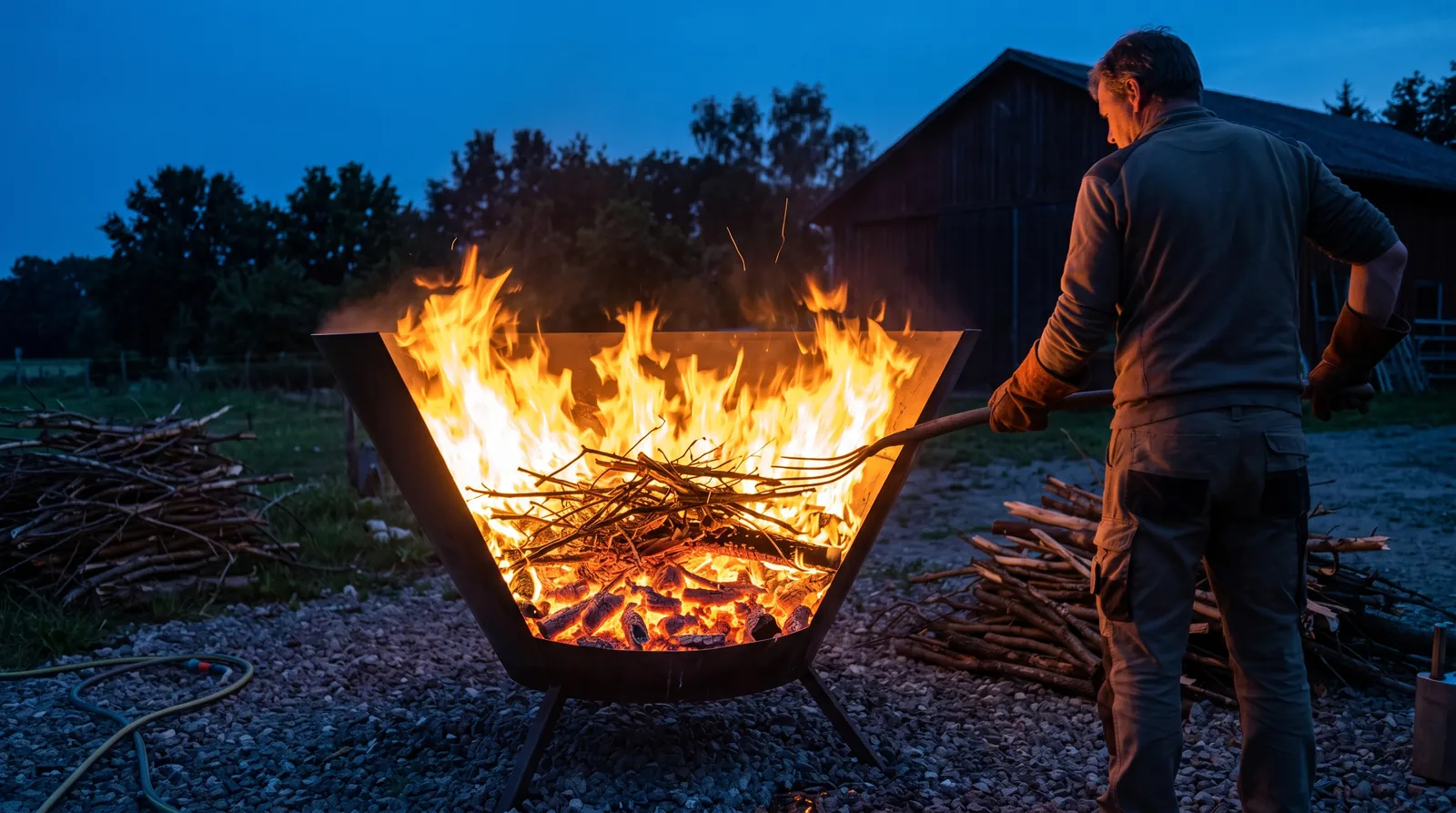
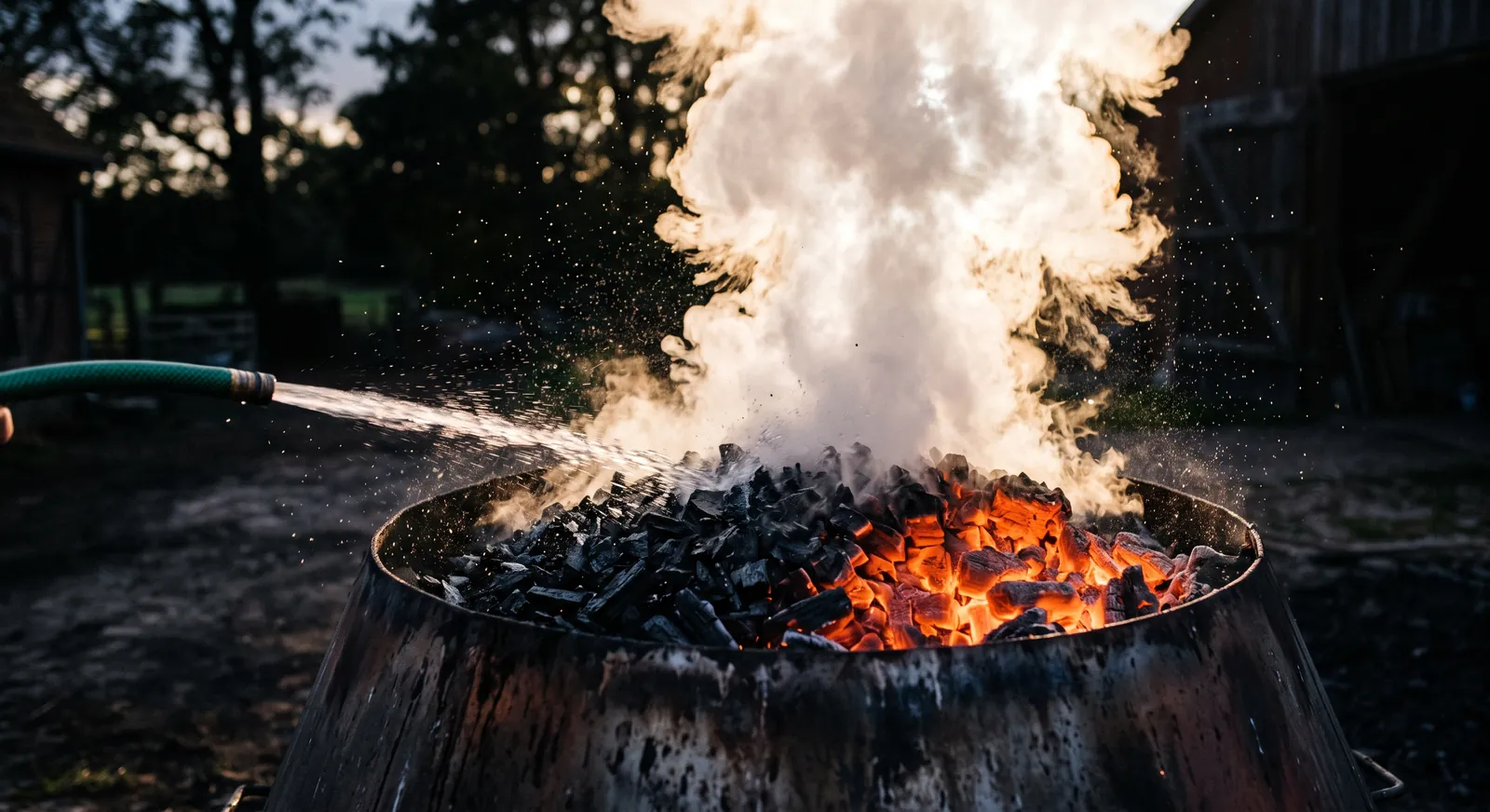
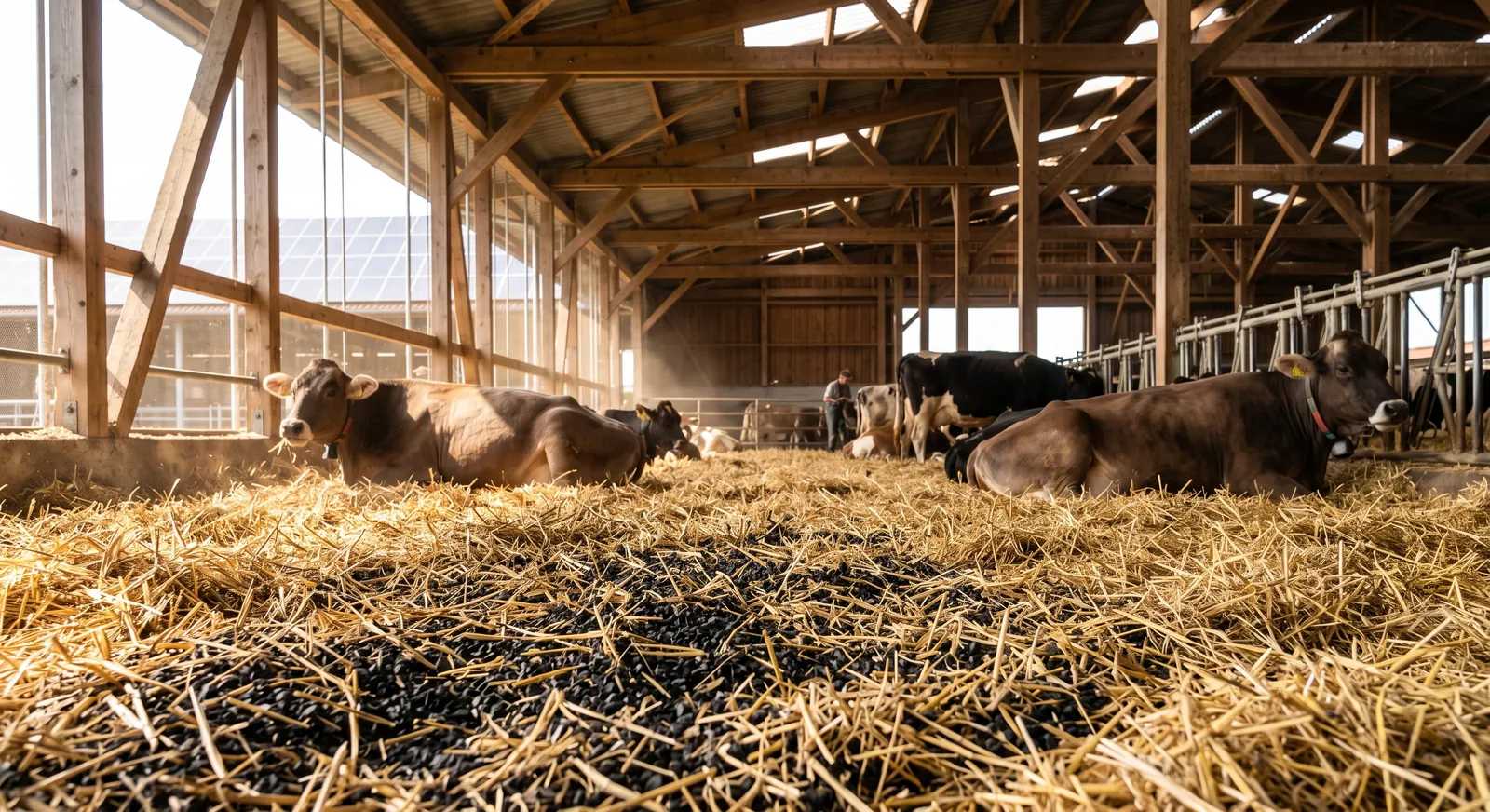
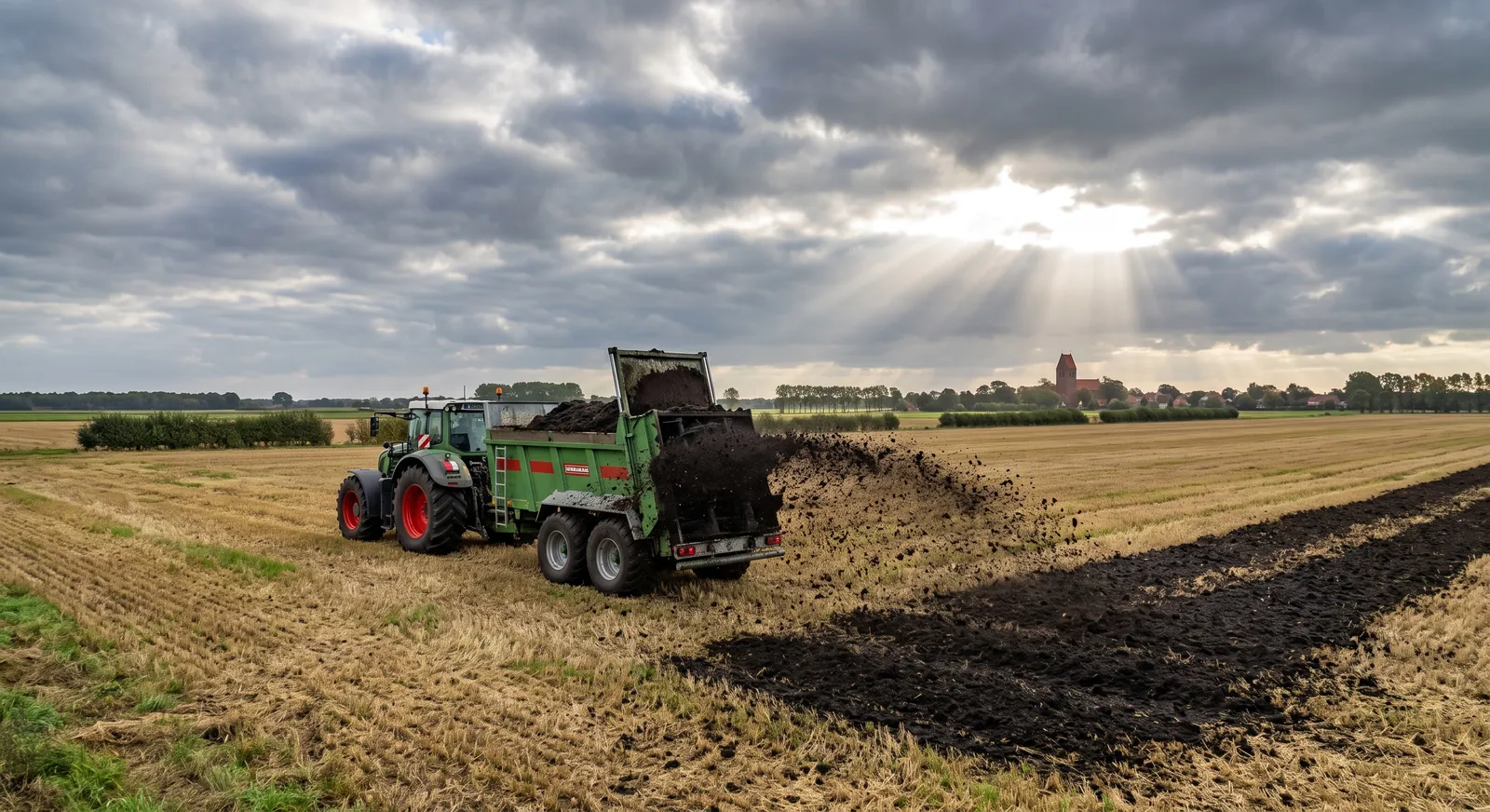
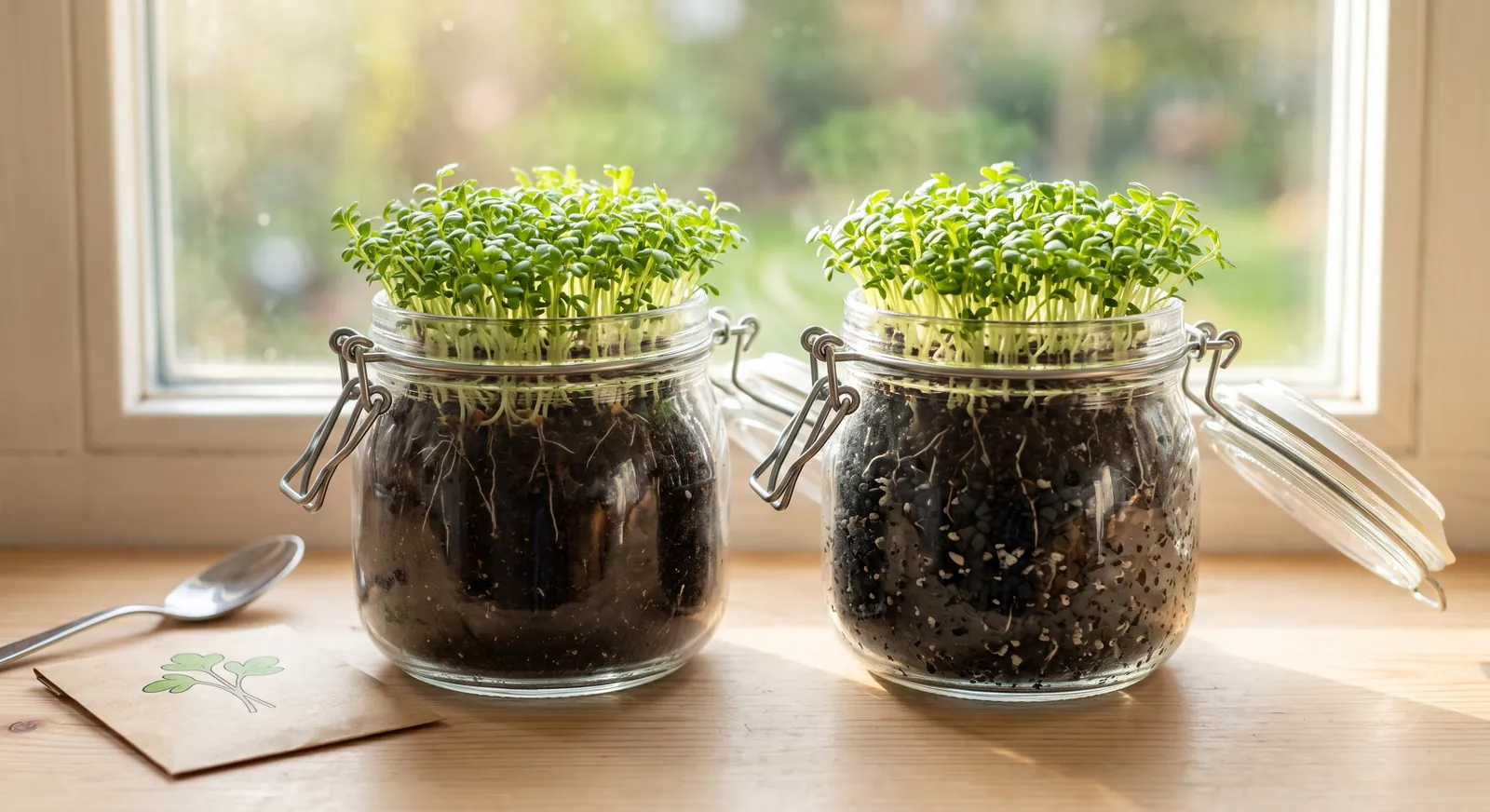
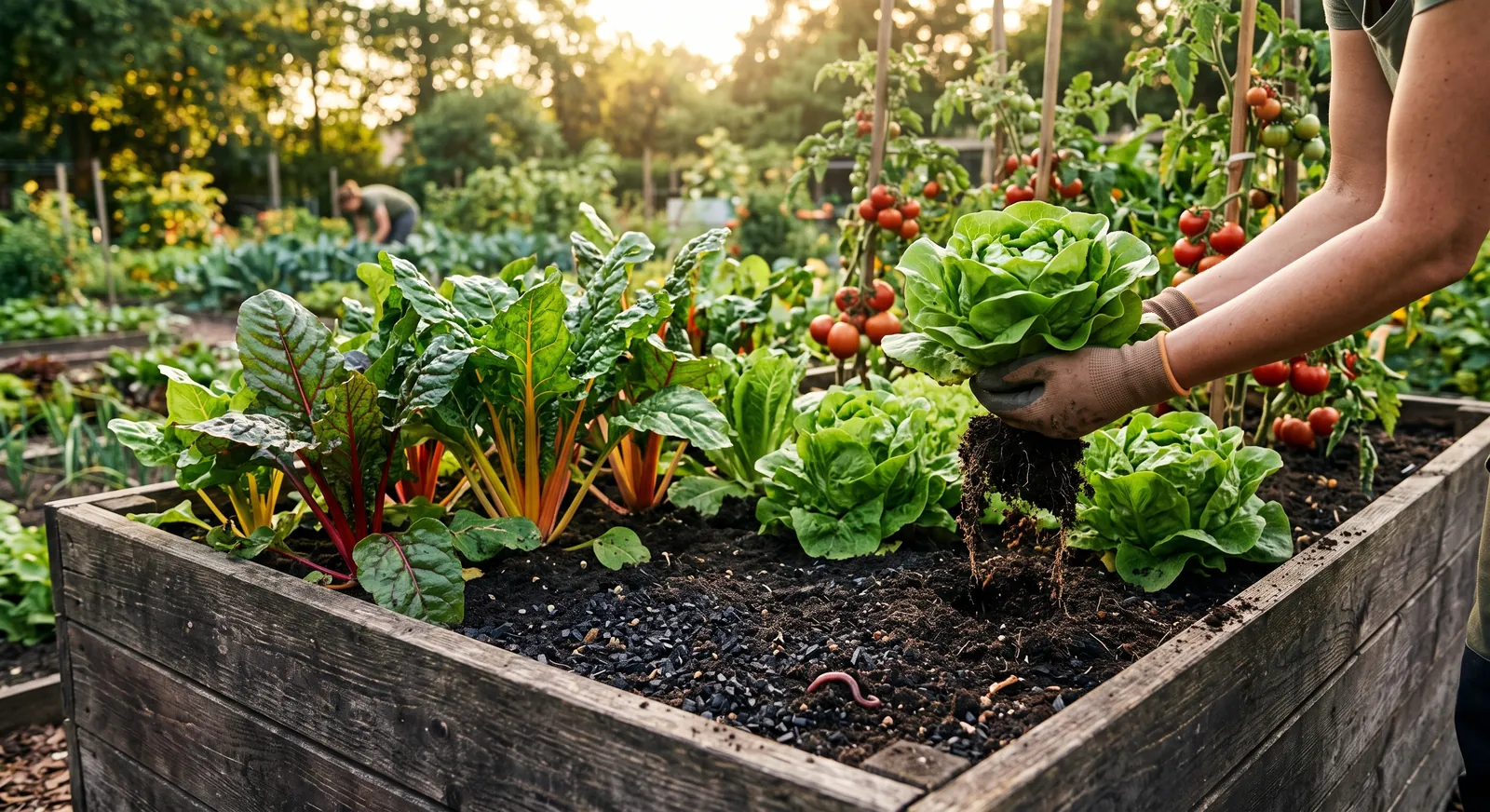
 NEU