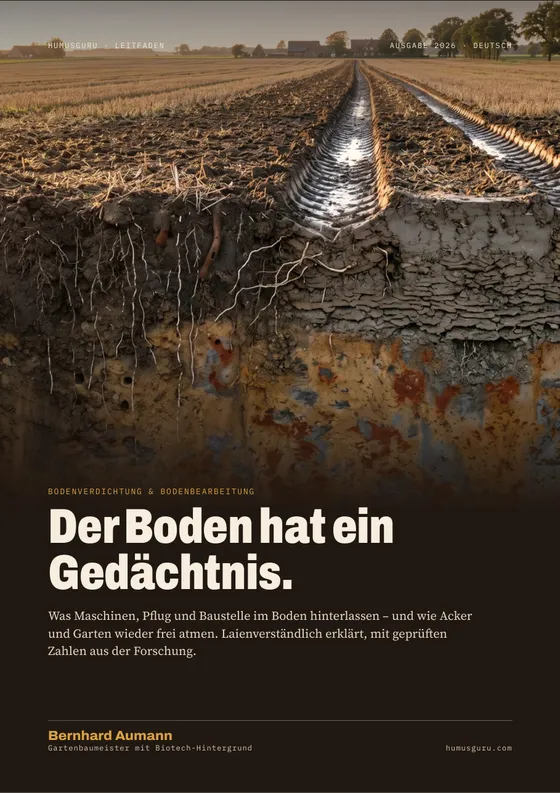
Aus Stein wird Boden.Stone becomes soil.
Jeder fruchtbare Boden hat als Gestein angefangen. Gesteinsmehle, Zeolith und Tonminerale können diesen Prozess gezielt unterstützen, wenn das richtige Material auf den richtigen Boden kommt. Hier steht, was belegt ist, was nicht, und wie viel Sie wirklich brauchen.Every fertile soil started out as rock. Rock dusts, zeolite and clay minerals can support this process, provided the right material goes onto the right soil. This page shows what the evidence supports, what it does not, and how much you actually need.
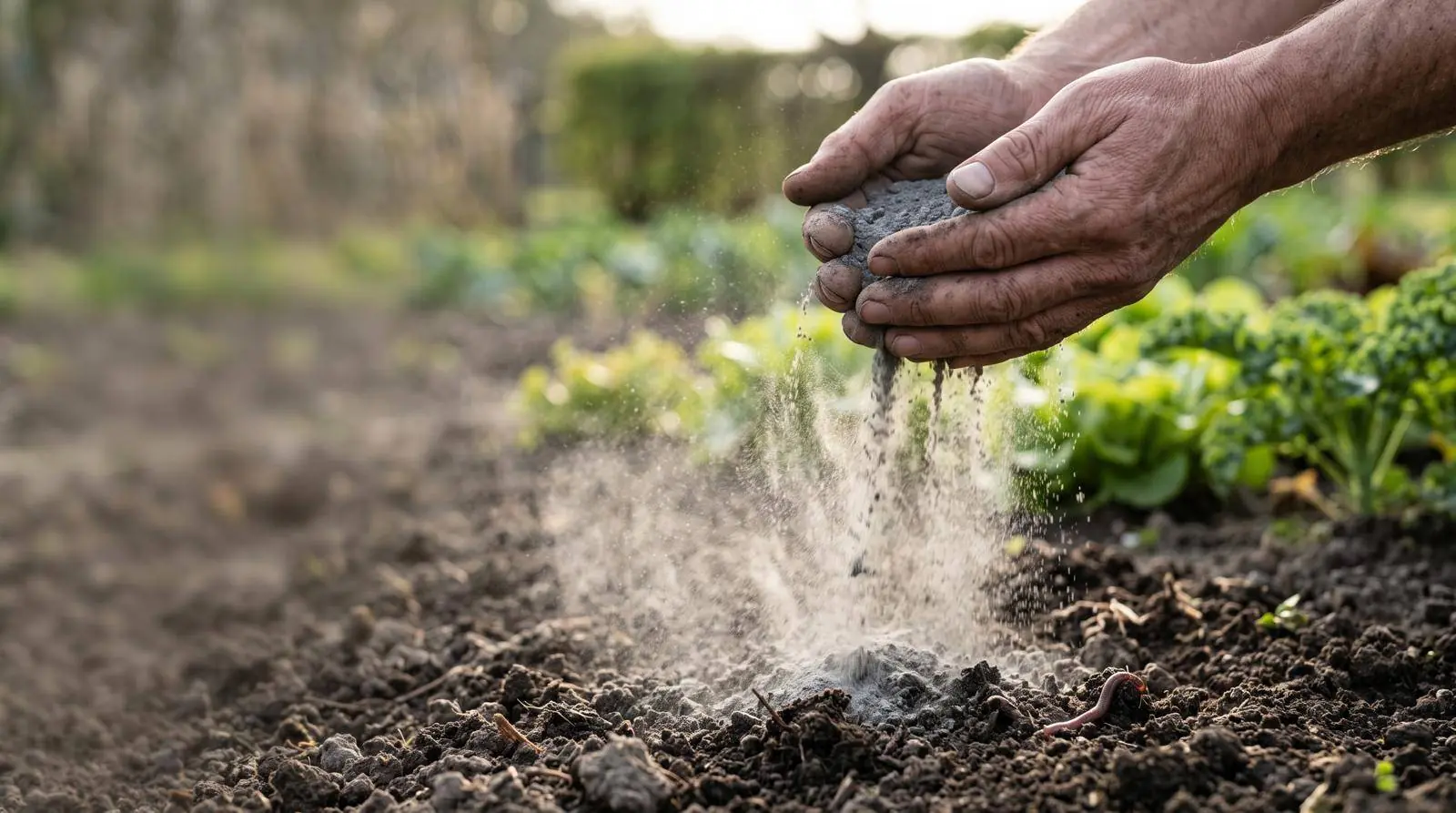
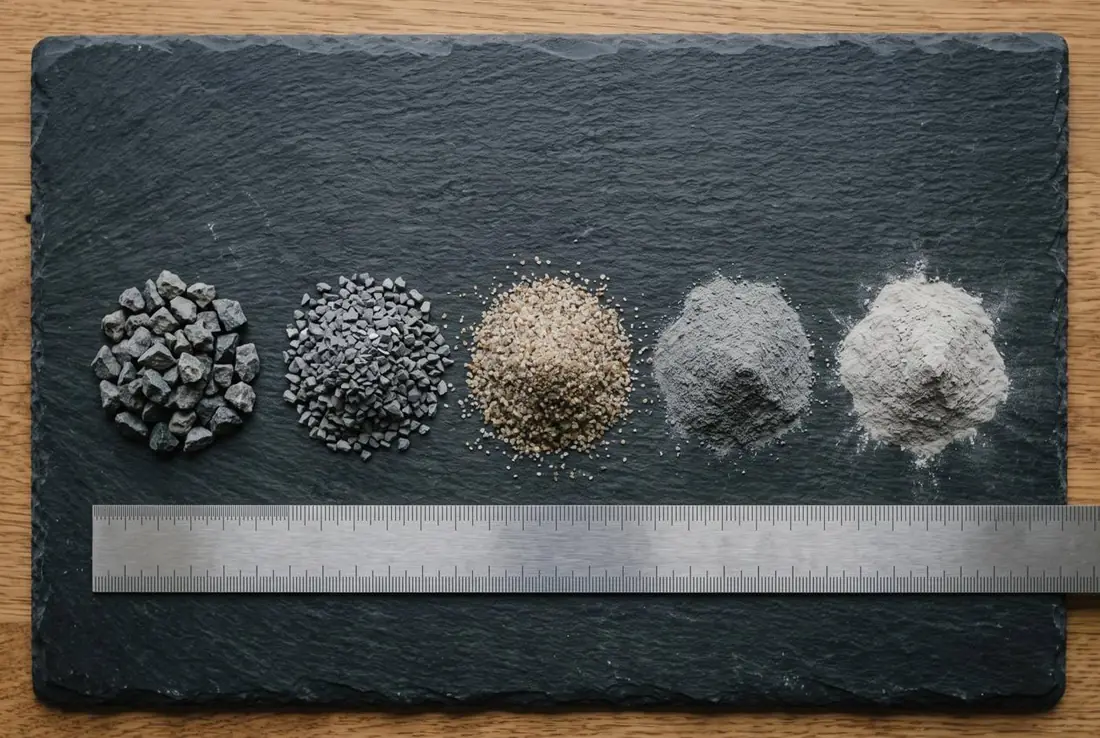
Mahlen Sie den Stein zu BodenGrind the rock into soil
Tippen, klicken oder reiben Sie den Stein klein. Je feiner das Korn, desto größer die Oberfläche und desto schneller gibt es Nährstoffe frei.Tap, click or rub the rock to break it down. The finer the grain, the larger the surface and the faster it releases nutrients.
Oberfläche: gleiche Menge Gestein, rechnerisch (halber Durchmesser = doppelte Oberfläche). Gelöst: Basalt, Modell Rinder & von Hagke 2021 – grob gerundet.Surface: same amount of rock, calculated (half the diameter = twice the surface). Dissolved: basalt, model by Rinder & von Hagke 2021 – roughly rounded.
Mit Kompost und Bodenleben wird daraus stabiler Humus.With compost and soil life it turns into stable humus.
Drei Regeln entscheiden über den ErfolgThree rules decide success
Das Gestein entscheidetThe rock decides
Basalt und Diabas sind reich an Calcium und Magnesium und verwittern. Granit („Urgesteinsmehl“) besteht zu einem Drittel aus Quarz und liefert kaum etwas. Name und Farbe sagen nichts, die Analyse sagt alles.Basalt and diabase are rich in calcium and magnesium and they weather. Granite („primary rock dust“) is one third quartz and releases very little. Name and colour tell you nothing; the analysis tells you everything.
Der Boden entscheidetThe soil decides
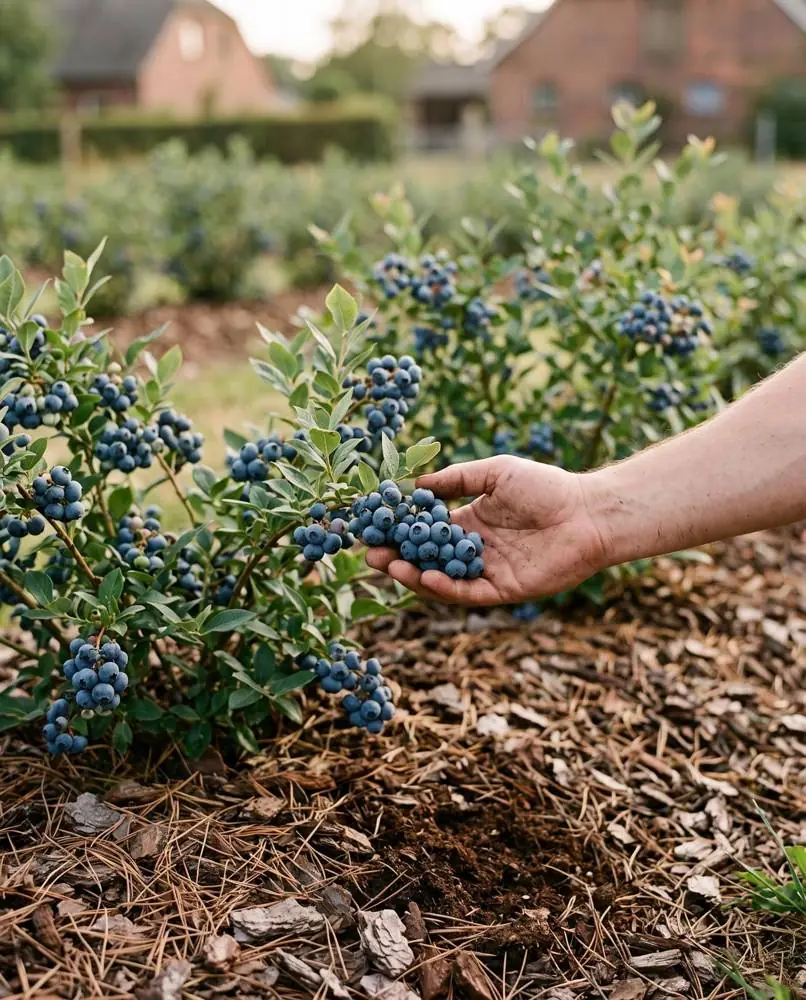
Je saurer, sandiger und ärmer der Boden, desto mehr bringt Gesteinsmehl. Auf gut versorgtem Lehm oder Löss ist oft kein Unterschied messbar. Auf Kalkboden und bei Heidelbeeren gehört kein basisches Gesteinsmehl hin.The more acidic, sandy and poor the soil, the more rock dust helps. On well-supplied loam or loess there is often no measurable difference. Alkaline soils and blueberries should get no basic rock dust.
Humus braucht PartnerHumus needs partners
Minerale bauen allein keinen Humus auf. Erst zusammen mit Kompost, Mist oder Gründüngung entsteht der stabile Ton-Humus-Komplex. Im Kompost verdoppelte 10 % Ton die Humusbildung.Minerals alone do not build humus. Only together with compost, manure or green manure does the stable clay–humus complex form. In compost, 10 % clay doubled humus formation.
Was taugt wofür?What is each material good for?
Grün heißt: in Studien belegt. Gelb: hängt vom Standort ab oder ist dünn belegt. Rot: nicht empfehlenswert oder unbelegt. Ein Klick öffnet den Steckbrief.Green: supported by studies. Yellow: depends on the site or thinly supported. Red: not recommended or unsupported. Click a card to open its profile.
Verwitterung: vom Korn zur PflanzeWeathering: from grain to plant
Gesteinsmehl wirkt nur, wenn es sich im Boden auflöst. Das passiert durch Kohlensäure, die Wurzeln und Bodenleben ständig erzeugen. Deshalb gilt: Leben im Boden, Wasser und Wärme beschleunigen alles.Rock dust only works when it dissolves in the soil. Carbonic acid, produced constantly by roots and soil life, does that job. So soil life, water and warmth speed everything up.
Säure entstehtAcid forms
Wurzeln und Mikroben atmen CO₂ aus. Mit Regenwasser wird daraus Kohlensäure.Roots and microbes breathe out CO₂. With rainwater it becomes carbonic acid.
Das Korn löst sichThe grain dissolves
Olivin am schnellsten, dann Basaltglas, Pyroxen, Feldspat. Quarz praktisch nie.Olivine fastest, then basalt glass, pyroxene, feldspar. Quartz practically never.
Nährstoffe und HumusNutrients and humus
Calcium, Magnesium, Silizium und Spurenelemente werden pflanzenverfügbar. Mineraloberflächen halten organische Substanz fest.Calcium, magnesium, silicon and trace elements become plant-available. Mineral surfaces hold on to organic matter.
CO₂ wandert abCO₂ moves on
Ein Teil des CO₂ geht als Bicarbonat mit dem Sickerwasser ins Meer. Das dauert Jahre, weil der Boden die Stoffe zuerst selbst festhält.Part of the CO₂ leaves as bicarbonate with seepage water towards the sea. This takes years because the soil holds on to the ions first.
Alles zum Nachlesen: Aus Stein wird BodenAll of it to keep: Stone becomes Soil
Der komplette Leitfaden mit Mengentabellen für Garten und Hof, dem Humusguru-Kompostrezept und dem Gartenjahr. Wissenschaftlich geprüft, einfach erklärt.The complete guide with dosage tables for garden and farm, the Humusguru compost recipe and the garden year. Scientifically checked, simply explained.
- 18 Kapitel von „Wie aus Stein Boden wird“ bis Mythen-Check
- über 200 Quellen ausgewertet
- vorsichtig gerechnete Mengen – ehrlich statt Werbung
- 18 chapters from “how rock becomes soil” to myth check
- more than 200 sources reviewed
- cautiously calculated amounts – honest, not hype
Gratis-Leitfaden · 30 Seiten · PDF
Wie viel brauche ich wirklich?How much do I really need?
Vier Angaben genügen. Der Rechner nimmt im Zweifel immer die vorsichtigere Menge und zeigt Ihnen jeden Rechenschritt. Das Beispiel ist vorausgefüllt: ein 20 m² großes Gemüsebeet auf saurem Sandboden.Four answers are enough. When in doubt, the calculator always uses the more cautious amount and shows every step. The example is pre-filled: a 20 m² vegetable bed on acidic sandy soil.
Ihre EmpfehlungYour recommendation
Ihre AnfrageYour request
Sie können mehrere Berechnungen sammeln, zum Beispiel Beet, Hochbeet und Kompost. Wir melden uns mit Preis und Liefertermin. Die Anfrage ist unverbindlich.You can collect several calculations, for example a bed, a raised bed and compost. We will reply with price and delivery date. The request is non-binding.
Eingegangene AnfragenReceived requests
Nur für Sie als Bearbeiter sichtbar.Visible to editors only.
Jedes Mineral hat eine Stärke und eine GrenzeEvery mineral has a strength and a limit
Kurz erklärt, was drin ist, was es kann und wofür es nicht taugt. Die Zahlen stammen aus zertifizierten Gesteinsstandards und Feldversuchen.In short: what is inside, what it does and what it is not good for. Figures come from certified rock standards and field trials.
Wie viel „Nährstoff-Basis“ steckt drin?How much nutrient base is inside?
Summe aus Calcium-, Magnesium- und Kaliumoxid in Gewichtsprozent. Die Linie zeigt die brasilianische Mindestanforderung für zugelassene Gesteinsmehle (9 %).Sum of calcium, magnesium and potassium oxide in weight percent. The line marks Brazil’s minimum for approved rock dusts (9 %).
Nickel: Wo die Grenze liegtNickel: where the limit is
Nickelgehalt in mg/kg (logarithmische Skala). Die Linie zeigt den deutschen Grenzwert für Gesteinsmehle (120 mg/kg). Olivin und Dunit liegen fast 20-fach darüber.Nickel content in mg/kg (log scale). The line marks the German limit for rock dusts (120 mg/kg). Olivine and dunite exceed it almost 20-fold.
Welches Mineral passt zu Ihrem Boden?Which mineral suits your soil?
Die Bodenart ist der wichtigste Hebel. Sandböden profitieren am meisten, fruchtbare Lehmböden am wenigsten.Soil type is the biggest lever. Sandy soils benefit most, fertile loams least.
| BodenSoil | PasstSuits | WarumWhy | UrteilVerdict |
|---|---|---|---|
| Saurer SandAcidic sand | Basalt/Diabas + Ca-Bentonit oder Zeolith, immer mit KompostBasalt/diabase + Ca bentonite or zeolite, always with compost | Weidelgras +28–33 % auf saurem Sand, auf Lehm kein Effekt (Desmalles 2025). Bentonit 30 t/ha: Mais +24 % (Zhang 2019).Ryegrass +28–33 % on acidic sand, no effect on loam (Desmalles 2025). Bentonite 30 t/ha: maize +24 % (Zhang 2019). | beste Wirkungbest effect |
| Lehmiger SandLoamy sand | Basalt/Diabas, KompostBasalt/diabase, compost | Zwischen den Extremen. Hafer +9–20 % bei 19 t/ha auf sandigem Tonlehm (Skov 2024).Between the extremes. Oats +9–20 % at 19 t/ha on sandy clay loam (Skov 2024). | gutgood |
| Lehm, Schluff, LössLoam, silt, loess | allenfalls Erhaltungsgabe, Kompost mit Mineralanteilmaintenance dose at most, compost with minerals | In gemäßigtem Klima 11 von 16 Versuchen ohne messbaren Effekt (Swoboda 2022).In temperate climates 11 of 16 trials showed no measurable effect (Swoboda 2022). | wenig messbarlittle measurable |
| Schwerer TonHeavy clay | Kompost, bei Natrium Gips; kein BentonitCompost, gypsum if sodic; no bentonite | Ton ist schon da. Struktur verbessern organische Substanz und bei Salzproblemen Gips.The clay is already there. Organic matter improves structure, gypsum helps with salt problems. | selten nötigrarely needed |
| Kalkboden (pH über 7,2)Calcareous soil (pH above 7.2) | kein basisches Gesteinsmehlno basic rock dust | Der Boden ist schon basisch, Verwitterung läuft kaum. Kartoffel auf alkalischem Boden: kein signifikanter Effekt (Vienne 2022).The soil is already basic and weathering is minimal. Potato on alkaline soil: no significant effect (Vienne 2022). | nicht nötignot needed |
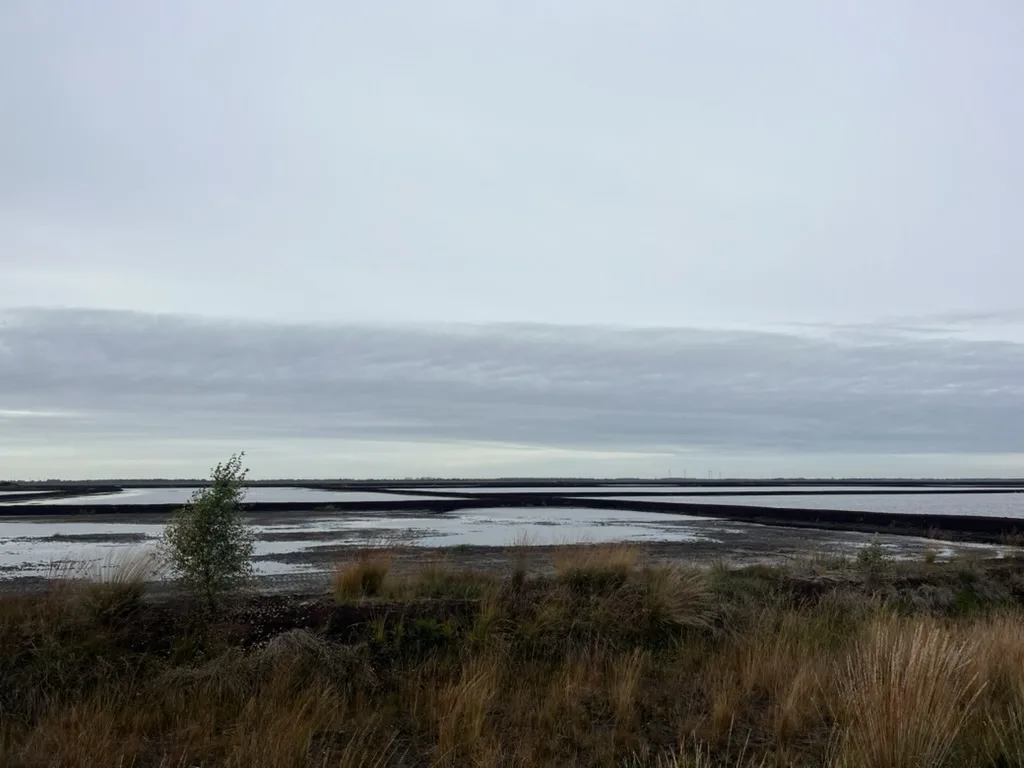
| Moor, AnmoorPeat, peaty soil | keine pH-Anhebung, vor allem bei Wiedervernässungno pH increase, especially where rewetted | Für mitteleuropäische Moore fehlen belastbare Studien mit Gesteinsmehl.Robust rock-dust studies on Central European peat are lacking. | Zurückhaltunghold back |
| Hochbeet, Kübel, SubstratRaised bed, pots, substrate | Zeolith oder Ca-Bentonit ins Substrat, Lava für DrainageZeolite or Ca bentonite in the substrate, lava for drainage | 30 % Zeolith im Torfsubstrat: Wasserhaltekapazität +260 %, Wurzelmasse +209 % (Méndez Argüello 2019).30 % zeolite in peat substrate: water holding +260 %, root mass +209 % (Méndez Argüello 2019). | gutgood |
Und welche Pflanze braucht was?And what does each crop need?
Gräser und Getreide lieben Silizium, Leguminosen einen nicht zu sauren Boden, Weiden Magnesium. Säureliebende Pflanzen vertragen kein basisches Mehl.Grasses and cereals love silicon, legumes prefer a soil that is not too acidic, pastures need magnesium. Acid-loving plants do not tolerate basic dust.
| KulturCrop | Braucht vor allemMainly needs | Passendes MineralSuitable mineral | Was Studien zeigenWhat studies show | UrteilVerdict |
|---|---|---|---|---|
| Gemüse (Kohl, Salat, Möhre)Vegetables (cabbage, lettuce, carrot) | Humus, Wasser, NährstoffpufferHumus, water, nutrient buffer | Kompost mit Ton oder Zeolith, Basalt auf SandCompost with clay or zeolite, basalt on sand | Pak Choi: Kompost plus Mineral-Kohle-Komplex besser als jedes allein (Ye 2016, Topfversuch)Pak choi: compost plus mineral–char complex beat each alone (Ye 2016, pot trial) | gutgood |
| Gurke, Kürbis, ZucchiniCucumber, squash, courgette | Silizium gegen MehltauSilicon against mildew | Basalt (langsam), KompostBasalt (slow), compost | Si-Schutz gegen Echten Mehltau gut beschrieben (Guntzer 2012); aus Gesteinsmehl nicht direkt geprüftSi protection against powdery mildew well described (Guntzer 2012); not tested directly with rock dust | plausibelplausible |
| Tomate, Paprika im KübelTomato, pepper in pots | Wasser und Nährstoffe haltenHolding water and nutrients | Zeolith im SubstratZeolite in the substrate | Spross +62 %, Wurzel +209 % mit Zeolith im Torf (Méndez Argüello 2019)Shoots +62 %, roots +209 % with zeolite in peat (Méndez Argüello 2019) | gutgood |
| Rasen auf SandLawn on sand | Stickstoff halten, WasserHolding nitrogen, water | ZeolithZeolite | Nitratauswaschung −86 %, Ammonium −99 % in Sand-Greens (Huang & Petrovic 1994)Nitrate leaching −86 %, ammonium −99 % in sand greens (Huang & Petrovic 1994) | gutgood |
| Obst (Apfel, Birne, Kirsche)Fruit trees (apple, pear, cherry) | Schutz vor Sonnenbrand und SchädlingenProtection from sunburn and pests | Kaolin als Spritzfilm (Pflanzenschutzmittel)Kaolin spray film (plant protection product) | Frucht 4–10 °C kühler, Sonnenbrand von 11 % auf 2 % (Glenn 2002)Fruit 4–10 °C cooler, sunburn cut from 11 % to 2 % (Glenn 2002) | belegtproven |
| Heidelbeere, Rhododendron, AzaleeBlueberry, rhododendron, azalea | saurer Boden, pH 4,5–5,5acidic soil, pH 4.5–5.5 | kein Basalt, Kalk, Dolomit, Holzascheno basalt, lime, dolomite, wood ash | Höherer pH führt zu Eisenmangel (Chlorose) (PNW Handbooks, RHS)Higher pH causes iron deficiency (chlorosis) (PNW Handbooks, RHS) | Finger wegavoid |
| Weizen, Gerste, HaferWheat, barley, oats | Silizium, Magnesium, pHSilicon, magnesium, pH | Basalt, DiabasBasalt, diabase | Hafer +9 bis +20 % bei 19 t/ha (Skov 2024); Getreide sammeln viel SiliziumOats +9 to +20 % at 19 t/ha (Skov 2024); cereals accumulate much silicon | standortabhängigsite-dependent |
| MaisMaize | pH, Kalium, MagnesiumpH, potassium, magnesium | BasaltBasalt | +12 % bei 50 t/ha jedes Jahr (Beerling 2024); andere Versuche ohne Effekt+12 % at 50 t/ha every year (Beerling 2024); other trials without effect | standortabhängigsite-dependent |
| KartoffelPotato | viel Kalium, chloridfreilots of potassium, chloride-free | Kaliumsulfat; Gesteinsmehl nur ergänzendPotassium sulphate; rock dust only as a supplement | Basalt ohne signifikanten Effekt (Vienne 2022); Gesteinsmehl deckt den Kaliumbedarf nichtBasalt without significant effect (Vienne 2022); rock dust cannot cover the potassium demand | kein K-Ersatzno K substitute |
| Grünland, WeideGrassland, pasture | Magnesium (Weidetetanie)Magnesium (grass tetany) | Basalt, Diabas, DolomitBasalt, diabase, dolomite | Risiko unter 0,2 % Mg im Futter (Merck Vet Manual); direkter Gesteinsmehl-Beleg fehltRisk below 0.2 % Mg in forage (Merck Vet Manual); no direct rock-dust evidence | plausibelplausible |
| Klee, Luzerne, Bohne, SojaClover, lucerne, beans, soy | Molybdän (nur bei pH über 5,5 verfügbar)Molybdenum (available only above pH 5.5) | Basalt auf saurem BodenBasalt on acidic soil | Molybdän im Sojakorn vervierfacht (Beerling 2024)Molybdenum in soybean grain quadrupled (Beerling 2024) | plausibelplausible |
| RapsOilseed rape | Schutz vor RapsglanzkäferProtection from pollen beetle | Gesteinsmehl oder Kaolin, gestäubtRock dust or kaolin, dusted | Befall um etwa ein Drittel geringer, rein physikalisch (FiBL 2017)Infestation about one third lower, purely physical (FiBL 2017) | belegtproven |
Warum Minerale für den Humus so wichtig sindWhy minerals matter so much for humus
Humus hält am längsten, wenn er an Mineralen klebt. Stellen Sie sich Klettband vor: Die Tonplättchen sind die Haken, die Humusteilchen bleiben daran hängen und werden so vor dem Abbau geschützt.Humus lasts longest when it sticks to minerals. Think of Velcro: clay platelets are the hooks, humus particles cling to them and are protected from decomposition.
Forscher nennen das „mineralgebundene organische Substanz“. Sie bleibt Jahrzehnte bis Jahrhunderte im Boden, während lose Pflanzenreste in wenigen Jahren abgebaut sind (Cotrufo 2019). Aktive Tonminerale wie Bentonit können bis zu 86 mg Kohlenstoff pro Gramm binden, Kaolin nur etwa die Hälfte (Georgiou 2022). Unsere Ackerböden nutzen diese Kapazität im Mittel nur zu 31 %.Researchers call this „mineral-associated organic matter“. It stays in the soil for decades to centuries, while loose plant residues are broken down within a few years (Cotrufo 2019). Active clay minerals such as bentonite can bind up to 86 mg of carbon per gram, kaolin only about half (Georgiou 2022). On average our arable soils use only 31 % of this capacity.
Deshalb wirkt Ton auf Sandböden so stark: In Westaustralien stieg der Humusvorrat um 2 t Kohlenstoff pro Hektar in 10 Jahren, als der Tongehalt von 1 auf 6 % angehoben wurde. In Polen war eine einmalige Bentonitgabe nach 38 Jahren noch im Humus messbar (Czaban 2013).That is why clay works so well on sandy soils: in Western Australia, soil carbon rose by 2 t per hectare within 10 years after clay content was raised from 1 to 6 %. In Poland a single bentonite application was still measurable in the humus after 38 years (Czaban 2013).
Die Regel:The rule: Mineral plus organisches Material baut Humus. Mineral allein nicht, denn ohne Kohlenstoff gibt es nichts zu binden.Mineral plus organic matter builds humus. Mineral alone does not, because without carbon there is nothing to bind.
Wichtig: Das ist für Tonminerale gut belegt. Bei Basaltmehl sind die Feldergebnisse gemischt. Im Labor band feiner Basalt mit Kompost am meisten Humus (Matsuoka 2026), im Feld bremste frischer Basalt den Humusaufbau teils sogar, weil der höhere pH den Abbau beschleunigt (Lei 2025, Sohng 2025). Für den Humus setzen wir deshalb auf Ton und Kompost, Basalt dient der Mineralversorgung.Important: this is well established for clay minerals. For basalt dust, field results are mixed. In the lab, fine basalt with compost bound the most humus (Matsuoka 2026); in the field, fresh basalt sometimes even slowed humus build-up because the higher pH speeds up decomposition (Lei 2025, Sohng 2025). For humus we therefore rely on clay and compost; basalt serves mineral supply.
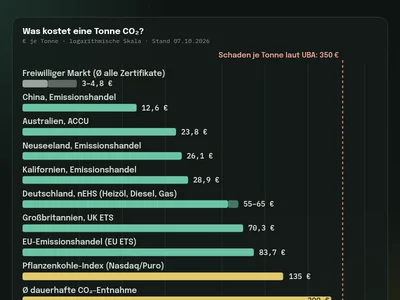
CO₂-Bindung: ehrlich gerechnetCO₂ removal: honestly calculated
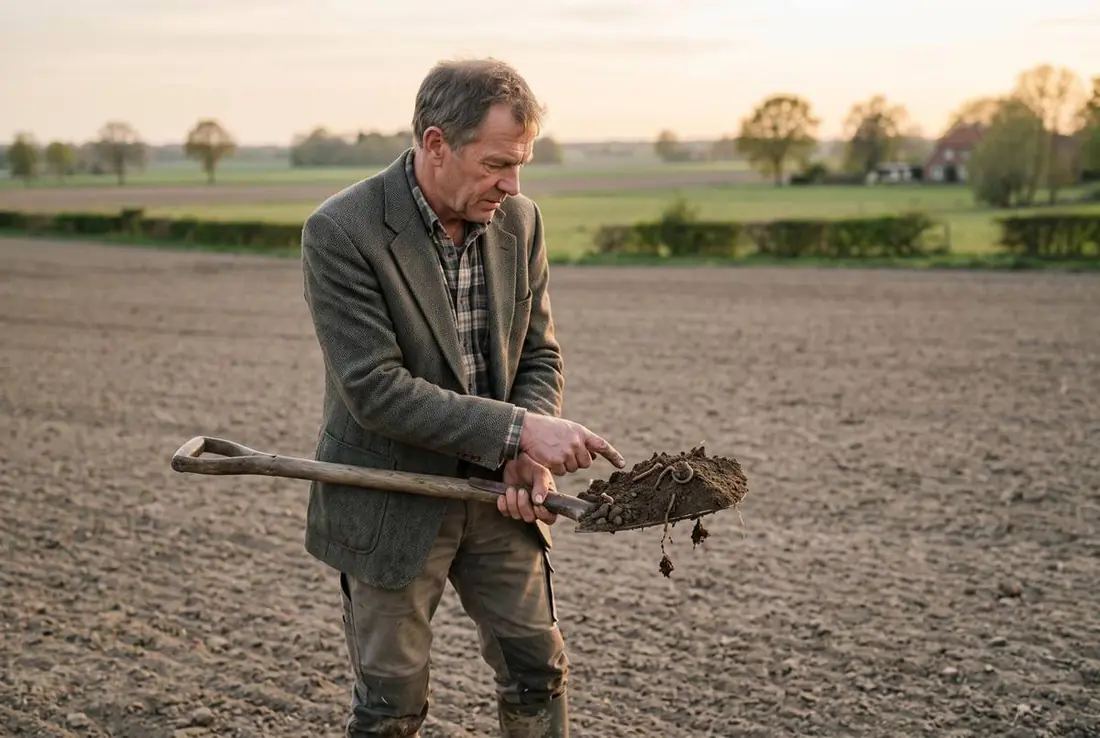
Die Chemie ist sicher: Silikatgestein bindet beim Verwittern CO₂ dauerhaft. Im Feld wird aber in den ersten Jahren meist nur 1–15 % der theoretischen Menge nachgewiesen, weil der Boden die gelösten Stoffe zuerst selbst festhält.The chemistry is certain: silicate rock binds CO₂ permanently as it weathers. In the field, however, only 1–15 % of the theoretical amount is usually detected in the first years, because the soil holds on to the dissolved ions first.
Theoretische Obergrenze je Tonne GesteinTheoretical maximum per tonne of rock
t CO₂ pro t Gestein bei vollständiger Verwitterung. Granit bindet praktisch nichts.t CO₂ per t rock at complete weathering. Granite binds practically nothing.
Gemessen im Feld (Basalt & Co.)Measured in the field (basalt & co.)
t CO₂ pro Hektar und Jahr, logarithmische Skala. Grünes Band: konservativer Planungswert für Mitteleuropa.t CO₂ per hectare and year, log scale. Green band: conservative planning value for Central Europe.
Rechnung für jedermannA calculation anyone can follow
1 Tonne Basalt kann theoretisch 300 kg CO₂ binden. Realistisch weisen Messungen in den ersten Jahren 1–15 % davon nach, also 3–45 kg CO₂ pro Tonne. Bei 30 t Basalt pro Hektar sind das rund 0,1–1,4 t CO₂, verteilt über mehrere Jahre. Wir rechnen deshalb vorsichtig mit 0,1–0,5 t CO₂ pro Hektar und Jahr.One tonne of basalt can theoretically bind 300 kg of CO₂. Realistically, measurements in the first years detect 1–15 % of that, i.e. 3–45 kg CO₂ per tonne. At 30 t of basalt per hectare that is roughly 0.1–1.4 t CO₂, spread over several years. We therefore use a cautious 0.1–0.5 t CO₂ per hectare and year.
Für den Garten heißt das: Die CO₂-Wirkung einer Gartengabe ist verschwindend klein. Der echte Nutzen liegt im Boden, nicht im Klimakonto.For gardens this means: the CO₂ effect of a garden dose is tiny. The real benefit is in the soil, not in a climate account.
Zertifikate (Stand September 2026)Certificates (as of September 2026)
Die EU-Zertifizierung für CO₂-Entnahmen (CRCF) enthält für Gesteinsmehl noch keine Methode. Private Standards (Puro.earth, Isometric) vergeben Zertifikate nur mit eigener Feldmessung und Kontrollflächen. Für landwirtschaftliche Projekte beraten wir gern zu diesem Weg.The EU carbon removal certification (CRCF) has no method for rock dust yet. Private standards (Puro.earth, Isometric) issue credits only with field measurement and control plots. We are happy to advise farm projects on this route.
Die beste Kombination: Mineral, Kompost, PflanzenkohleThe best combination: mineral, compost, biochar
Pflanzenkohle und Minerale ergänzen sich: Die Kohle bietet Wohnraum für Mikroben, die Minerale binden Humus und Nährstoffe. Wichtig ist, beides vorher mit Kompost oder Mist „aufzuladen“. Rohe Kohle bindet zunächst selbst Nährstoffe und bringt allein keinen Ertrag (Metaanalyse Ye 2019).Biochar and minerals complement each other: the char offers housing for microbes, the minerals bind humus and nutrients. The key is to „charge“ both with compost or manure first. Raw char first binds nutrients itself and gives no yield benefit on its own (meta-analysis Ye 2019).
MischenMix
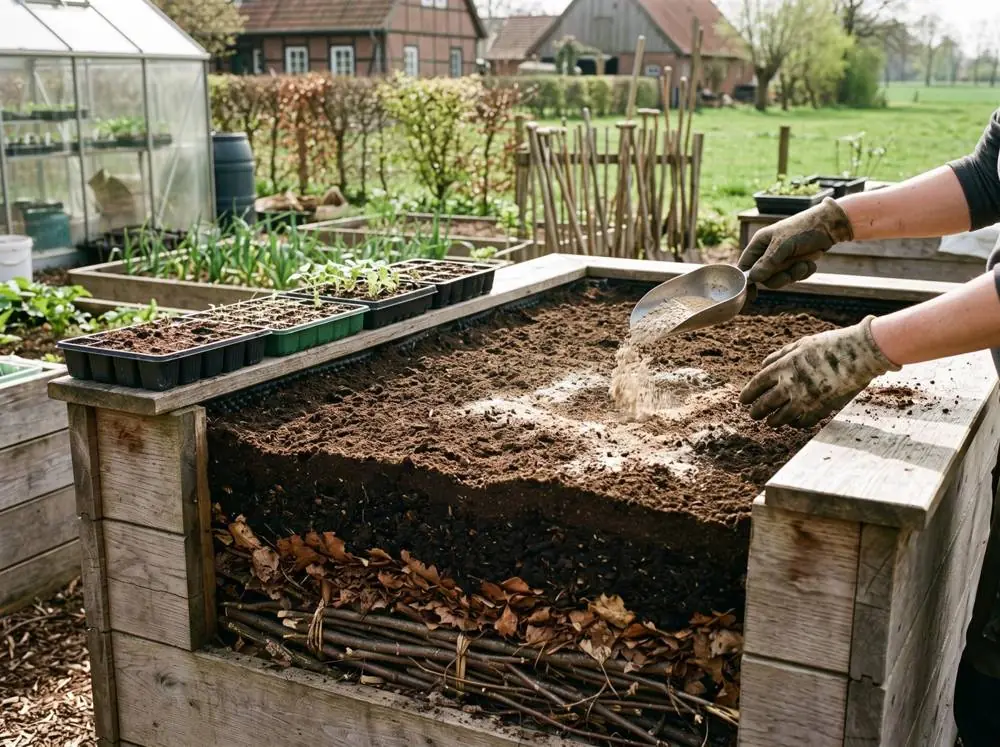
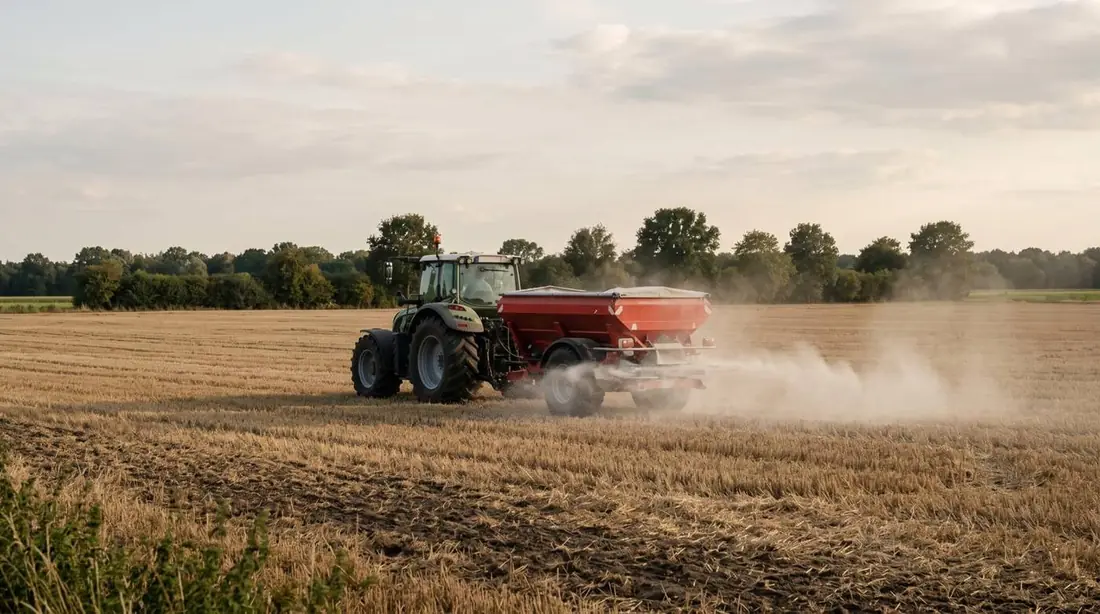
Beim Aufsetzen des Komposts pro Kubikmeter etwa 100 Liter Pflanzenkohle, 25 kg Zeolith oder Ca-Bentonit und 10 kg Basaltmehl einstreuen, schichtweise.When building the compost heap, add per cubic metre about 100 litres of biochar, 25 kg zeolite or Ca bentonite and 10 kg basalt dust, in layers.
Aufladen lassenLet it charge
Mindestens 14 Tage reifen lassen, besser die ganze Rotte. Die Kohle saugt Nährstoffe und Mikroben auf, der Zeolith hält Ammoniak fest (−20 bis −46 % Verluste).Let it mature for at least 14 days, ideally the whole composting cycle. The char soaks up nutrients and microbes, the zeolite holds ammonia (20–46 % lower losses).
AusbringenApply
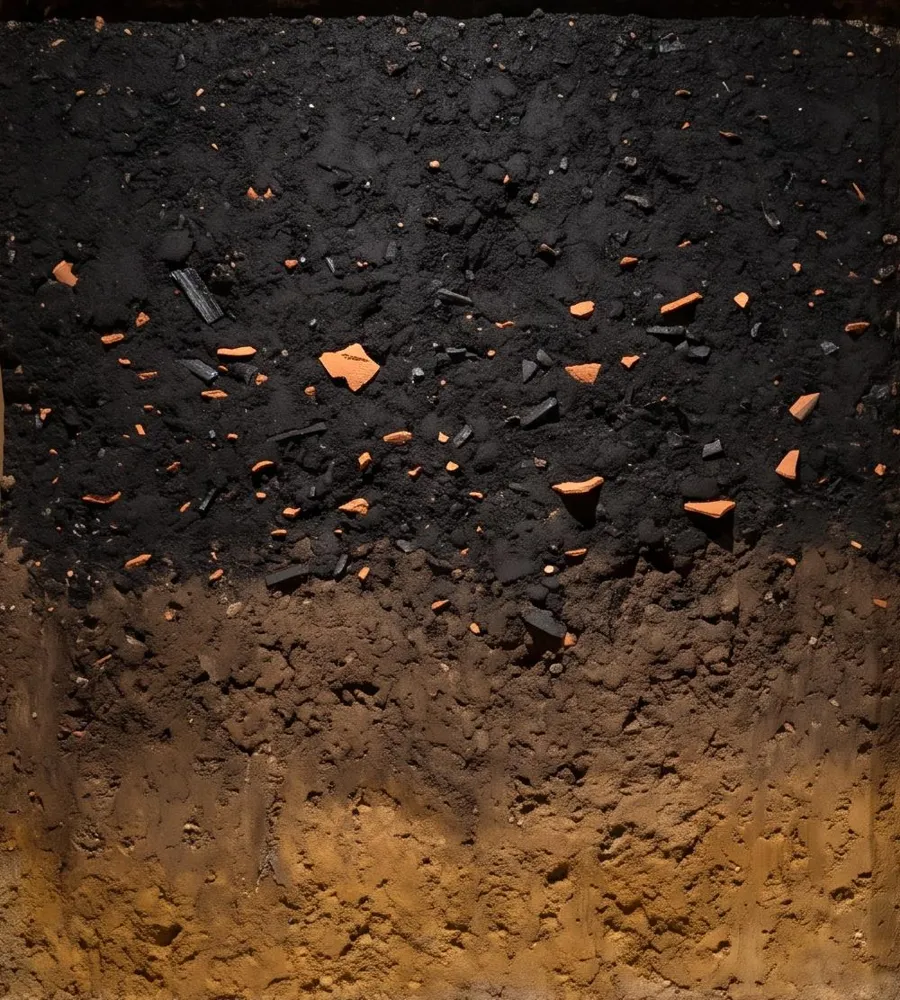
Den fertigen Kompost flach einarbeiten. So entsteht Schritt für Schritt ein dunkler, humusreicher Boden nach dem Vorbild der Terra Preta.Work the finished compost into the top layer. Step by step this builds a dark, humus-rich soil modelled on Terra Preta.
Acht kurze Fragen – und Sie bekommen Ihren persönlichen Bodenplan: die drei wichtigsten Hebel für Ihren Garten oder Betrieb, einen Jahresplan und ein Mess-Protokoll.Eight short questions – and you get your personal soil plan: the three most important levers for your garden or farm, a year plan and a measuring log.
Was stimmt, was nicht?What is true, what is not?
Urgesteinsmehl ist ein Volldünger.Primary rock dust is a complete fertiliser.
Granitmehl liefert kaum verfügbare Nährstoffe; das Kalium steckt in Feldspat, der sich fast nicht löst.Granite dust releases hardly any available nutrients; its potassium is locked in feldspar, which barely dissolves.
Gesteinsmehl ersetzt Kalk.Rock dust replaces lime.
Basalt hat theoretisch 42 % der Kalkwirkung und setzt sie sehr langsam frei. Für die Erhaltungskalkung bleibt Kalk das Mittel der Wahl.Basalt theoretically has 42 % of lime’s neutralising power and releases it very slowly. Lime remains the choice for maintenance liming.
Zeolith hält Nitrat fest.Zeolite holds on to nitrate.
Zeolith bindet Ammonium und Kalium, aber kein Nitrat. Deshalb wirkt er vor allem in Kompost, Mist und Gülle.Zeolite binds ammonium and potassium, but not nitrate. That is why it works best in compost, manure and slurry.
Eine Handvoll Tonmehl baut Humus auf.A handful of clay dust builds humus.
Messbare Effekte beginnen bei etwa 1 kg Bentonit pro m² auf Sand. Kleine Streumengen verschwinden im Boden.Measurable effects start at about 1 kg of bentonite per m² on sand. Small sprinkles disappear in the soil.
Gesteinsmehl bindet CO₂.Rock dust binds CO₂.
Chemisch richtig, in Gartenmengen aber verschwindend gering. Für den Klimanutzen braucht es 20–50 t pro Hektar und Messungen.Chemically correct, but negligible at garden amounts. Climate benefits need 20–50 t per hectare and measurements.
Gesteinsmehl macht Gemüse nährstoffreicher.Rock dust makes vegetables more nutritious.
Mineralgehalte in Gemüse sind seit 1940 gesunken, vor allem wegen ertragreicherer Sorten, nicht wegen verarmter Böden (Fan 2008, Marles 2017). Basalt veränderte das Nährstoffprofil von Kartoffeln nicht (Bruno 2025).Mineral contents in vegetables have fallen since 1940, mainly because of higher-yielding varieties rather than depleted soils (Fan 2008, Marles 2017). Basalt did not change the nutrient profile of potatoes (Bruno 2025).
Pilze im Boden „fressen“ Gestein.Soil fungi „eat“ rock.
Mykorrhiza-Hyphen besiedeln Basalt bevorzugt und lösen mit organischen Säuren Calcium 10- bis 100-mal schneller als ohne Pilz (Quirk 2012, Schmalenberger 2015). Lebendiger Boden macht Gesteinsmehl wirksamer.Mycorrhizal hyphae preferentially colonise basalt and dissolve calcium 10 to 100 times faster than without fungi, using organic acids (Quirk 2012, Schmalenberger 2015). Living soil makes rock dust more effective.
Auf Sandboden lohnt es sich besonders.It pays off especially on sandy soil.
Sand hat wenig eigene Minerale und kaum Speicherplatz für Wasser und Nährstoffe. Hier zeigen Studien die deutlichsten Effekte.Sand has few minerals of its own and little storage space for water and nutrients. This is where studies show the clearest effects.
Worauf es beim Kauf ankommtWhat matters when buying
Gesteinsmehl ist ein Naturprodukt, und Natur schwankt. Drei Punkte verdienen Aufmerksamkeit: Schwermetalle, Fasern und Staub. Alle drei lassen sich mit Analysen und etwas Vorsicht sicher beherrschen.Rock dust is a natural product, and nature varies. Three points deserve attention: heavy metals, fibres and dust. All three are easily managed with analyses and a little care.
Nickel und ChromNickel and chromium
Basalte enthalten je nach Steinbruch 18–195 mg Nickel pro kg. Erlaubt sind 120 mg/kg. Eine Gartengabe von 300 g/m² hebt den Nickelgehalt im Boden nur um etwa 0,2 mg/kg an. Olivin und Dunit (über 2.000 mg/kg) sind in Deutschland als Bodenhilfsstoff nicht zulässig.Depending on the quarry, basalts contain 18–195 mg nickel per kg. The limit is 120 mg/kg. A garden dose of 300 g/m² raises soil nickel by only about 0.2 mg/kg. Olivine and dunite (over 2,000 mg/kg) are not permitted as soil additives in Germany.
FasernFibres
Manche Gesteine können Asbestminerale enthalten, manche Zeolithe den Faserzeolith Erionit. Seriöse Ware hat einen Negativbefund. Zeolith aus der Slowakei (Nižný Hrabovec) ist nachweislich erionitfrei.Some rocks can contain asbestos minerals, some zeolites the fibrous zeolite erionite. Reputable material comes with a negative test. Zeolite from Slovakia (Nižný Hrabovec) is proven erionite-free.
StaubDust
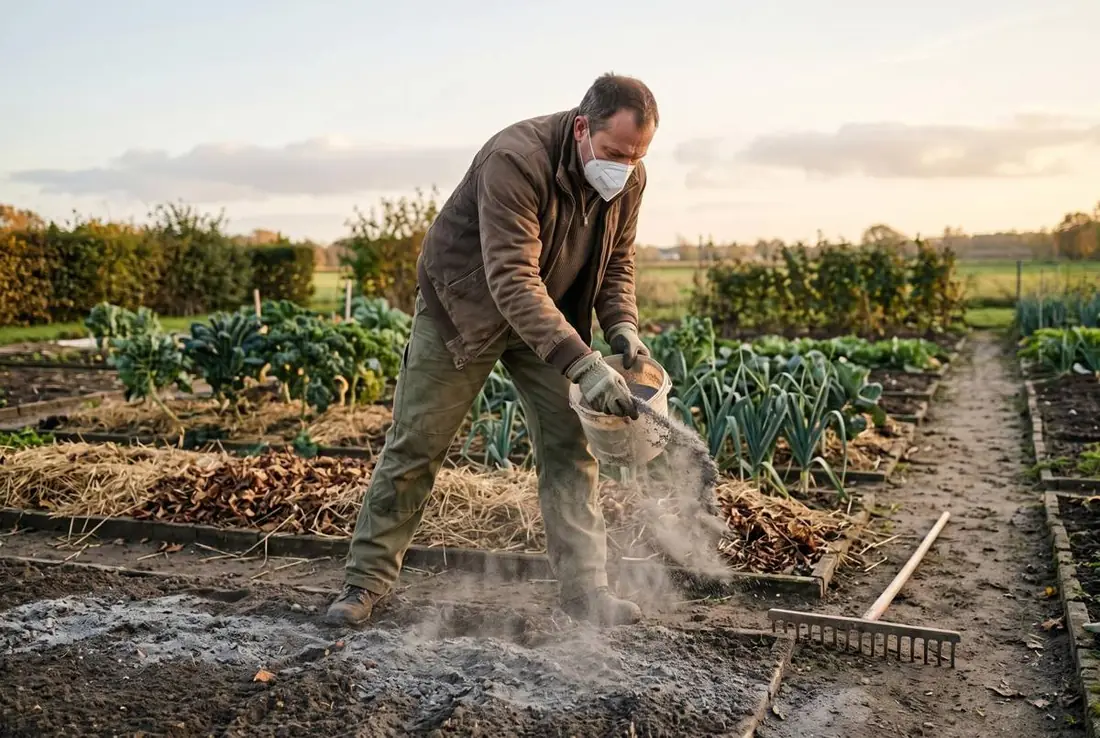
Feines Mehl staubt. Beim Ausbringen eine FFP2-Maske tragen, bei Wind nicht streuen, das Mehl leicht anfeuchten. Kinder und Haustiere fernhalten, bis es eingearbeitet ist.Fine dust gets airborne. Wear an FFP2 mask when spreading, do not spread in wind, and moisten the dust slightly. Keep children and pets away until it is worked in.
Checkliste: Das sollte jede Charge habenChecklist: every batch should have
- Schadstoffanalyse nach Düngemittelverordnung, Nickel unter 120 mg/kgContaminant analysis to German fertiliser ordinance, nickel below 120 mg/kg
- Vollanalyse: Calcium, Magnesium, Kalium, SiliziumFull analysis: calcium, magnesium, potassium, silicon
- Siebanalyse: Korngröße unter 0,1 mm für MehlSieve analysis: grain size below 0.1 mm for dust
- Asbest-Negativbefund bei Basalt und DiabasNegative asbestos test for basalt and diabase
- Zeolith: Klinoptilolith über 80 %, faserfreiZeolite: clinoptilolite above 80 %, fibre-free
- Bentonit: Calcium-Bentonit, kein Natrium-BentonitBentonite: calcium bentonite, not sodium bentonite
- Sicherheitsdatenblatt mit Angabe zum FeinstaubSafety data sheet with fine-dust information
Häufige FragenFrequently asked questions
Wie oft muss ich Gesteinsmehl ausbringen?How often should I apply rock dust?
Gesteinsmehl wirkt über Jahre. Eine Gabe reicht für zwei bis drei Jahre. Zeolith und Bentonit bleiben dauerhaft im Boden und werden in der Regel nur einmal eingearbeitet.Rock dust works over years. One application lasts two to three years. Zeolite and bentonite stay in the soil permanently and are usually worked in only once.
Wann ist der beste Zeitpunkt?When is the best time?
Im Herbst oder zeitigen Frühjahr, damit Regen die Verwitterung anstößt. In den Kompost gehört es beim Aufsetzen.In autumn or early spring, so that rain can start the weathering. For compost, add it when you build the heap.
Kann ich zu viel nehmen?Can I use too much?
Bei Gesteinsmehl in Gartenmengen passiert nichts Schlimmes, es ist nur verschwendet. Zu viel pH-Anhebung kann aber Mangan, Eisen und Phosphor festlegen. Bei Ton gilt: nie über 15 % Ton im Oberboden.With rock dust at garden rates nothing bad happens; it is just wasted. Raising pH too far can lock up manganese, iron and phosphorus, though. For clay: never above 15 % clay in the topsoil.
Ist das im Bio-Anbau erlaubt?Is it allowed in organic farming?
Steinmehl, Ton und Tonminerale sind in der EU-Öko-Verordnung (Anhang II der VO 2021/1165) zugelassen. Zeolith ist dort nicht namentlich genannt; im Zweifel entscheidet Ihre Kontrollstelle.Rock dust, clay and clay minerals are permitted under the EU organic regulation (Annex II of Reg. 2021/1165). Zeolite is not named explicitly; in case of doubt your certification body decides.
Hilft Gesteinsmehl gegen Schnecken oder Krankheiten?Does rock dust help against slugs or diseases?
Gesteinsmehl ist ein Bodenhilfsstoff und kein Pflanzenschutzmittel. Silizium stärkt nachweislich die Zellwände von Gräsern und Gurkengewächsen. Ein Schutzversprechen dürfen und wollen wir nicht geben.Rock dust is a soil additive, not a plant protection product. Silicon demonstrably strengthens cell walls of grasses and cucurbits. We cannot and do not promise protection.
Brauche ich eine Bodenprobe?Do I need a soil test?
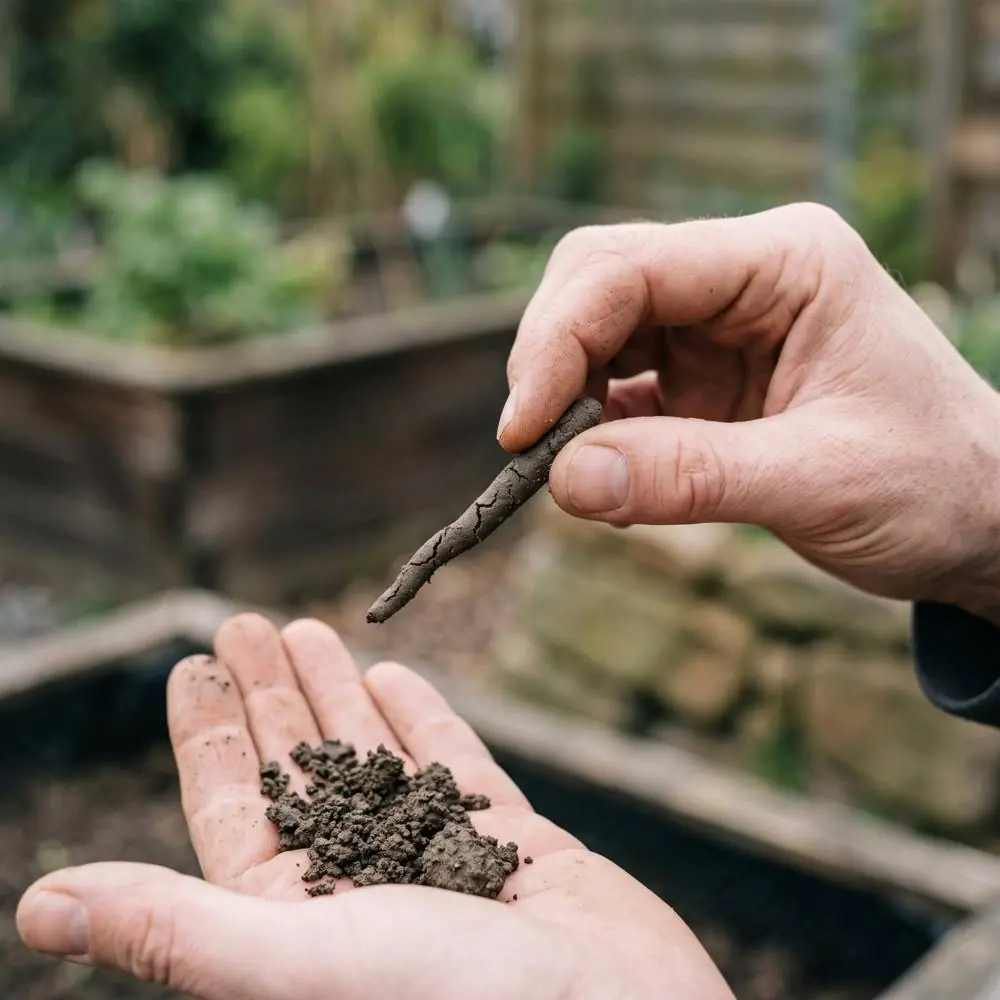
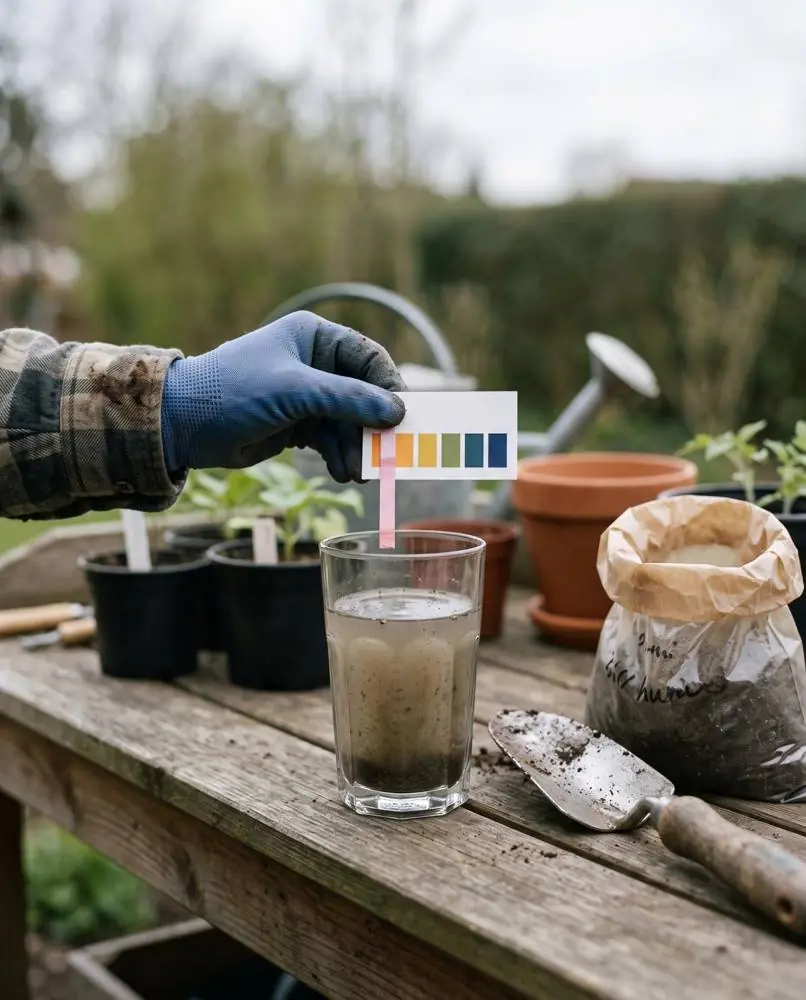
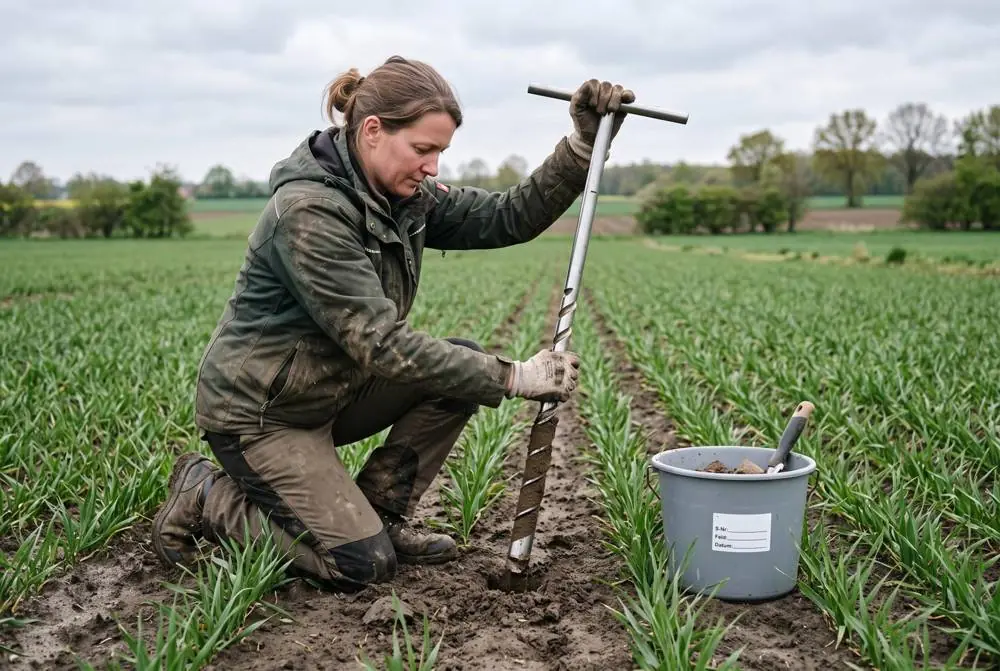
Für den Garten reichen Fingerprobe und pH-Teststreifen. In der Landwirtschaft sollte eine Standard-Bodenuntersuchung (pH, Kalium, Magnesium, Bodenart) vorliegen. Sie verhindert, dass Geld in einen Boden fließt, der nichts braucht.For gardens, a finger test and pH strip are enough. On farms a standard soil test (pH, potassium, magnesium, soil type) should be available. It prevents money going into soil that needs nothing.
Warum rechnet der Rechner so vorsichtig?Why is the calculator so cautious?
Wir nehmen im Zweifel den unteren, sicheren Wert aus Studien und Beratungsempfehlungen. Lieber einmal nachlegen als Geld für Material ausgeben, das der Boden nicht braucht.When in doubt we use the lower, safe value from studies and advisory recommendations. Better to top up later than to pay for material the soil does not need.
Worauf diese Seite beruhtWhat this page is based on
Auswahl der wichtigsten Studien und Regelwerke. Stand: September 2026.Selection of the key studies and regulations. As of September 2026.
- Swoboda, Döring, Hamer 2022 – Remineralizing soils? STOTEN
- Swoboda et al. 2026 – Meta-analysis Brazil
- Beerling et al. 2024 – US Corn Belt, PNAS
- Beerling et al. 2020 – Nature
- Skov et al. 2024 – Basalt & oats, PLOS ONE
- Desmalles et al. 2025 – Agronomy
- Ramezanian et al. 2013 – Plant and Soil
- Vienne et al. 2022 – Frontiers in Climate
- ten Berge et al. 2012 – Olivine & nickel
- Rinder & von Hagke 2021 – grain size model
- Jochum et al. 2016 – rock reference materials
- Georgiou et al. 2022 – mineral carbon capacity
- Cotrufo et al. 2019 – Nature Geoscience
- Meng et al. 2021 – clay in compost
- Czaban & Siebielec 2013 – bentonite, 38 years
- Zhang et al. 2019 – bentonite on sand
- Mi et al. 2020 – bentonite, Sci. Rep.
- Soil CRC – sandy soil amendments
- Huang & Petrovic 1994 – zeolite in sand greens
- Li et al. 2022 – zeolite compost
- de Haro-Martí 2017 – zeolite in manure piles
- Zhuang et al. 2025 – zeolite in digestate
- Méndez Argüello et al. 2019 – zeolite substrate
- Ithaka Journal – Aktivierung von Pflanzenkohle
- Ye et al. 2020 – biochar yield meta-analysis
- Glenn et al. 2002 – kaolin particle film
- FiBL 2017 – Gesteinsmehl gegen Rapsglanzkäfer
- Guntzer et al. 2012 – silicon in crops
- DLR Rheinland-Pfalz – Einsatz von Gesteinsmehlen
- BGK – Kompost-Anwendungsempfehlungen
- Renforth 2012 – enhanced weathering potential
- Dietzen & Rosing 2023 – field trial Denmark
- McBride et al. 2025 – field trial Scotland
- CarbonPlan – enhanced weathering fluxes
- EU Commission – CRCF methodologies
- Düngemittelverordnung, Anlage 2
- DVO (EU) 2021/1165, Anhang II
- TRGS 559 – Quarzhaltiger Staub
- Tschegg et al. 2019 – Nižný Hrabovec zeolite
- Dupla, Bertagni & Grand 2025 – Swiss vineyards, ES&T
- Van Der Bauwhede et al. 2024 – rock dust in forest, 34 years
- Van Der Bauwhede et al. 2025 – phonolite, maple seedlings
- Hammes, Hartmann et al. 2025 – Carbon Drawdown Initiative (preprint)
- De Marke 2026 – klei op zand, maize
- Xu et al. 2025 – meta-analysis soil carbon
- Schiedung, Dupla, Don et al. 2026 – Nat. Rev. Earth Environ.
- Power et al. 2026 – ERW as farming practice, PNAS
- Cobo & Guillén-Gosálbez 2026 – life-cycle risks
- Holden et al. 2024 – 5-year trial Australia
- Matsuoka et al. 2026 – MAOM with basalt and compost
- Lei et al. 2025 – basalt and soil carbon loss
- Sohng et al. 2025 – rock, compost, biochar field trial
- Quirk et al. 2012 – mycorrhiza weather basalt
- Schmalenberger et al. 2015 – fungal oxalate and rock
- Ren et al. 2020 – clay in manure compost
- Thorne et al. 2026 – silicon vs fungal disease, meta-analysis
- Johnson et al. 2024 – silicon vs herbivores, meta-analysis
- Puppe et al. 2021 – silicon export by harvest
- Fan et al. 2008 – minerals in wheat grain since 1845
- Marles 2017 – nutrient decline in foods reviewed
- Wang et al. 2020 – magnesium fertilisation meta-analysis
- Liu et al. 2024 – zeolite and N₂O
- US EPA – horticultural vermiculite
- Kohl et al. 2026 – biochar on organic farm, Hesse
Hinweis: Diese Seite informiert über den Stand der Forschung. Sie ersetzt keine Bodenuntersuchung und keine individuelle Beratung. Wirkungen hängen von Boden, Klima und Bewirtschaftung ab.Note: this page summarises current research. It does not replace a soil test or individual advice. Effects depend on soil, climate and management.
Bildnachweis: Fotos sind KI-generierte Illustrationen (Google Gemini) und zeigen keine realen Personen oder Produkte.Image credits: photos are AI-generated illustrations (Google Gemini) and do not show real people or products.
 NEU